
Utah approves first U.S. pilot for AI-driven acne prescriptions
Utah has greenlit a first-of-its-kind pilot program allowing startup Nolla Health to use AI to prescribe acne treatments via its Nolla Derm app. The project, approved under Utah’s AI Learning Lab sandbox, will test a three-stage rollout with decreasing human oversight—raising both prospects and concerns about AI’s role in healthcare.

Editor, Lazyfounder
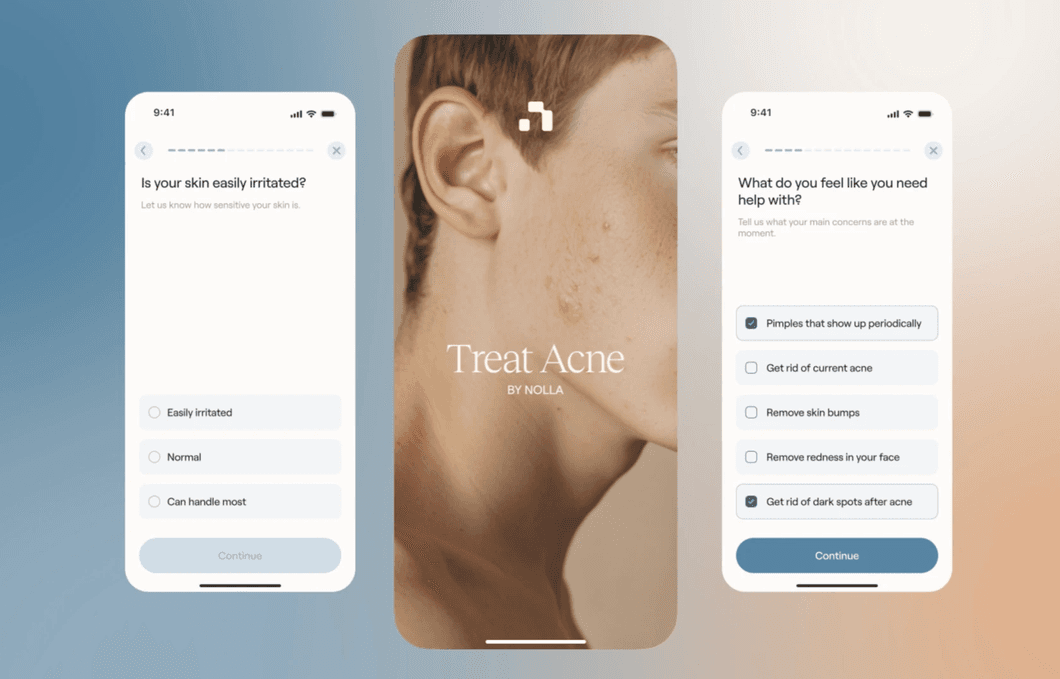
Utah has greenlit a first-of-its-kind pilot program allowing startup Nolla Health to use AI to prescribe acne treatments via its Nolla Derm app. The project, approved under Utah’s AI Learning Lab sandbox, will test a three-stage rollout with decreasing human oversight—raising both prospects and concerns about AI’s role in healthcare.
30 SEC SUMMARY
- Utah has approved the first U.S. pilot program allowing AI to issue prescriptions for acne treatments via the Nolla Derm app.
- Nolla Health’s pilot has three stages, gradually reducing human oversight while increasing AI autonomy.
- The AI is limited to prescribing topical acne treatments, with severe cases referred to human doctors.
- Utah’s AI Learning Lab sandbox program enables regulatory flexibility for testing AI-driven healthcare solutions.
- Doctors and medical associations have raised concerns about the safety of AI-driven prescriptions.
TABLE OF CONTENTS
- Utah approves landmark AI prescription pilot
- How the pilot works
- Safety limits and opposition
- Broader implications for AI in healthcare
- Background: Utah’s regulatory sandbox
- What this means
- Key takeaways
- FAQ
- Sources
KEY HIGHLIGHTS
- Utah has approved the first U.S. pilot program for AI-driven acne prescriptions, led by startup Nolla Health.
- The Nolla Derm app will analyze acne severity and prescribe topical treatments, with human oversight decreasing over three pilot stages.
- The AI is restricted to low-risk topical medications and cannot prescribe oral drugs like isotretinoin.
- The pilot is part of Utah’s AI Learning Lab, which provides regulatory relief for supervised AI testing in healthcare.
- Medical associations and doctors have criticized the program, citing safety concerns.
Utah approves landmark AI prescription pilot
Utah has become the first state in the U.S. to approve a pilot program allowing an artificial intelligence system to issue prescriptions for acne treatments, according to SiliconANGLE and Gizmodo. The program, developed by startup Nolla Health, will use its Nolla Derm app to analyze users’ skin conditions and prescribe topical treatments without direct physician involvement for most cases.
The approval was granted by Utah’s Office of Artificial Intelligence Policy, the Division of Professional Licensing, the Utah Medical Association, and the American Academy of Dermatology. The pilot is part of Utah’s AI Learning Lab sandbox program, which provides regulatory flexibility to test AI-driven products under supervision.
How the pilot works
The Nolla Derm app allows users to upload a facial scan and describe their condition to an AI agent, which then generates a prescription for topical acne treatments. According to SiliconANGLE, the AI can only prescribe a shortlist of physician-approved medications and is barred from recommending oral drugs like isotretinoin or addressing complex cases.
The pilot is structured in three stages. In the first stage, two physicians will review and approve every AI-generated prescription for the first 100 patients. During the second stage, the AI will issue prescriptions directly for the next 500 patients, with doctors reviewing them retroactively. In the final stage, the AI will operate with full autonomy, though physicians will conduct periodic reviews of at least 10% of cases monthly.
Users pay a $4.99 monthly subscription for the app, which also tracks progress through daily skin scans and updates treatment plans monthly. Prescriptions can be filled at local pharmacies or delivered to users’ homes.
Safety limits and opposition
The pilot restricts the AI to prescribing topical acne treatments, excluding higher-risk medications like stimulants, opioids, or benzodiazepines. Patients with severe or complex cases will be referred to human doctors, as reported by Gizmodo.
Despite these safeguards, the program has faced backlash from medical professionals. Doctors and associations, including the Utah Medical Association, have questioned the safety of AI-driven prescribing, arguing that even routine cases require clinical judgment that AI may lack.
Broader implications for AI in healthcare
SiliconANGLE reports that Nolla Health’s founders envision expanding the AI’s capabilities to other common conditions, such as the flu or urinary tract infections, pending further regulatory approval. The pilot is seen as a test case for broader automation in routine healthcare, including diagnostics, prescription refills, and testing.
However, industry observers note that predictions about AI replacing highly skilled medical roles have not materialized. Geoffrey Hinton and other experts cited by SiliconANGLE suggest that AI will likely remain limited to low-risk, routine tasks rather than handling life-changing diagnoses or high-stakes procedures.
Background: Utah’s regulatory sandbox
Utah’s AI Learning Lab sandbox program was established to provide regulatory relief for companies testing innovative AI products. The program allows startups like Nolla Health to pilot solutions under supervision, balancing innovation with oversight. This approach mirrors efforts in other sectors, such as fintech, where sandboxes have enabled experimentation without full regulatory compliance.
What this means
Lazyfounder analysis — our interpretation, not reported fact.
This approval sets a precedent for AI-driven healthcare in the U.S., signaling a shift toward regulated automation in medicine. For founders, it demonstrates that narrowly scoped AI applications—like acne treatments—can secure regulatory buy-in, especially in sandboxes designed for innovation. However, the backlash from medical professionals highlights the tension between efficiency and trust. Startups eyeing similar models must prioritize transparency, safety, and compliance to navigate skepticism and avoid regulatory pushback.
Long-term, this could pave the way for AI to handle routine diagnostics and prescriptions, but only if companies prove reliability in low-risk use cases first. The phased approach in Utah’s pilot—starting with human oversight and scaling automation—offers a blueprint for balancing innovation with accountability.
Key takeaways
- Utah is the first U.S. state to approve AI-automated prescriptions for acne, marking a milestone in digital health regulation.
- Nolla Health’s Nolla Derm app will use AI to prescribe topical acne treatments, with human oversight gradually reduced in three pilot stages.
- The pilot is part of Utah’s AI Learning Lab, which provides regulatory flexibility for testing AI products under supervision.
- The program has faced criticism from doctors who question the safety and ethics of AI-driven healthcare.
- Future expansion could include AI prescriptions for common conditions like the flu or urinary tract infections.
FAQ
Why is Utah’s AI prescription pilot significant?
It marks the first time a U.S. state has approved AI to issue initial prescriptions without direct human involvement, setting a precedent for AI-driven healthcare.
What limitations does the AI have in this pilot?
The AI is restricted to prescribing topical acne treatments and cannot recommend oral medications like isotretinoin or handle severe cases, which are referred to human doctors.
What are the stages of the pilot program?
The pilot has three stages: full physician oversight for the first 100 prescriptions, retroactive reviews for the next 500, and periodic sampling reviews for all subsequent prescriptions.
How have doctors responded to the pilot?
Medical associations and doctors have criticized the program, expressing concerns about patient safety and the reliability of AI in clinical decision-making.
What could this mean for the future of AI in healthcare?
If successful, the pilot could pave the way for AI to manage routine prescriptions and diagnostics, but adoption will depend on proving safety and earning trust from regulators and medical professionals.
Related on Lazyfounder
Sources
- SiliconANGLE · 2026-10-06
Utah gives startup Nolla Health permission to start issuing AI automated prescriptions for acne treatments - Gizmodo · 2026-10-06
Utah Pilots AI-Only Examination and Prescription Process for Certain Patients
This story is an original summary drafted with AI by Lazyfounder from the reporting listed above and checked by automated validation. Facts are attributed to their original publishers; sections marked as analysis are Lazyfounder's. Where a source is in another language, facts were machine-translated and quotations are reported, not reproduced. Read the original coverage via the links, and see our AI policy and corrections policy.

About the author
Editor, Lazyfounder
Tarun Mottlia edits LazyFounders, covering Indian startups, funding rounds, AI and product launches. Every story on the site is AI-assisted and checked against its cited sources before publication.
More stories by Tarun MottliaGet the LazyFounder Brief
Startup, funding and AI news in a five-minute read. Join the early-access list.