
San Francisco expands Flock camera use despite privacy concerns
San Francisco will continue using over 400 Flock automated license plate reader (ALPR) cameras, adopting new limits on their use despite privacy concerns raised elsewhere. While crime has dropped significantly in 2026, the cameras’ role in that trend remains unclear. The decision follows voter approval of expanded police surveillance authority, even as California lawmakers reject statewide regulations.

Editor, Lazyfounder
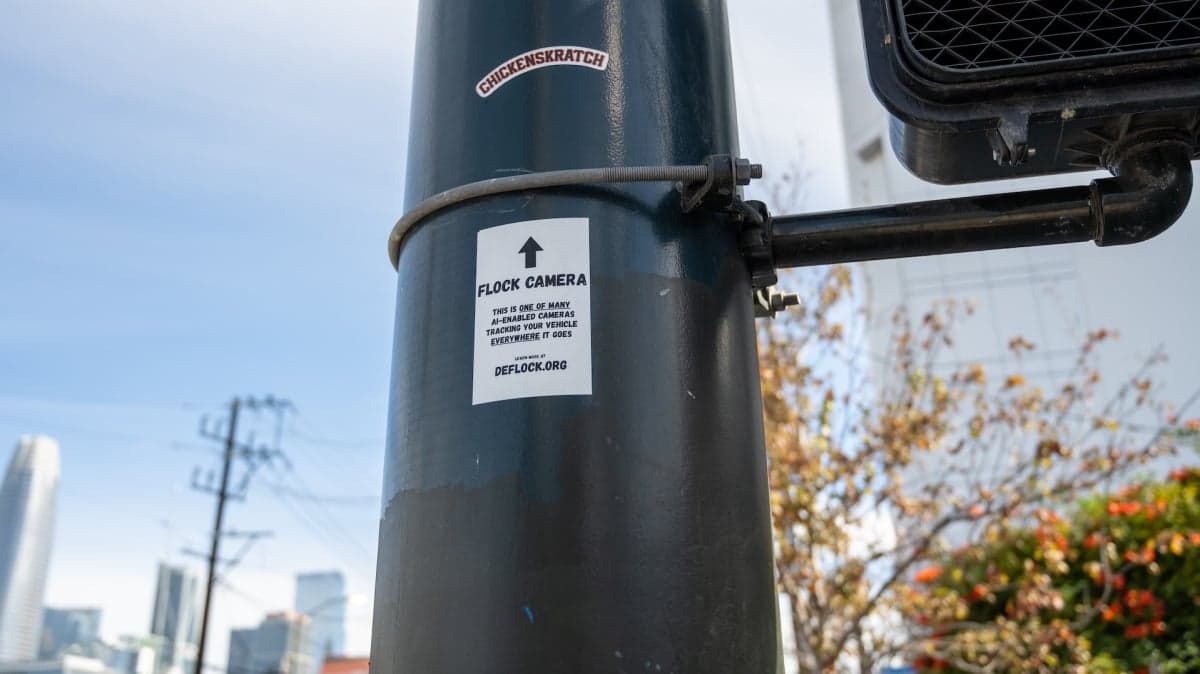
San Francisco will continue using over 400 Flock automated license plate reader (ALPR) cameras, adopting new limits on their use despite privacy concerns raised elsewhere. While crime has dropped significantly in 2026, the cameras’ role in that trend remains unclear. The decision follows voter approval of expanded police surveillance authority, even as California lawmakers reject statewide regulations.
30 SEC SUMMARY
- San Francisco has extended its use of over 400 Flock automated license plate reader (ALPR) cameras despite privacy concerns raised in other cities and states.
- The city adopted a new policy limiting access to older camera data, requiring police approval for searches beyond 30 days.
- Crime in San Francisco dropped significantly in early 2026 compared to 2022, but the role of Flock cameras in this decline is unclear.
- Proposition E, approved by voters in 2024, expanded police authority to use surveillance tools without additional oversight.
- 72% of San Franciscans support the use of drones and cameras in active investigations, per a July poll commissioned by GrowSF.
TABLE OF CONTENTS
- San Francisco doubles down on Flock cameras
- Crime drops, but cameras’ role remains unclear
- Voter-backed expansion of police authority
- California resists statewide regulations
- Broader context on surveillance and AI
- What this means
- Key takeaways
- FAQ
- Sources
KEY HIGHLIGHTS
- San Francisco will maintain its network of over 400 Flock ALPR cameras, despite privacy concerns raised in other cities and states.
- A new city policy requires police to obtain supervisory approval to search camera data older than 30 days.
- Crime in San Francisco fell by 59% and 82% in early 2026 compared to 2022, but the decline may not be tied to Flock cameras.
- Proposition E, approved by voters in 2024, expanded police authority to use surveillance tools without additional oversight.
- California state lawmakers rejected Flock regulations for the fifth time, leaving decisions to local jurisdictions.
San Francisco doubles down on Flock cameras
San Francisco will continue using more than 400 Flock automated license plate reader (ALPR) cameras, a decision that contrasts with opposition in other cities and states. The city adopted a new policy last month that imposes limits on accessing older data, requiring police officers to obtain approval from supervisors to search footage older than 30 days. According to Mashable, this move aims to balance surveillance capabilities with privacy protections, though critics argue the safeguards are insufficient.
The cameras, deployed as part of a broader push for data-driven policing, have become a point of contention. Privacy advocates warn that ALPR systems like Flock’s can enable indiscriminate tracking of citizens, while supporters argue they are essential for solving crimes and deterring offenders.
Crime drops, but cameras’ role remains unclear
Crime in San Francisco fell sharply in the first eight months of 2026 compared to the same period in 2022, with reported incidents dropping by 59% and 82% in key categories, according to Mashable. However, the extent to which Flock cameras contributed to this decline is uncertain. Other factors, such as demographic shifts driven by the AI-driven tech boom and a nationwide post-COVID crime reduction, may also play significant roles.
The lack of clear evidence linking the cameras to crime trends mirrors challenges faced in other cities. Without rigorous studies isolating the impact of ALPR systems, policymakers are effectively making decisions in the dark—relying on anecdotal success stories rather than data-driven assessments.
Voter-backed expansion of police authority
San Francisco voters approved Proposition E in 2024, a ballot measure that expanded the San Francisco Police Department’s (SFPD) authority to use drones and surveillance cameras without requiring approval from the police commission or board of supervisors. The measure reflected growing public frustration with rising crime and a desire for stronger law enforcement tools.
A July poll commissioned by GrowSF, a political group founded by tech workers, found that 72% of San Franciscans support the use of drones and cameras in active investigations. The survey underscored a shift in public sentiment toward prioritizing safety over privacy concerns, at least in emergency contexts.
GrowSF, which advocates for holding local leaders accountable, has played a significant role in shaping the city’s approach to public safety. One of its billionaire funders, Chris Larsen, reportedly assisted the SFPD in purchasing the Flock camera system.
California resists statewide regulations
While San Francisco moves forward with Flock cameras, California state lawmakers have repeatedly rejected attempts to regulate their use. Last month, legislators voted down proposed Flock regulations for the fifth time, leaving oversight decisions to individual cities and counties.
This hands-off approach has created a patchwork of policies across the state. Some cities, like San Francisco, have embraced ALPR systems, while others have restricted or banned them due to privacy concerns. The absence of statewide standards complicates efforts by companies like Flock to scale their technology uniformly.
Broader context on surveillance and AI
The debate over Flock cameras in San Francisco is part of a larger conversation about the role of AI and surveillance in public safety. Similar discussions have played out nationwide, with policymakers grappling with how to balance technological innovation with civil liberties.
Earlier this year, tech leaders and regulators clashed over AI governance, with the Trump administration rebranding AI as "Super Intelligence" and pushing for industry-led self-regulation. Meanwhile, figures like Bill Gates have warned of catastrophic risks posed by unchecked AI, advocating for stricter oversight at the federal level.
Documentaries like Primetime have also highlighted the ethical dilemmas of vigilante-style justice and media-driven surveillance, raising questions about the consequences of empowering citizens and authorities with invasive tools.
What this means
Lazyfounder analysis — our interpretation, not reported fact.
San Francisco’s decision to continue using Flock cameras reflects a broader tension between public safety and privacy—and between voter-backed policies and state-level caution. Founders and operators should note how local sentiment, political pressure, and funding from tech-aligned groups like GrowSF can shape policy.
The lack of clear evidence linking the cameras to crime reduction underscores a common challenge: deploying technology as a solution without measurable impact. For startups in surveillance or public safety tech, this case highlights the risks of overpromising results in ambiguous environments. Meanwhile, the repeated rejection of Flock regulations at the state level signals that California may favor local control over statewide standards, creating a patchwork of rules that could complicate scaling such solutions.
Key takeaways
- San Francisco will keep using Flock ALPR cameras despite opposition in other cities and states.
- A new policy requires police approval to access camera data older than 30 days.
- Crime dropped significantly in early 2026, but the cameras’ role in this trend is not proven.
- Proposition E expanded police surveillance authority, reflecting voter support for such tools.
- California state lawmakers have rejected Flock regulations five times, favoring local discretion.
FAQ
What are Flock cameras?
Flock cameras are automated license plate readers (ALPRs) that capture images of vehicle license plates, along with location, date, and time data. They are used by law enforcement to track vehicles linked to crimes or Amber Alerts.
Why are Flock cameras controversial?
Critics argue that ALPR systems like Flock’s enable mass surveillance, allowing governments to track civilians’ movements without warrants or clear oversight. Concerns also include data accuracy, false positives, and the potential for misuse by authorities.
What does Proposition E do?
Proposition E, approved by San Francisco voters in 2024, expanded the police department’s authority to use drones and surveillance cameras without requiring additional approval from city oversight bodies. It reflects a voter-backed push for stronger law enforcement tools.
Why has California rejected Flock regulations?
California state lawmakers have repeatedly voted down proposed regulations on Flock cameras, favoring local control over statewide standards. This approach allows cities and counties to set their own rules, creating a patchwork of policies across the state.
Has crime in San Francisco actually decreased because of Flock cameras?
Crime in San Francisco has dropped significantly in 2026, but there is no clear evidence linking the decline to Flock cameras. Other factors, such as demographic shifts and broader national trends, may also be contributing to the decrease.
Related on Lazyfounder
Sources
- Mashable · 2026-10-05
San Francisco is sticking with Flock
This story is an original summary drafted with AI by Lazyfounder from the reporting listed above and checked by automated validation. Facts are attributed to their original publishers; sections marked as analysis are Lazyfounder's. Where a source is in another language, facts were machine-translated and quotations are reported, not reproduced. Read the original coverage via the links, and see our AI policy and corrections policy.

About the author
Editor, Lazyfounder
Tarun Mottlia edits LazyFounders, covering Indian startups, funding rounds, AI and product launches. Every story on the site is AI-assisted and checked against its cited sources before publication.
More stories by Tarun MottliaGet the LazyFounder Brief
Startup, funding and AI news in a five-minute read. Join the early-access list.
