
Ukrainian firms unveil drone detector and fiber-optic FPV drones with microphones
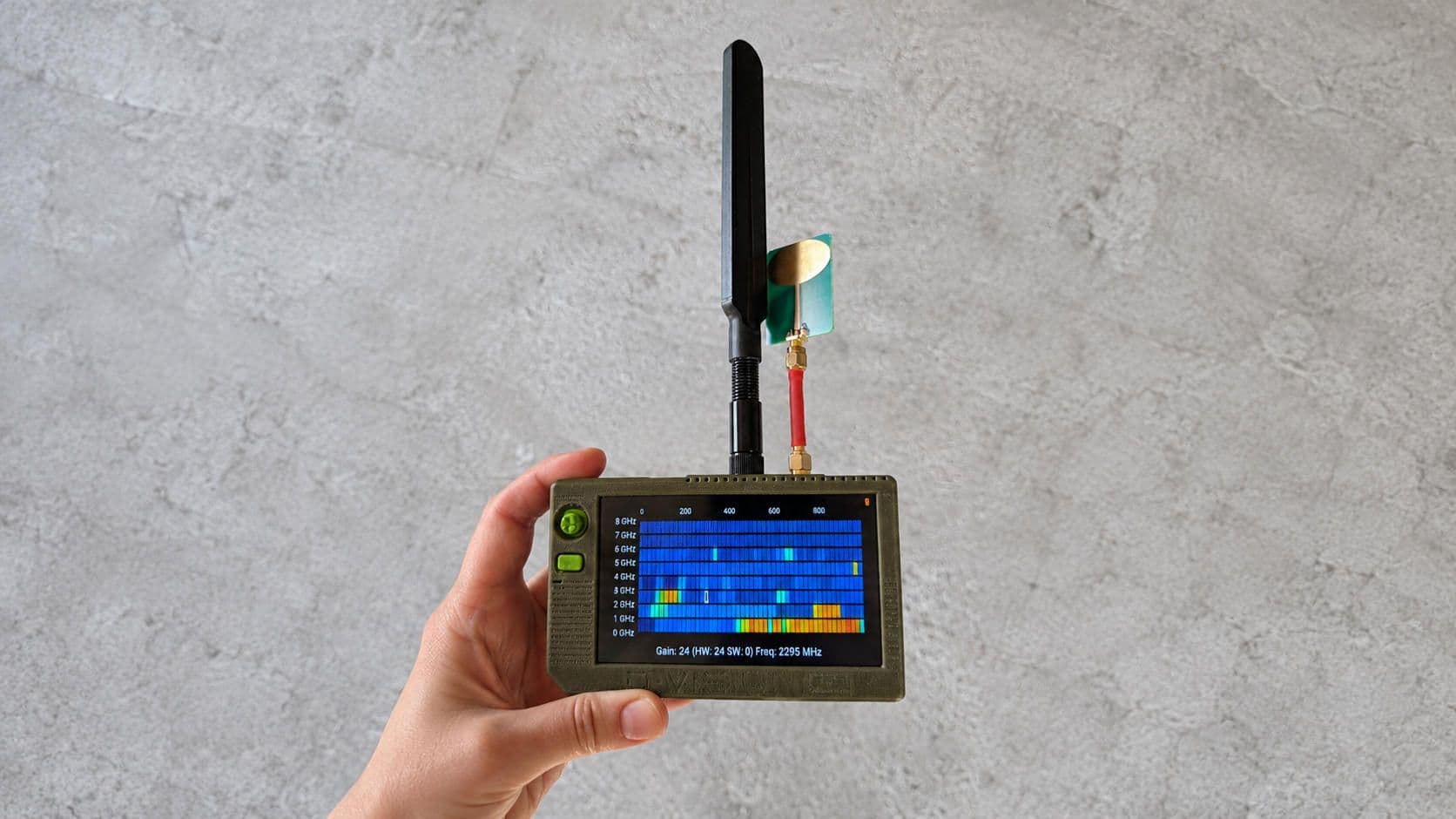
Ukrainian companies CODE380 and Ptashka Drones have launched new drone technologies designed to enhance battlefield intelligence. CODE380’s D·Vision SDR intercepts Russian drone signals to provide live video feeds, while Ptashka Drones’ fiber-optic FPV drones use microphones to detect enemy movements by sound.

Editor, Lazyfounder
KEY HIGHLIGHTS
- CODE380 launched D·Vision SDR, a drone detector that intercepts Russian drone signals and converts them into live video feeds for Ukrainian troops.
- D·Vision SDR uses software-defined radio to scan frequencies from 500 to 8,700 MHz with no reported blind spots.
- Ptashka Drones introduced fiber-optic FPV drones with microphones capable of detecting loud conversations at 20-30 meters and vehicles at up to 200 meters.
- Both systems are combat-tested and receive regular software updates.
D·Vision SDR: Intercepting drone signals for real-time intelligence
CODE380, a Kyiv-based firm, has developed D·Vision SDR, a drone detector that intercepts and decodes video feeds from Russian drones. According to TechRadar, the system converts intercepted signals into live video, allowing Ukrainian troops to see what enemy operators observe in real time.
The device uses software-defined radio to scan frequencies from 500 to 8,700 MHz, covering the spectrum without reported blind spots. CODE380 claims its sensitivity exceeds that of competing detectors. The system has been combat-tested with Ukrainian forces and receives software updates approximately twice a month.
While CODE380 was founded recently, development of the detector began earlier. Its ability to decode manual drone operations—rather than just preset targets—reflects a response to evolving Russian tactics, where drones increasingly carry cameras and are flown by operators.
Fiber-optic drones with acoustic detection
Ptashka Drones, another Ukrainian company, has introduced fiber-optic FPV drones equipped with microphones to detect enemy soldiers and vehicles by sound. These drones can identify loud conversations at 20–30 meters, light vehicles at 50–100 meters, and heavy vehicles up to 200 meters away.
The drones are part of a broader tactic where Ukrainian crews deploy "zhdun" (waiter) drones to ambush Russian forces. These drones land near expected enemy routes and wait for targets to approach, using auditory cues to identify and engage them. The fiber-optic connection likely enhances signal stability and reduces detection risk compared to traditional radio-controlled drones.
What this means
Lazyfounder analysis — our interpretation, not reported fact.
For founders and operators in defense tech, aerospace, and communications, these developments signal a shift in electronic warfare tactics. The ability to intercept and repurpose enemy drone feeds in real time demonstrates how software-defined radio (SDR) can be leveraged for intelligence gathering, not just detection. This could inspire commercial applications in sectors like border security, critical infrastructure protection, or even wildlife monitoring, where real-time signal interception is valuable.
The introduction of fiber-optic FPV drones with acoustic detection adds another layer: combining sensor data (audio) with long-endurance flight. This hybrid approach—where drones act as both eyes and ears—could be relevant for industries like search-and-rescue, agriculture, or logistics, where auditory cues (e.g., machinery malfunctions, distress signals) are as critical as visual ones.
The fact that both systems are combat-tested and receive frequent updates underscores the importance of agile software development in hardware products. For startups, this is a reminder that modular, updatable systems can extend product lifecycles and adapt to evolving threats or use cases.
Key takeaways
- D·Vision SDR’s ability to intercept and decode drone video feeds could set a new standard for counter-drone systems, particularly in conflicts where adversaries rely on commercial or modified drones.
- Fiber-optic drones with microphones highlight the potential for multi-sensor platforms that combine visual, auditory, and other data streams for situational awareness.
- Regular software updates for military-grade hardware suggest a growing expectation for post-deployment adaptability—a model consumer and enterprise tech companies may need to emulate.
- The use of software-defined radio for signal interception could have spillover effects in civilian sectors like telecommunications or IoT security.
Related on Lazyfounder
Sources
- TechRadar · 2026-10-25
This new Ukrainian detector can 'see' what a Russian drone can — and its new fiber-optic drones can also 'hear' enemy soldiers from 30 meters away
This story is an original summary drafted with AI by Lazyfounder from the reporting listed above and checked by automated validation. Facts are attributed to their original publishers; sections marked as analysis are Lazyfounder's. Where a source is in another language, facts were machine-translated and quotations are reported, not reproduced. Read the original coverage via the links, and see our AI policy and corrections policy.

About the author
Editor, Lazyfounder
Tarun Mottlia edits LazyFounders, covering Indian startups, funding rounds, AI and product launches. Every story on the site is AI-assisted and checked against its cited sources before publication.
More stories by Tarun MottliaGet the LazyFounder Brief
Startup, funding and AI news in a five-minute read. Join the early-access list.
