
Ukrainian military deploys ground robots for high-risk battlefield obstacle construction
Ukrainian forces are increasingly relying on remotely-operated wheeled robots to construct defensive obstacles in high-risk battlefield areas, replacing human engineers in dangerous tasks. The scale of robotic missions has grown sharply in 2026, with data showing a rapid increase in their deployment.

Editor, Lazyfounder
KEY HIGHLIGHTS
- Ukrainian troops are using remotely-operated wheeled robots to build defensive obstacles in dangerous battlefield zones.
- Robotic missions surged from 7,511 in January 2026 to 19,940 in July 2026, per Ukraine’s DELTA military management platform.
- Total robotic missions reached roughly 112,000 by September 2026.
- The Ground Forces of Ukraine stated these robots now perform tasks previously handled by combat engineers in high-risk areas.
- Key details like carrying capacity, operational range, and equipment losses remain undisclosed.
Robots take on dangerous engineering tasks
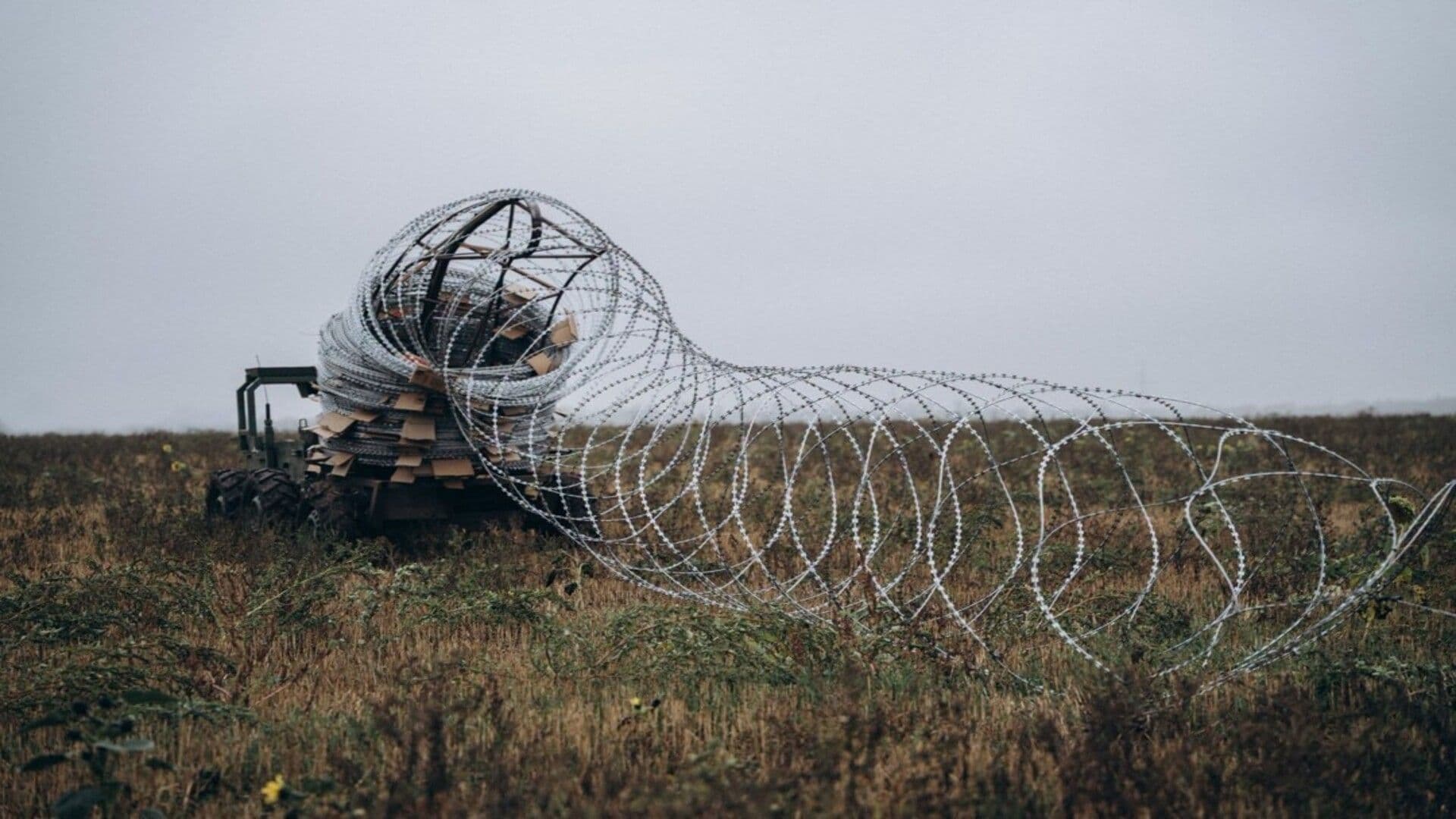
Ukrainian troops are deploying remotely-operated wheeled robots to construct defensive obstacles in areas where human engineers would face direct exposure to enemy fire. According to reports, these robots carry coils of wire on specially designed frames, unspooling barriers as they move forward. The machines are operated by Ukraine’s 16th Separate Support Brigade while remaining under cover, reducing the risk to soldiers.
The Ground Forces of Ukraine confirmed that ground-based drones are now performing tasks typically assigned to combat engineers in high-risk zones. However, specifics about the robots’ carrying capacity, operational distance, and the volume of fencing they can deploy in a single mission remain classified.
Rapid scaling of robotic missions
The use of these robotic systems has expanded rapidly in 2026. Data from Ukraine’s DELTA military management platform shows a surge in robotic missions, rising from 7,511 in January to 19,940 in July. By September, the total number of missions reached approximately 112,000.
Despite this growth, the military has not disclosed how many of these robots are in operation, whether other units use similar equipment, or the rate of equipment losses. Without data on successful installations or the distance covered per mission, the effectiveness of these systems remains difficult to assess.
What this means
Lazyfounder analysis — our interpretation, not reported fact.
Ukraine’s adoption of ground robots for battlefield engineering tasks highlights a emerging trend in modern warfare: the automation of high-risk roles to minimize human casualties. For founders and operators in robotics and defense, this development signals two key opportunities:
First, the demand for rugged, remotely-operated platforms capable of performing specialized tasks—like obstacle construction, logistics, or mine clearance—is growing. Startups that can deliver scalable, cost-effective solutions may find a receptive market, particularly if they can demonstrate reliability in contested environments.
Second, the lack of transparency about these robots’ performance underscores a challenge for the sector. Without clear metrics on capabilities, losses, or operational success, it may be difficult for new entrants to prove their value to military buyers. However, the rapid scaling of robotic missions suggests that governments are willing to invest in unproven systems if they address urgent operational needs.
Investors may also see potential in dual-use robotics—systems that serve both military and civilian applications, such as disaster response or infrastructure. Startups that can adapt battlefield-tested technology for other industries could unlock additional markets.
Key takeaways
- Ukraine’s use of ground robots for obstacle construction demonstrates a growing military appetite for automation in high-risk roles.
- The rapid increase in robotic missions—from 7,511 in January 2026 to 112,000 by September—signals strong demand for scalable, remotely-operated solutions.
- The lack of public data on performance and losses highlights a challenge for startups: proving effectiveness in a sector where transparency is limited.
- Dual-use potential exists for robotics startups, as battlefield-tested systems could be adapted for civilian applications like disaster response.
Related on Lazyfounder
Sources
- TechRadar · 2026-10-29
Ukraine is getting ground robots to carry out one of the riskiest battlefield tasks — and they're doing an excellent job
This story is an original summary drafted with AI by Lazyfounder from the reporting listed above and checked by automated validation. Facts are attributed to their original publishers; sections marked as analysis are Lazyfounder's. Where a source is in another language, facts were machine-translated and quotations are reported, not reproduced. Read the original coverage via the links, and see our AI policy and corrections policy.

About the author
Editor, Lazyfounder
Tarun Mottlia edits LazyFounders, covering Indian startups, funding rounds, AI and product launches. Every story on the site is AI-assisted and checked against its cited sources before publication.
More stories by Tarun MottliaGet the LazyFounder Brief
Startup, funding and AI news in a five-minute read. Join the early-access list.
