
Munich taxi operator MTZ to deploy 500 Tensor robotaxis in Germany
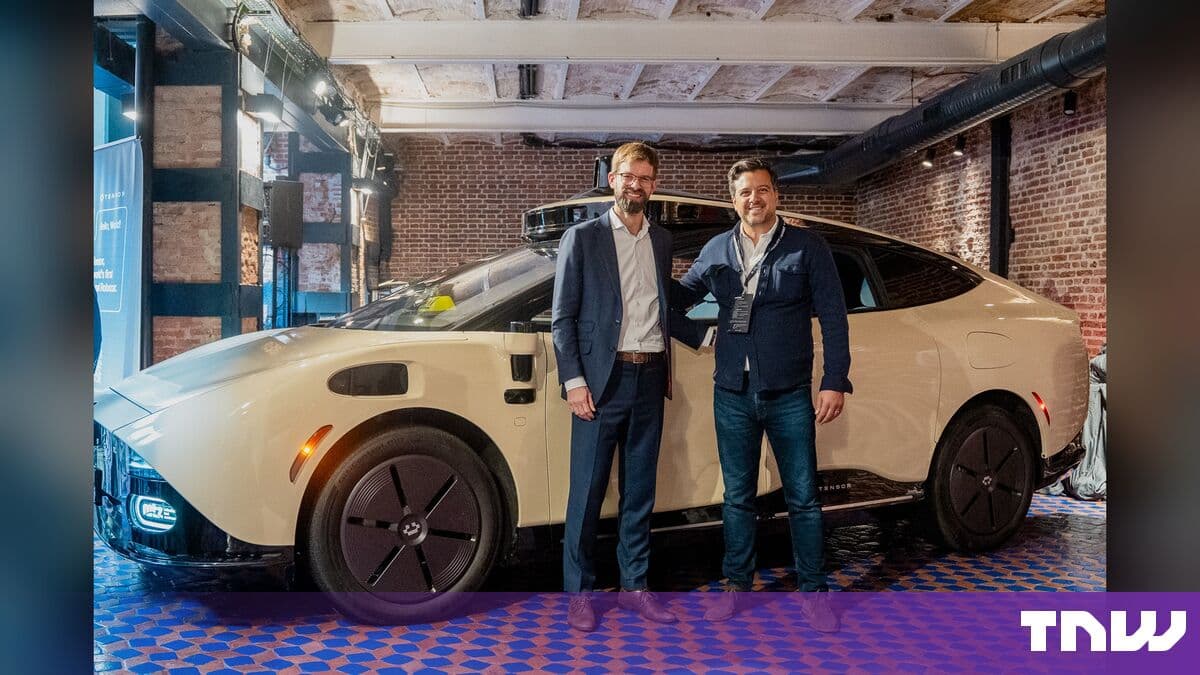
Munich’s largest taxi operator, Münchner Taxi Zentrum (MTZ), has signed a letter of intent to deploy up to 500 self-driving robotaxis from US-based Tensor in German cities. The partnership, announced at the Madrid Autonomous Mobility Summit, aims to expand the fleet to 10,000 vehicles across Europe within 24 months of regulatory approval.

Editor, Lazyfounder
KEY HIGHLIGHTS
- Munich’s largest taxi operator, Münchner Taxi Zentrum (MTZ), plans to deploy up to 500 self-driving robotaxis from US-based Tensor in German cities.
- The partnership was announced at the Madrid Autonomous Mobility Summit and formalized with a letter of intent.
- MTZ will retain control of its brand, fleet, customers, and data while using Tensor’s Robocar and subscription-based software.
- Deployment depends on regulatory approval for Level 4 autonomous driving in Germany.
- The partners aim to expand the fleet to 10,000 vehicles across Europe within 24 months of availability.
Partnership details and goals
Münchner Taxi Zentrum (MTZ), Munich’s largest taxi operator, plans to deploy up to 500 self-driving robotaxis from Tensor, a US-based autonomous vehicle company. The partnership was formalized with a letter of intent and announced at the Madrid Autonomous Mobility Summit.
Under the agreement, MTZ will operate the service under its own brand, retaining control of its fleet, customers, and data. Tensor will supply the Robocar vehicles and charge a subscription for its software, fleet management tools, and support services. Riders will book rides through MTZ’s existing dispatch system.
The partners aim to expand the Robocar fleet to 10,000 vehicles across Europe within 24 months of the car’s availability. They are also exploring the possibility of selling the Robocar to private buyers in Germany.
Regulatory and operational hurdles
The deployment of the robotaxis hinges on regulatory approval for Level 4 autonomous driving in Germany. At this level, vehicles can operate without a human driver under predefined conditions. MTZ’s CEO, Gregor Beiner, emphasized the importance of maintaining service quality and data sovereignty for customers.
Beiner’s role as chair of Taxis 4 Smart Mobility—an alliance of taxi groups from six European countries—and as president of Germany’s federal association of taxi and private hire firms positions MTZ as a key player in shaping the regulatory landscape for autonomous mobility.
Tensor’s Robocar and competitive landscape
Tensor’s Robocar is designed for both personal ownership and robotaxi fleets. It includes features like self-cleaning sensors and voice-enabled routing, allowing riders to modify routes or add stops during trips.
The company, founded in Silicon Valley in 2016, maintains offices in San Jose, Barcelona, Singapore, and Dubai. Its partnership with MTZ follows a broader trend of autonomous vehicle startups collaborating with traditional fleet operators to scale operations.
Competitors in the European robotaxi space include Bolt, which plans to deploy 25,000 driverless vehicles, and Uber and Pony.ai, which are preparing tests in London. Waymo, another US-based competitor, aims to grow its fleet to 20,000 robotaxis by 2027, while Wayve, Stellantis, and Nvidia have partnered with France for similar initiatives.
What this means
Lazyfounder analysis — our interpretation, not reported fact.
This partnership underscores a strategic shift in how autonomous vehicle technology is being commercialized. By collaborating with an established fleet operator like MTZ, Tensor is leveraging local expertise in regulatory navigation, customer trust, and operational scalability—factors that are often overlooked by tech-first startups. For founders in the mobility space, the deal highlights the value of partnerships that prioritize data ownership and brand control, which could become key differentiators as competition intensifies.
The German market, with its 50,000 taxis and stringent regulatory framework, will serve as a critical test case for Level 4 autonomous driving in Europe. Success here could accelerate similar deployments in other major cities, particularly where taxi operators wield significant influence over policy. Meanwhile, the subscription-based model for Tensor’s software may attract operators wary of the capital expenditure required for autonomous fleets, offering a more flexible path to adoption.
Key takeaways
- This partnership signals growing collaboration between traditional fleet operators and autonomous vehicle startups, offering a model for scaling robotaxis in regulated markets.
- Founders in autonomous mobility should note the emphasis on data sovereignty and brand control—MTZ’s decision to retain ownership of customer data could set a precedent for future deals.
- Germany’s regulatory environment for Level 4 driving will be a critical benchmark for operators eyeing European expansion. Startups should monitor approval timelines and requirements closely.
- The subscription-based model for Tensor’s software and fleet tools may appeal to operators seeking to avoid upfront capital expenditure on autonomous vehicle technology.
Related on Lazyfounder
Sources
- The Next Web · 2026-10-28
Munich’s biggest taxi firm plans up to 500 Tensor robotaxis in Germany
This story is an original summary drafted with AI by Lazyfounder from the reporting listed above and checked by automated validation. Facts are attributed to their original publishers; sections marked as analysis are Lazyfounder's. Where a source is in another language, facts were machine-translated and quotations are reported, not reproduced. Read the original coverage via the links, and see our AI policy and corrections policy.

About the author
Editor, Lazyfounder
Tarun Mottlia edits LazyFounders, covering Indian startups, funding rounds, AI and product launches. Every story on the site is AI-assisted and checked against its cited sources before publication.
More stories by Tarun MottliaGet the LazyFounder Brief
Startup, funding and AI news in a five-minute read. Join the early-access list.
