
Geopolitical shocks force UK Budget rethink as inflation shrinks fiscal buffers
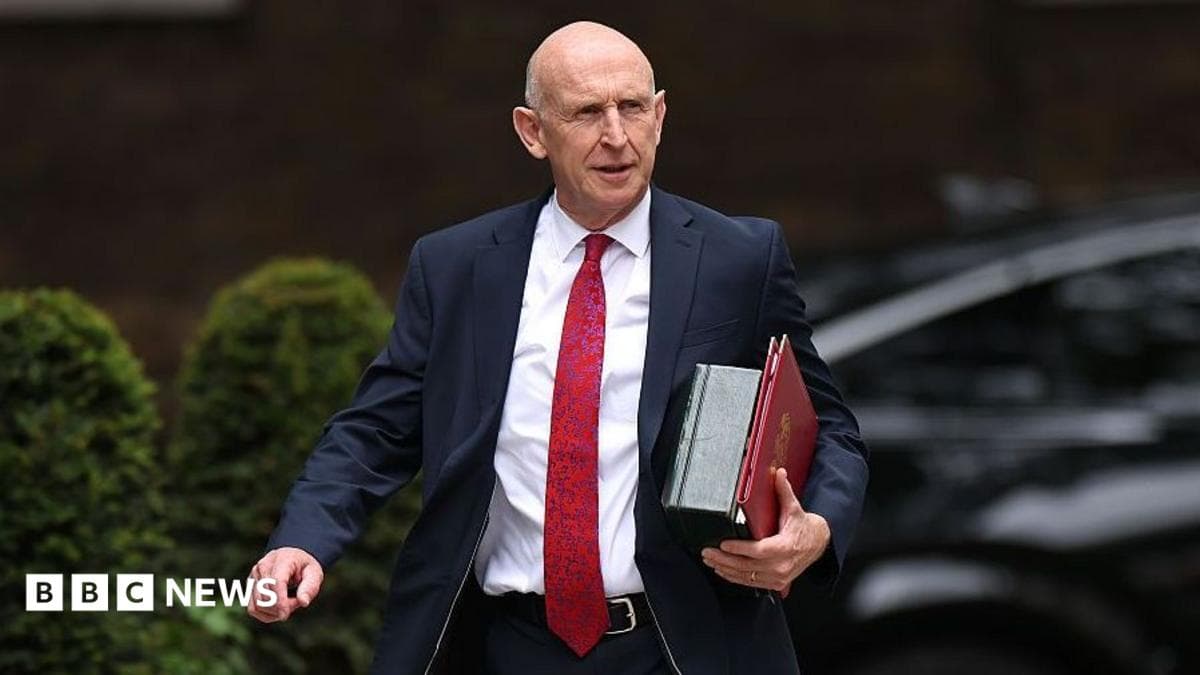
Chancellor John Healey is grappling with the economic fallout from geopolitical conflicts, including the US-Israel war in Iran and Russia’s invasion of Ukraine, as he prepares his first Budget. Higher inflation and borrowing costs threaten to shrink fiscal buffers, forcing tough decisions on spending cuts or tax rises.

Editor, Lazyfounder
30 SEC SUMMARY
- Chancellor John Healey faces pressure to adjust the UK’s Budget due to economic fallout from geopolitical conflicts, including the US-Israel war in Iran and Russia’s invasion of Ukraine.
- The Institute for Fiscal Studies (IFS) warns that higher inflation and borrowing costs may force spending cuts, tax rises, or both.
- Government borrowing costs in 2029-30 could rise by £10bn due to inflation and bond market turbulence, shrinking fiscal buffers.
- Maintaining department budgets amid inflation could require an additional £25bn, increasing the likelihood of tax increases.
- The IFS emphasizes the uncertainty of forecasts and the need for credible spending plans to maintain fiscal credibility.
TABLE OF CONTENTS
KEY HIGHLIGHTS
- The US-Israel war in Iran and Russia’s invasion of Ukraine have driven up global energy prices, increasing UK inflation and government debt interest payments.
- The Institute for Fiscal Studies (IFS) estimates an extra £10bn will be added to government borrowing costs in 2029-30 due to inflation and bond market volatility.
- Chancellor John Healey may need to find an additional £25bn in 2029-30 to maintain department budgets, likely leading to tax rises.
- The government is expected to meet its fiscal rules but with a reduced buffer of £20bn, down from £24bn predicted earlier.
- The IFS warns that unrealistic spending plans could undermine the credibility of the Budget.
Geopolitical conflicts disrupt UK economic plans
According to BBC News, the economic fallout from the US-Israel war in Iran and Russia’s invasion of Ukraine has contributed to a spike in global energy prices. This has, in turn, fueled inflation and increased the cost of UK government debt interest payments, complicating Chancellor John Healey’s first Budget.
Inflation and borrowing costs squeeze fiscal headroom
The Institute for Fiscal Studies (IFS) has warned that higher-than-expected inflation could reduce the government’s spending capacity for public services. The IFS estimates that borrowing costs in 2029-30 could rise by £10bn due to inflation and recent turbulence in bond markets, narrowing the fiscal buffer to £20bn from an earlier projection of £24bn.
This tightens the government’s ability to meet its self-imposed fiscal rules, which include borrowing only for investment projects by 2029-30 and reducing debt as a percentage of GDP.
Healey faces tough choices on spending and taxes
Healey must decide between spending cuts, tax increases, or a combination of both to address the fiscal shortfall. The IFS has urged the government to ensure its spending plans are credible, warning that unrealistic projections could undermine financial market confidence.
To maintain department budgets in the face of inflation, the government may need an additional £25bn in 2029-30, a move that would likely require significant tax rises. The IFS also noted that any relief for households would likely be temporary and limited.
Uncertainty clouds budget forecasts
The IFS highlighted exceptional uncertainty in its forecasts, given the volatile economic environment. The spending plans inherited from former Chancellor Rachel Reeves assumed some departments’ budgets would not keep pace with inflation in coming years, a scenario that could cast doubt on the credibility of the government’s financial strategy if left unaddressed.
Healey may delay finalizing spending totals until future events, such as the Spring Statement or a Spending Review.
What this means
Lazyfounder analysis — our interpretation, not reported fact.
This Budget cycle underscores a reality founders and operators know well: macroeconomic shocks—whether from geopolitical conflicts, energy markets, or inflation—rarely respect fiscal timelines. Healey’s challenge mirrors the dilemmas startups face when external forces shrink runway or raise costs: do you cut, raise prices, or both? The IFS’s warning about credibility is especially relevant. Just as investors penalize startups for unrealistic growth projections, financial markets distrust governments that paper over gaps with optimistic assumptions. For UK operators, this Budget isn’t just about taxes or spending—it’s a signal of whether the government will prioritize stability over short-term fixes. If tax rises materialize, sectors like fintech and SaaS could see lower disposable income for customers, while infrastructure and green energy might benefit from sustained investment. The lesson? Build flexibility into financial planning, because the next shock could already be unfolding.
Key takeaways
- Founders should monitor geopolitical risks, as they can unexpectedly tighten costs, inflation, and borrowing conditions, directly impacting business operations.
- Financial credibility is critical—whether for governments or startups. Overly optimistic projections can erode trust with investors, customers, and markets.
- Tax increases or spending cuts could reduce consumer disposable income, affecting demand for non-essential products and services.
- Operators in sectors reliant on government contracts or subsidies should prepare for potential budget constraints in coming years.
- Uncertainty in fiscal policy may delay major spending decisions; maintain financial buffers to weather volatility.
FAQ
What specific risks does the US-Israel war in Iran pose to the UK economy?
The conflict has contributed to higher global energy prices, which drive inflation and increase the cost of UK government debt interest payments. This reduces the fiscal headroom for public spending and could force tax rises or cuts.
How much could borrowing costs rise by 2029-30?
The Institute for Fiscal Studies estimates that borrowing costs could increase by around £10bn in 2029-30 due to inflation and bond market turbulence.
Why is the IFS warning about unrealistic spending plans?
The IFS cautions that unrealistic projections could undermine the government’s financial credibility, similar to how startups risk losing investor trust with overly optimistic forecasts.
Related on Lazyfounder
Sources
- BBC News (Tech & Business) · 2026-10-11
Iran war threatens Healey's Budget plans, think tank warns
This story is an original summary drafted with AI by Lazyfounder from the reporting listed above and checked by automated validation. Facts are attributed to their original publishers; sections marked as analysis are Lazyfounder's. Where a source is in another language, facts were machine-translated and quotations are reported, not reproduced. Read the original coverage via the links, and see our AI policy and corrections policy.

About the author
Editor, Lazyfounder
Tarun Mottlia edits LazyFounders, covering Indian startups, funding rounds, AI and product launches. Every story on the site is AI-assisted and checked against its cited sources before publication.
More stories by Tarun MottliaGet the LazyFounder Brief
Startup, funding and AI news in a five-minute read. Join the early-access list.
