
Tesla renames Full Self-Driving to Tesla Assisted Driving in UK and Europe
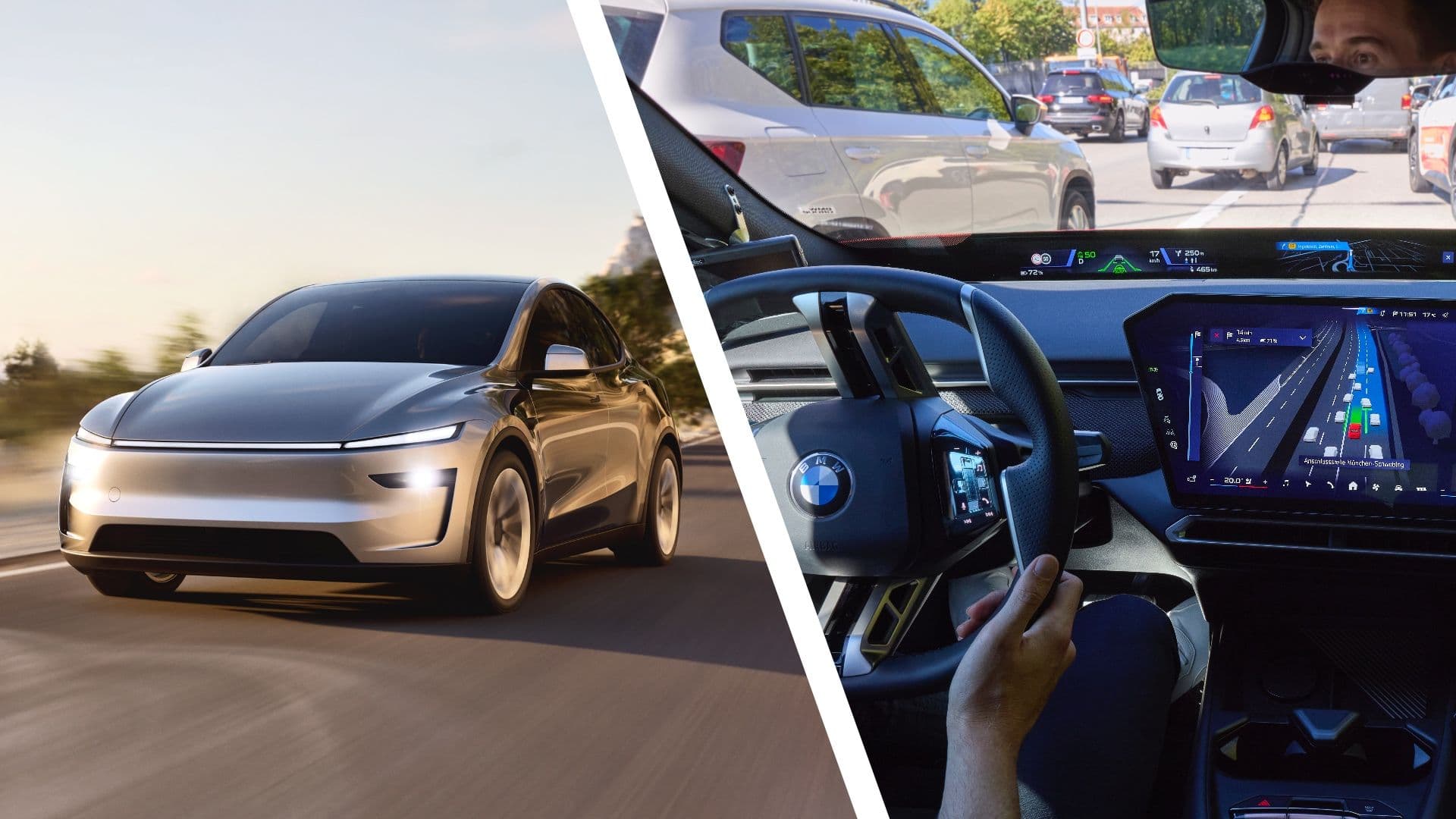
Tesla has agreed to rename its Full Self-Driving (FSD) technology to Tesla Assisted Driving in the UK and Europe following regulatory pressure from Germany’s transport ministry. The change reflects growing scrutiny over terminology in automated driving systems. Meanwhile, BMW is set to launch its Symbiotic Drive technology in 2027, adding competition to the market.

Editor, Lazyfounder
30 SEC SUMMARY
- Tesla is renaming Full Self-Driving to Tesla Assisted Driving in the UK and Europe due to regulatory concerns.
- Germany’s transport ministry called the original name misleading, as the system still requires driver attention.
- The UK’s 2024 Automated Vehicles Act reserves terms like self-driving for vehicles that do not need human monitoring.
- BMW will launch its SAE Level 2 Symbiotic Drive in 2027, targeting urban driving tasks.
TABLE OF CONTENTS
KEY HIGHLIGHTS
- Tesla’s Full Self-Driving technology is being rebranded as Tesla Assisted Driving in the UK and Europe.
- Germany’s transport ministry intervened, citing the original name as misleading for consumers.
- The UK’s 2024 Automated Vehicles Act restricts terms like self-driving to vehicles that do not require human oversight.
- BMW’s Symbiotic Drive, an SAE Level 2 system, will debut in 2027 with features like urban lane changes and roundabout navigation.
Regulatory pressure drives Tesla’s rebrand
Tesla has agreed to rename its Full Self-Driving (FSD) technology to Tesla Assisted Driving in the UK and Europe, according to reports from TechRadar. The change follows concerns raised by Germany’s transport ministry, led by Transport Minister Steffen Bilger, about the misleading nature of the original name. The ministry argued that the term Full Self-Driving implied a level of autonomy that the system does not yet deliver, as drivers must remain attentive at all times.
The new name, Tesla Assisted Driving, has already appeared on Tesla’s European websites, including the UK. The rebrand aligns with broader regulatory scrutiny over terminology used in automated driving technologies, particularly in markets with strict advertising standards.
UK law restricts terminology for automated vehicles
The UK’s 2024 Automated Vehicles Act has set clear definitions for terms like self-driving, autonomous, and driverless. Under the law, these labels are reserved for vehicles that do not require human monitoring or control. This means Tesla’s FSD, which still requires driver oversight, cannot be marketed as a self-driving system in the UK.
The act reflects a growing trend among regulators to hold automakers accountable for accurate representation of their technology’s capabilities. Misleading names could expose companies to legal risks, including liability in the event of accidents involving assisted driving systems.
BMW’s Symbiotic Drive enters the fray in 2027
BMW is preparing to launch its own automated driving technology, Symbiotic Drive, in 2027. The system, classified as SAE Level 2, is designed to assist with urban driving tasks such as turning, navigating right-of-way situations, lane changes, and roundabouts. It will use satellite navigation and interior cameras to monitor driver intent, executing maneuvers like lane changes autonomously when safe to do so.
Unlike Tesla’s system, BMW’s Symbiotic Drive will initially be available on select models in Germany, with over-the-air updates enabling future enhancements. The system allows drivers to intervene or override its actions without disabling it entirely, a feature aimed at balancing automation with human control.
Implications for Tesla’s earlier challenges
This regulatory intervention follows a series of setbacks for Tesla’s technology ambitions. Earlier reporting by LazyFounder highlighted operational issues with Tesla’s Robotaxi service in Houston, where riders reported long detours and unsupported pickup points despite an expanded coverage area. The company has also discontinued its Solar Roof tiles after years of delays and low adoption, shifting focus to conventional solar panels.
While Tesla continues to push the boundaries of automated driving, regulatory and operational hurdles underscore the challenges of scaling such technologies. The rebranding in Europe and the UK may signal a shift toward more cautious marketing as competitors like BMW prepare to enter the market.
What this means
Lazyfounder analysis — our interpretation, not reported fact.
Tesla’s decision to rebrand its Full Self-Driving technology in Europe and the UK is a rare concession to regulators, reflecting the increasing scrutiny over how automated driving systems are marketed. For founders and operators in the automotive and technology sectors, this serves as a reminder that regulatory compliance is not just about technology but also about how it is presented to consumers. Misleading names or exaggerated claims can invite legal challenges, reputational damage, and costly rebrands—especially in markets with strict advertising laws.
BMW’s upcoming Symbiotic Drive also signals that competition in assisted driving technologies is heating up. While Tesla has dominated headlines with its ambitious claims, established automakers are taking a more measured approach, focusing on incremental improvements and clearer communication about capabilities. This could pressure Tesla to temper its messaging globally, even in markets where regulations are less stringent.
For startups in the automated driving space, the takeaway is clear: regulatory alignment and transparent marketing are as critical as technological innovation. Early engagement with policymakers and a focus on consumer education may help avoid similar pivots down the line.
Key takeaways
- Tesla’s rebranding in the UK and Europe sets a precedent for how assisted driving technologies may be named and marketed globally.
- Regulatory frameworks like the UK’s Automated Vehicles Act are reshaping industry terminology, with legal consequences for non-compliance.
- BMW’s entry into the market with Symbiotic Drive highlights growing competition in SAE Level 2 systems, emphasizing urban driving assistance.
- Automakers and startups must balance innovation with regulatory alignment to avoid reputational and financial risks.
Related on Lazyfounder
Sources
- TechRadar · 2026-11-03
Tesla forced to rename 'misleading' Full Self-Driving technology in the UK and Europe — as BMW readies its own automated driving rival for 2027
This story is an original summary drafted with AI by Lazyfounder from the reporting listed above and checked by automated validation. Facts are attributed to their original publishers; sections marked as analysis are Lazyfounder's. Where a source is in another language, facts were machine-translated and quotations are reported, not reproduced. Read the original coverage via the links, and see our AI policy and corrections policy.

About the author
Editor, Lazyfounder
Tarun Mottlia edits LazyFounders, covering Indian startups, funding rounds, AI and product launches. Every story on the site is AI-assisted and checked against its cited sources before publication.
More stories by Tarun MottliaGet the LazyFounder Brief
Startup, funding and AI news in a five-minute read. Join the early-access list.
