
Tesla Loses Ground to BYD and Geely as Chinese Automakers Dominate Global EV Sales
The Tesla Model Y remained the best-selling electric vehicle globally in August 2026, but Chinese automakers BYD and Geely are rapidly gaining market share. BYD’s diverse product lineup and aggressive pricing have propelled it to the top of the global EV rankings, while Tesla’s reliance on just two models may be limiting its growth.

Editor, Lazyfounder
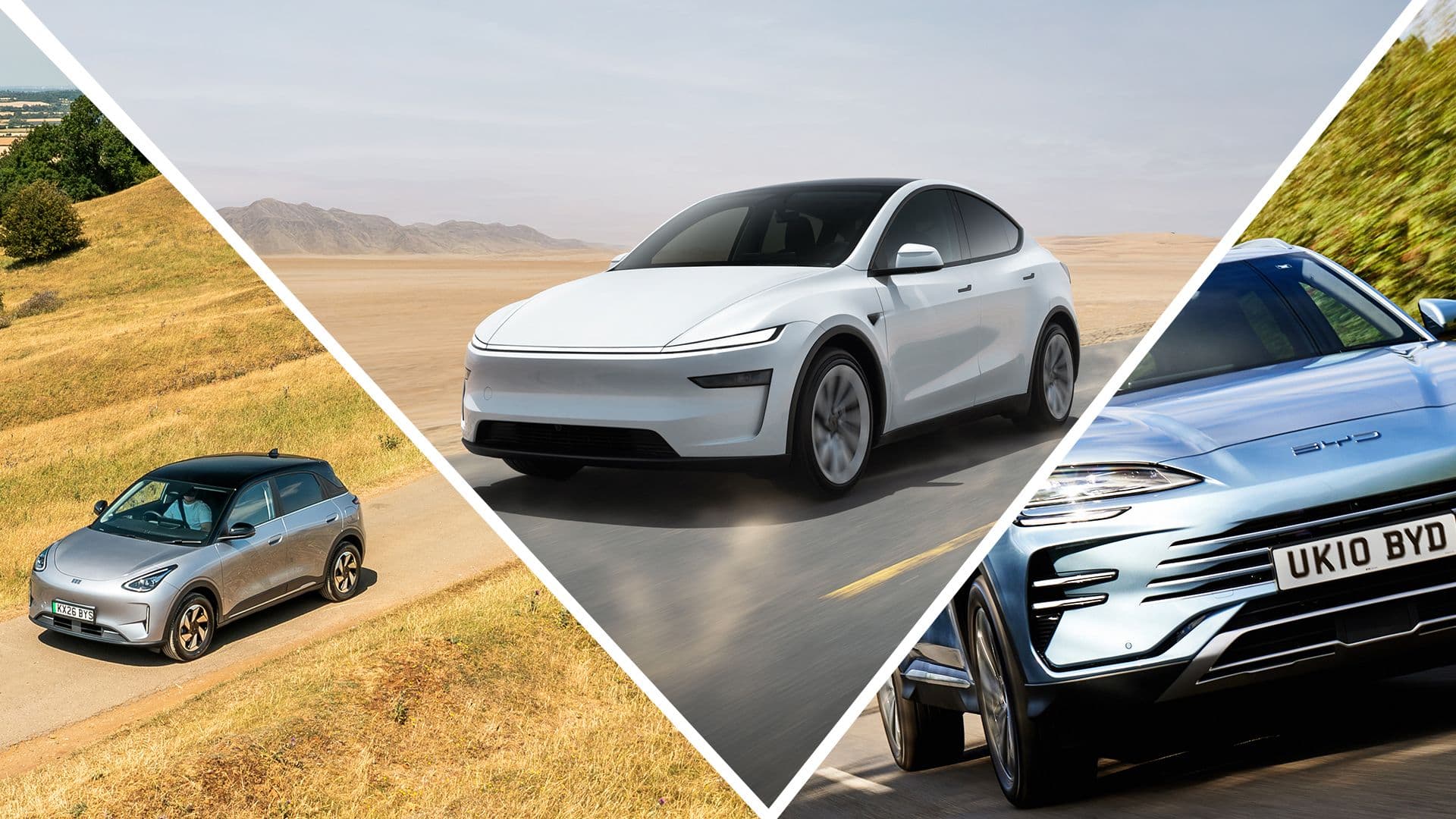
The Tesla Model Y remained the best-selling electric vehicle globally in August 2026, but Chinese automakers BYD and Geely are rapidly gaining market share. BYD’s diverse product lineup and aggressive pricing have propelled it to the top of the global EV rankings, while Tesla’s reliance on just two models may be limiting its growth.
30 SEC SUMMARY
- Tesla Model Y remained the best-selling global EV in August 2026, but Chinese automakers BYD and Geely are rapidly closing the gap.
- BYD secured four of the top 10 best-selling EV models, with a total sales volume of 375,373 units in August, compared to Tesla’s 141,996.
- Battery electric vehicles (BEVs) grew 13% year-on-year, while plug-in hybrids (PHEVs) declined 12%.
- Chinese brands like Leapmotor, MG, and Xiaomi outsold established players like Toyota and Volkswagen.
- Tesla’s reliance on just two models, the Model 3 and Model Y, may be limiting its market dominance as competition intensifies.
TABLE OF CONTENTS
- Tesla Model Y Leads, but Chinese Rivals Gain Ground
- Chinese Automakers Dominate Global EV Market
- Tesla’s Market Position Under Pressure
- What this means
- Key takeaways
- FAQ
- Sources
KEY HIGHLIGHTS
- Tesla Model Y was the best-selling EV globally in August 2026, but BYD and Geely are narrowing the gap.
- BYD’s August sales volume reached 375,373 units, nearly triple Tesla’s 141,996.
- Chinese automakers accounted for four of the top 10 best-selling EV models in August.
- BEVs grew 13% year-on-year, while PHEVs declined 12%, reflecting changing market dynamics.
- Tesla’s Model 3 is losing ground to Chinese competitors like Geely’s EX2 and multiple BYD models.
Tesla Model Y Leads, but Chinese Rivals Gain Ground
According to TechRadar, the Tesla Model Y remained the best-selling electric vehicle (EV) globally in August 2026. However, Chinese automakers BYD and Geely are rapidly closing the gap in both sales volume and market share.
Tesla’s Model Y outsold its closest competitor, BYD’s Song/Seal U, by nearly double in August. Despite this, BYD’s overall sales volume for the month reached 375,373 units, compared to Tesla’s 141,996. This discrepancy highlights BYD’s broader product lineup, which includes four of the top 10 best-selling EV models globally.
Chinese Automakers Dominate Global EV Market
Chinese brands are increasingly dominating the global EV market. According to TechRadar, BYD leads the year-to-date rankings for 2026, accounting for 20.3% of global plug-in vehicle sales. Geely follows with 9.9%, while Tesla holds 8.3%, placing it third.
Other Chinese automakers, including Leapmotor, MG, Fang Cheng Bao (FCB), Qiyuan, Li, Wuling, and Xiaomi, have outsold established global players like Toyota and Volkswagen. This shift reflects the growing competitiveness of Chinese manufacturers in the EV space.
The report also notes that battery electric vehicles (BEVs) experienced a 13% year-on-year growth, while plug-in hybrids (PHEVs) saw a 12% decline, indicating a potential shift in consumer preferences toward fully electric models.
Tesla’s Market Position Under Pressure
Tesla’s reliance on just two models—the Model 3 and Model Y—may be limiting its ability to maintain market dominance. According to TechRadar, the Model 3’s position in global sales charts is increasingly vulnerable, with Geely’s EX2 and multiple BYD models closing in.
Non-Chinese brands like Toyota’s bZ4X and BMW’s iX1/X1 PHEV combination are also gaining ground, further pressuring Tesla’s market share. The report suggests that the EV market is evolving beyond premium offerings, with smaller, more affordable models gaining traction.
What this means
Lazyfounder analysis — our interpretation, not reported fact.
Tesla’s leadership in the EV market is facing its strongest challenge yet, not from legacy automakers like Toyota or Volkswagen, but from Chinese competitors with aggressive pricing, diverse product lineups, and rapid innovation. The data underscores a critical vulnerability for Tesla: its reliance on a narrow product range. While the Model Y and Model 3 remain top sellers, they are no longer unassailable, and Tesla’s lack of affordable or segment-diverse options could limit its growth as the market matures.
For founders and operators, this shift offers a few key lessons. First, scale and cost efficiency—areas where Chinese manufacturers excel—are becoming decisive factors in the EV race. Second, the decline of plug-in hybrids suggests that consumer appetite is tilting toward fully electric solutions, a trend worth watching for startups in adjacent sectors like charging infrastructure or battery tech. Finally, Tesla’s struggles highlight the risks of over-reliance on a few products; diversification, even within a single vertical, can be a hedge against market shifts.
The broader takeaway? The EV market is entering a new phase where incumbents can no longer assume their dominance is permanent. For startups, this could mean opportunities in niches like fleet electrification, emerging markets, or software layers that integrate with the next wave of EVs.
Key takeaways
- The Tesla Model Y led global EV sales in August 2026, but Chinese automakers are gaining significant market share.
- BYD is the world’s largest EV manufacturer in 2026, accounting for 20.3% of global plug-in vehicle sales year-to-date.
- Geely holds 9.9% of the global plug-in vehicle market, placing it second ahead of Tesla’s 8.3%.
- BEVs saw 13% year-on-year growth, while PHEVs declined 12%, signaling a shift in consumer preferences.
- Chinese brands are outperforming established global automakers, including Toyota and Volkswagen, in EV sales.
FAQ
Why is Tesla losing ground to Chinese automakers?
Tesla’s reliance on just two models, the Model 3 and Model Y, limits its ability to compete with Chinese automakers like BYD and Geely, which offer a broader range of products at competitive prices. Additionally, Chinese brands are excelling in cost efficiency and scaling production faster than many legacy automakers.
What does the decline in plug-in hybrid sales mean for the EV market?
The 12% year-on-year decline in plug-in hybrid (PHEV) sales, alongside a 13% growth in battery electric vehicles (BEVs), suggests that consumers are increasingly favoring fully electric models. This shift could accelerate investments in charging infrastructure and battery technology.
How significant is BYD’s lead in global EV sales?
BYD is the world’s largest EV manufacturer in 2026, with 20.3% of global plug-in vehicle sales year-to-date. Its August sales volume of 375,373 units was nearly triple Tesla’s 141,996, reflecting its dominance in both volume and product diversity.
Are non-Chinese automakers still competitive in the EV market?
While Chinese brands are leading, non-Chinese automakers like Toyota and BMW are still competitive. Toyota’s bZ4X and BMW’s iX1/X1 PHEV are gaining traction, particularly as the market expands beyond premium offerings to include more affordable models.
Related on Lazyfounder
Sources
- TechRadar · 2026-10-05
Tesla Model Y tops global EV sales figures again — but new report reveals BYD is closing fast with 4 of the top 10 models
This story is an original summary drafted with AI by Lazyfounder from the reporting listed above and checked by automated validation. Facts are attributed to their original publishers; sections marked as analysis are Lazyfounder's. Where a source is in another language, facts were machine-translated and quotations are reported, not reproduced. Read the original coverage via the links, and see our AI policy and corrections policy.

About the author
Editor, Lazyfounder
Tarun Mottlia edits LazyFounders, covering Indian startups, funding rounds, AI and product launches. Every story on the site is AI-assisted and checked against its cited sources before publication.
More stories by Tarun MottliaGet the LazyFounder Brief
Startup, funding and AI news in a five-minute read. Join the early-access list.
