

Skyroot Aerospace approaches next phase after first private orbital rocket launch
Skyroot Aerospace, which successfully launched India’s first privately developed orbital rocket, is now focused on achieving consistent success in a sector where margins for error are minimal. Co-founder and CEO Pawan Kumar Chandana shared insights on the company’s journey and the challenges that lie ahead.

Editor, Lazyfounder
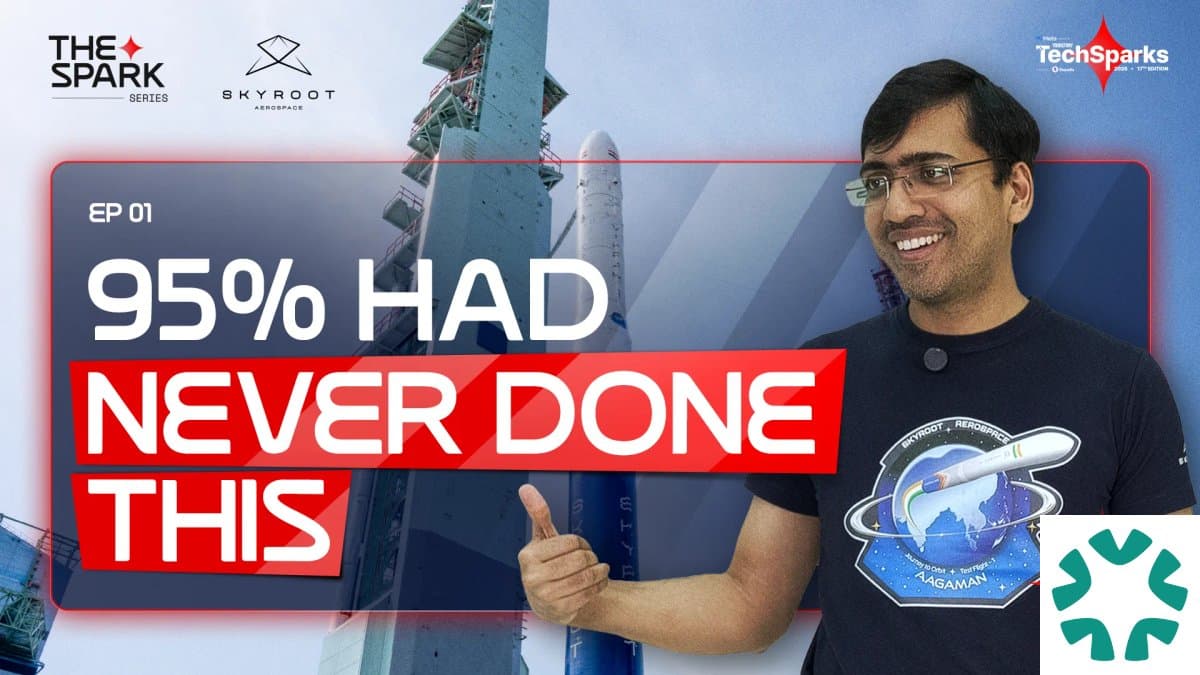
Launch marked a milestone but not a guarantee
The successful launch of Vikram-1, India’s first privately developed orbital rocket, was a high-stakes, 16-minute operation that Skyroot Aerospace’s co-founder and CEO, Pawan Kumar Chandana, described as a "16-minute thriller movie."
While the launch demonstrated the company’s technical capabilities, Chandana emphasized that a single success does not prove long-term viability. "It gives you confidence," he said. "But you have to be consistently successful."
Challenges in building a deep tech company from India
Skyroot Aerospace began without initial capital, a defined private-space policy, or a readily available talent pool. Chandana highlighted these constraints as significant hurdles in developing a globally competitive deep tech company from India.
The company’s journey reflects broader challenges faced by startups in the space sector, including regulatory uncertainty and the need for sustained investment.
Focus shifts to scalability and reliability
With the first launch behind them, Skyroot Aerospace is now concentrating on the harder task of ensuring scalability and reliability. Chandana’s remarks underscore the importance of repeated success in an industry where failure is not an option.
The company’s efforts are part of a larger shift in India’s space sector, where private players are increasingly playing a critical role in advancing capabilities.
What this means
Lazyfounder analysis — our interpretation, not reported fact.
Skyroot Aerospace’s progress signals growing maturity in India’s private space sector, but the focus on consistent success highlights the realities of operating in a high-stakes industry. For other founders and operators, this serves as a reminder that breakthroughs—while critical—are only the first step. The ability to scale, replicate success, and navigate regulatory and talent challenges will determine long-term viability. For investors, it underscores the need for patience and sustained commitment in deep tech, where returns are not immediate and risks remain high.
Sources
This story is an original summary drafted with AI by Lazyfounder from the reporting listed above and checked by automated validation. Facts are attributed to their original publishers; sections marked as analysis are Lazyfounder's. Where a source is in another language, facts were machine-translated and quotations are reported, not reproduced. Read the original coverage via the links, and see our AI policy and corrections policy.

About the author
Editor, Lazyfounder
Tarun Mottlia edits LazyFounders, covering Indian startups, funding rounds, AI and product launches. Every story on the site is AI-assisted and checked against its cited sources before publication.
More stories by Tarun MottliaGet the LazyFounder Brief
Startup, funding and AI news in a five-minute read. Join the early-access list.
