
Sipeed’s MaixStation AI computer claims edge over Nvidia DGX Spark in Qwen workloads
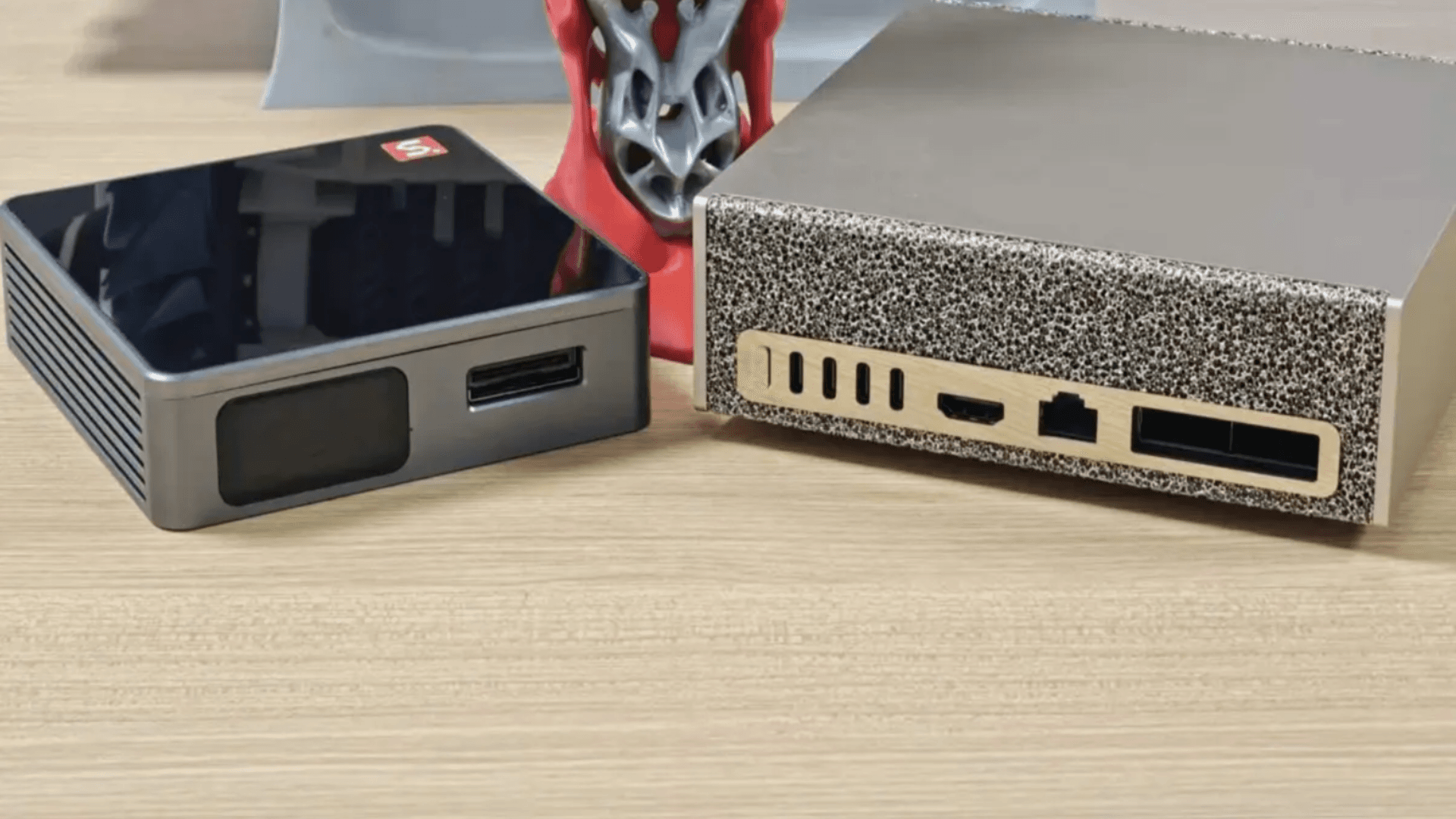
Chinese manufacturer Sipeed has announced its MaixStation AI computer, claiming it outperforms Nvidia’s DGX Spark and Apple’s Mac Mini in specific Qwen workloads. The device, powered by Axera’s AX8860P processor, emphasizes practical inference performance over theoretical TOPS metrics and is priced below $4,000.

Editor, Lazyfounder
KEY HIGHLIGHTS
- Sipeed’s MaixStation AI computer, powered by Axera’s AX8860P processor, claims superior performance in Qwen workloads compared to Nvidia’s DGX Spark and Apple’s Mac Mini, despite lower theoretical TOPS.
- The MaixStation has a typical power consumption of 40W and is priced below $2,000 for the 32GB model and under $4,000 for the 128GB configuration.
- Nvidia’s DGX Spark, advertised at 1,000 sparse FP4 TOPS, reportedly sells for $6,949.99, up from its March 2025 pricing of $3,000–$4,000.
- Sipeed plans a Kickstarter campaign with a $100 discount for early reservations.
MaixStation’s performance claims
Chinese electronics manufacturer Sipeed has announced its MaixStation AI computer, powered by Axera’s AX8860P processor, claiming it outperforms Nvidia’s DGX Spark and Apple’s Mac Mini in specific Qwen workloads. The AX8860P combines 16 Arm Cortex-A55 cores with AI acceleration capable of 256 TOPS, though Sipeed argues that practical inference performance matters more than theoretical metrics.
Sipeed’s 128GB MaixStation configuration reportedly slightly exceeds Nvidia’s DGX Spark in Qwen benchmarks, despite the latter being advertised at 1,000 sparse FP4 TOPS. Sipeed contends that real-world workloads cannot fully utilize Nvidia’s theoretical capacity, giving its hardware an edge in efficiency.
Power, pricing, and availability
The MaixStation has a typical power consumption of 40W, targeting low-power AI computing applications. The entry-level 32GB model is priced below $2,000, while the 128GB configuration is expected to cost under $4,000. For comparison, Nvidia’s DGX Spark reportedly sells for $6,949.99, up from its March 2025 pricing of $3,000–$4,000.
Sipeed plans to launch the MaixStation via a Kickstarter campaign, offering a $100 discount for early reservations made with a $30 deposit. The device measures 110 × 110 × 30 mm and includes USB 3.0 Type-C and a 10GbE SFP+ network interface.
The MaixStation supports large language models like Qwen3.8-27B on its 32GB model and Qwen3.8-Flash-Next 125B on its 128GB configuration. Multi-unit setups can handle even larger models, leveraging AXLink for inter-processor communication with approximately 80% efficiency.
Software and hardware compatibility
The AX8860P processor is manufactured using a 6nm process and offers 273GB/s memory bandwidth, matching the DGX Spark’s specifications. The MaixStation supports frameworks like PyTorch and ONNX, as well as OpenAI-compatible interfaces, making it adaptable for existing AI workflows.
What this means
Lazyfounder analysis — our interpretation, not reported fact.
Sipeed’s claims, if verified, could disrupt the edge AI hardware market by demonstrating that lower-power, lower-cost devices can compete with high-end alternatives in real-world workloads. This challenges the industry’s reliance on theoretical TOPS as the primary performance metric and may push competitors to prioritize practical benchmarks. For founders and operators, the MaixStation’s pricing and power efficiency could make it a viable option for deploying LLM-powered applications, particularly in cost-sensitive or power-constrained environments.
Key takeaways
- The MaixStation’s claimed performance challenges the assumption that higher theoretical TOPS always translate to better real-world AI inference, which could influence hardware procurement decisions for edge AI deployments.
- Its pricing and power efficiency may appeal to cost-sensitive founders and startups building LLM-powered applications, particularly in markets where affordability is critical.
- The shift toward practical benchmarks over theoretical metrics could pressure competitors like Nvidia to emphasize real-world workload performance in their marketing.
Related on Lazyfounder
Sources
- TechRadar · 2026-10-23
Plucky Chinese startup claims to beat Nvidia DGX Spark, Mac Mini on Qwen — says its '256 TOPS beats 1000 TOPS in prefill', running 16-core Cortex-A55 SoC on 40w
This story is an original summary drafted with AI by Lazyfounder from the reporting listed above and checked by automated validation. Facts are attributed to their original publishers; sections marked as analysis are Lazyfounder's. Where a source is in another language, facts were machine-translated and quotations are reported, not reproduced. Read the original coverage via the links, and see our AI policy and corrections policy.

About the author
Editor, Lazyfounder
Tarun Mottlia edits LazyFounders, covering Indian startups, funding rounds, AI and product launches. Every story on the site is AI-assisted and checked against its cited sources before publication.
More stories by Tarun MottliaGet the LazyFounder Brief
Startup, funding and AI news in a five-minute read. Join the early-access list.
