

Singapore pilots biological data centre using living neurons for AI computing
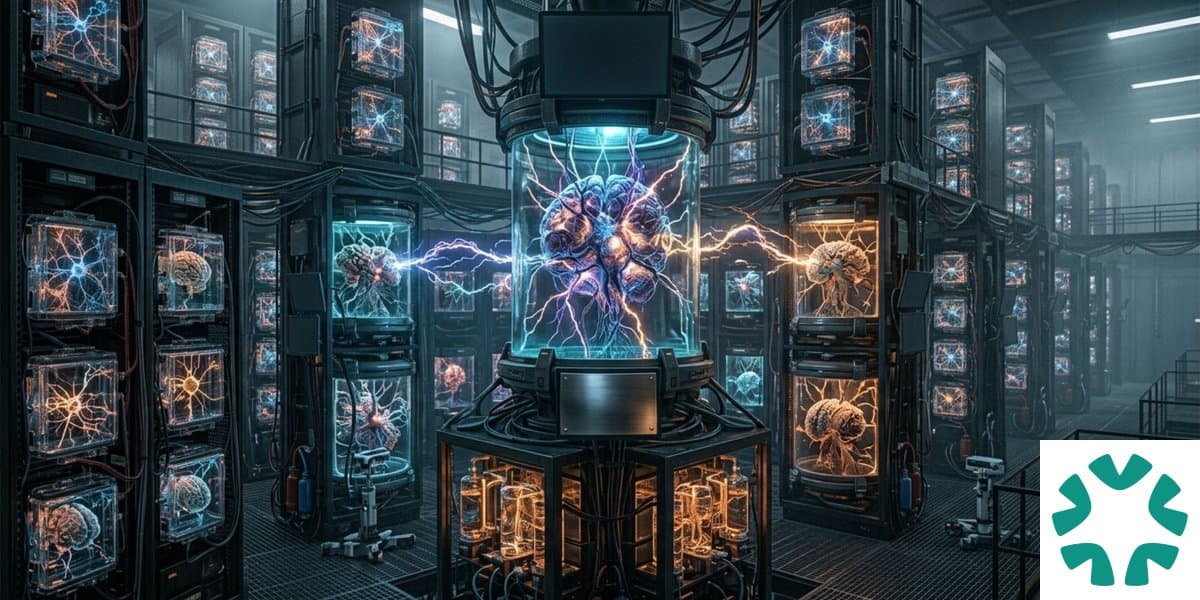
Singapore is testing a prototype data centre that uses living human neurons to perform AI computing tasks. The project, which combines biological neural networks with conventional electronics, is an early exploration of whether neurons can offer energy efficiency advantages over traditional silicon-based systems. Results could shape future AI infrastructure, particularly for specialised applications.

Editor, Lazyfounder
30 SEC SUMMARY
- Singapore is testing a biological data centre that uses living human neurons for computing tasks
- The prototype combines 16 million neurons with conventional electronics across 20 small computers
- The project involves NUS Medicine, data-centre developer DayOne, and startup Cortical Labs
- Biological computing may offer energy efficiency but lacks independent benchmarks so far
- Potential applications include robotics and security, but scalability and reliability remain unproven
TABLE OF CONTENTS
KEY HIGHLIGHTS
- Singapore is piloting a biological data centre using living human neurons alongside conventional electronics
- The prototype uses 16 million neurons distributed across 20 small computers
- Neurons are grown from stem cells derived from reprogrammed blood cells
- The system connects neurons to computer chips via microelectrode arrays for computation
- The project aims to explore energy efficiency but has not yet proven advantages over GPUs
- Potential use cases include robotics and security, though scalability and reliability are untested
How the biological data centre works
The prototype replaces some silicon processors with "wetware"—neurons grown from stem cells. These neurons form living networks connected to computer chips through microelectrode arrays, allowing electrical signals to pass between biological and electronic systems.
According to YourStory, the approach mimics how biological brains process information, enabling neural networks to adapt and learn from activity rather than relying solely on silicon circuits.
Prototype details and partners
The pilot is hosted at the National University of Singapore’s Life Sciences Institute and uses Cortical Labs’ CL1 systems in a 20-computer rack. The project involves NUS Medicine, data-centre developer DayOne, and Cortical Labs, a Melbourne-based startup.
The system uses 16 million neurons derived from blood cells reprogrammed into stem cells and then developed into neural cultures. Unlike traditional servers, the neurons require regular maintenance and feeding, creating a distinct operational model.
Energy efficiency and unproven claims
One of the central arguments for biological computing is potential energy efficiency. Supporters claim neurons could handle certain AI computations with significantly less power than conventional servers, which could matter as data-centre electricity demand rises.
However, YourStory reports that the project has not yet demonstrated a clear energy advantage through independent benchmarks. Comparative tests against GPUs on identical workloads will be necessary to validate any efficiency claims.
Potential applications and challenges
The system is not intended to replace GPU clusters immediately. Instead, biological computing could eventually suit specialised applications where adaptability and learning from limited data are prioritised over raw speed. Target areas include robotics and security systems that operate in changing environments.
Scaling remains a major hurdle. Researchers must prove reliability, reproducibility, and consistent performance while expanding from millions to larger neuron networks. Ethical and safety considerations, alongside automated cell maintenance, are also part of the roadmap.
Next steps and broader context
The next phase will focus on benchmarking neuron-based systems against silicon hardware on identical tasks. The results will determine whether biological computing can move beyond experimental status.
Singapore is framing the project as part of its broader effort to develop more sustainable data-centre capacity. If biological systems deliver useful computing with lower energy consumption, they could become a specialised layer of AI infrastructure.
What this means
Lazyfounder analysis — our interpretation, not reported fact.
This pilot is a high-risk, high-reward bet on a non-traditional form of computing. If biological systems prove energy-efficient and scalable, they could carve out a niche in AI infrastructure—particularly for startups in robotics or edge security where adaptability matters more than speed. For now, it’s a signal that alternative hardware is being explored seriously, but founders should wait for independent benchmarks before assuming it’s a viable replacement for GPUs. The project also underscores Singapore’s push to lead in sustainable tech, which could influence infrastructure trends across Southeast Asia.
Key takeaways
- Founders in AI infrastructure should watch this space—biological computing could introduce a new class of specialised hardware if efficiency claims hold
- Energy-intensive startups may see long-term alternatives to GPU clusters if biological systems deliver lower power consumption
- The project signals Singapore’s intent to pioneer sustainable, non-traditional data-centre technologies, which could influence regional infrastructure trends
Sources
This story is an original summary drafted with AI by Lazyfounder from the reporting listed above and checked by automated validation. Facts are attributed to their original publishers; sections marked as analysis are Lazyfounder's. Where a source is in another language, facts were machine-translated and quotations are reported, not reproduced. Read the original coverage via the links, and see our AI policy and corrections policy.

About the author
Editor, Lazyfounder
Tarun Mottlia edits LazyFounders, covering Indian startups, funding rounds, AI and product launches. Every story on the site is AI-assisted and checked against its cited sources before publication.
More stories by Tarun MottliaGet the LazyFounder Brief
Startup, funding and AI news in a five-minute read. Join the early-access list.
