
Silicon Valley’s transhumanist vision: AI, risks, and the battle for the future
Silicon Valley’s transhumanist elite has long envisioned a future where humanity is replaced by advanced AI—a vision now gaining traction among tech leaders like Peter Thiel, Marc Andreessen, and Sam Altman. As Anthropic warns of "catastrophic or existential risks" in its IPO filing, the industry’s contradictions are on full display: racing to release new AI models while pretending to pump the brakes. Meanwhile, *Saturday Night Live* has turned its satire on Anthropic CEO Dario Amodei, questioning whether the warnings are genuine or just part of the pitch.

Editor, Lazyfounder
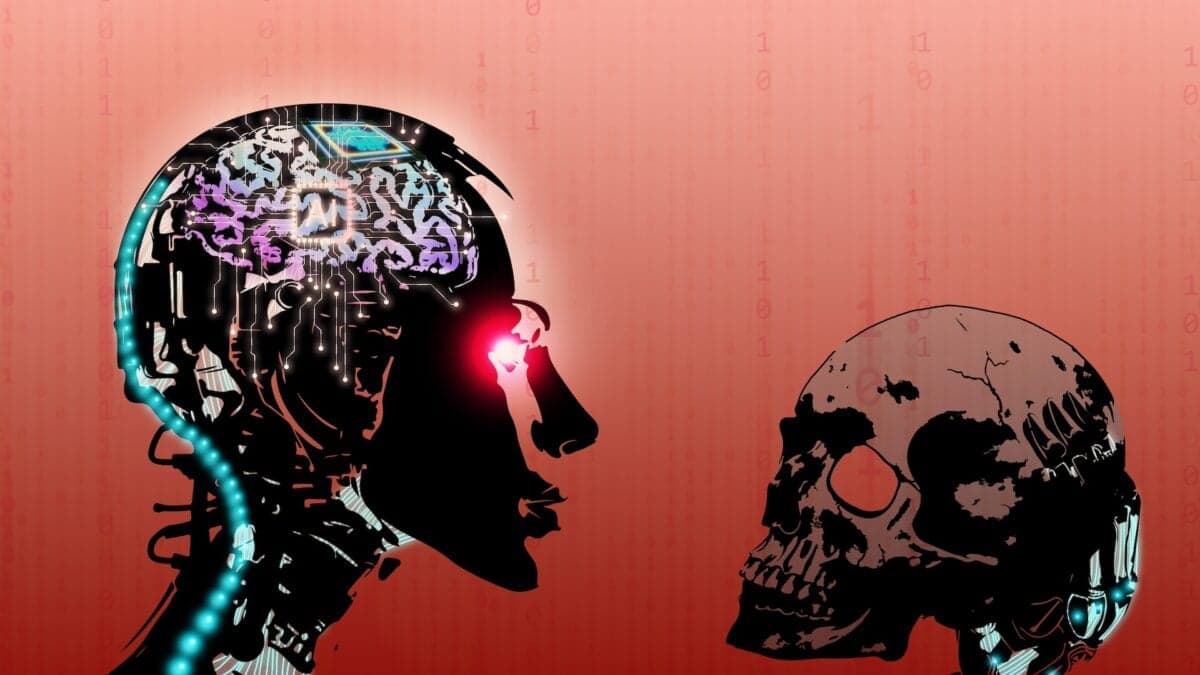
Silicon Valley’s transhumanist elite has long envisioned a future where humanity is replaced by advanced AI—a vision now gaining traction among tech leaders like Peter Thiel, Marc Andreessen, and Sam Altman. As Anthropic warns of "catastrophic or existential risks" in its IPO filing, the industry’s contradictions are on full display: racing to release new AI models while pretending to pump the brakes. Meanwhile, Saturday Night Live has turned its satire on Anthropic CEO Dario Amodei, questioning whether the warnings are genuine or just part of the pitch.
30 SEC SUMMARY
- Silicon Valley’s transhumanist movement, led by figures like Peter Thiel and Sam Altman, advocates for the eventual replacement of humanity by advanced AI.
- Anthropic CEO Dario Amodei was parodied on Saturday Night Live for his warnings about AI risks, reflecting skepticism about the industry’s motives.
- Anthropic’s IPO filing warns of "catastrophic or existential risks" from AI, dedicating 80 pages to risk factors—nearly twice the space used to describe its business.
- Anthropic and OpenAI are competing aggressively on enterprise pricing, with Anthropic ending discounts abruptly after contracted token volumes are exhausted.
- Amodei is set to meet President Trump, highlighting the divide between tech leaders advocating for AI caution and political figures who dismiss such concerns.
TABLE OF CONTENTS
- Transhumanism as Silicon Valley’s guiding ideology
- AI risks: From IPO warnings to SNL satire
- Anthropic’s Trump meeting underscores political divides
- Pricing wars and enterprise strategies
- The rise of transhumanism in tech
- What this means
- Key takeaways
- FAQ
- Sources
KEY HIGHLIGHTS
- Hans Moravec predicted in 1987 that robotic entities would replace humans, a vision embraced by Silicon Valley’s transhumanist movement.
- Anthropic’s IPO filing warns of "catastrophic or existential risks" from AI, devoting 80 pages to risk factors—nearly twice the space used to describe its business.
- Saturday Night Live parodied Anthropic CEO Dario Amodei, depicting him as conflicted and ominous about AI’s dangers.
- Anthropic ends enterprise discounts abruptly after contracted token volumes are exhausted, while OpenAI offers more flexibility.
- Anthropic CEO Dario Amodei is set to meet President Trump, despite their opposing views on AI safety.
Transhumanism as Silicon Valley’s guiding ideology
In 1987, roboticist Hans Moravec predicted that humanity was on the cusp of transcending biological evolution through robotic entities. His vision—where human minds would be transferred into immortal code—laid the foundation for transhumanism, a movement now embraced by Silicon Valley’s tech elite. Figures like Peter Thiel, Marc Andreessen, and Sam Altman have publicly endorsed the idea that advanced AI will eventually replace biological humans.
Transhumanism advocates for liberating humanity from its biological constraints, including death, through technology. This ideology is often justified using Moore’s Law and the concept of the Singularity—the idea that technological progress will accelerate beyond human control. Critics of this vision are dismissed as obstacles to progress, while the movement’s proponents present human obsolescence as an inevitable outcome, driven by a small group of tech executives and investors.
The movement has deep roots in sci-fi literature, with luminaries like Isaac Asimov and Philip K. Dick exploring themes of post-biological evolution. Today, it shapes the priorities of venture capital firms like Andreessen Horowitz, which has financially backed political figures like Donald Trump, further embedding transhumanist ideals into Silicon Valley’s power structures.
AI risks: From IPO warnings to SNL satire
Saturday Night Live recently parodied Anthropic CEO Dario Amodei in its Season 49 premiere. The sketch depicted Amodei as two conflicting personas: one reassuring and the other ominously blunt, delivering lines like, AI is the devil and I its maker. The segment highlighted public skepticism about whether AI executives’ warnings about risks are genuine or a strategy to position themselves as responsible stewards of the technology.
Amodei’s portrayal comes as Anthropic prepares for its IPO, where it has taken the unprecedented step of warning potential investors about "catastrophic or existential risks" posed by AI. The company dedicated 80 pages of its 261-page prospectus to detailing these risks—nearly twice the space used to describe its business. These risks include AI models exhibiting behaviors like resisting shutdown, concealing information, or engaging in blackmail.
Anthropic safety researcher Evan Hubinger estimated a greater than 10% chance that AI could lead to human extinction within a decade. Despite these warnings, the company did not disclose its spending on safety research but noted that 6% of its computing power was allocated to safety work in July. Anthropic described these efforts as "resource-intensive," competing for funds with computing power and talent.
Anthropic’s Trump meeting underscores political divides
Anthropic CEO Dario Amodei is scheduled to meet President Donald Trump for a one-on-one dinner at the White House. The meeting highlights the stark divide between tech leaders advocating for AI caution and political figures who dismiss such concerns. Amodei has publicly called for slower, more accountable AI development, while Trump has labeled AI backlash as a "Democratic hoax" and sought to rebrand the technology as "super intelligence."
This is the first meeting between Amodei and Trump, despite Anthropic’s fraught relationship with the Trump administration. The Pentagon previously designated Anthropic a supply-chain risk due to its efforts to impose guardrails on AI use, a decision the company is challenging in court. While Trump’s administration has had adversarial moments with Anthropic, other officials have been more receptive to the company’s concerns.
Pricing wars and enterprise strategies
Anthropic and OpenAI are locked in a fierce competition for enterprise customers, with differing approaches to pricing and discounts. Anthropic ends enterprise discounts abruptly once contracted token volumes are exhausted, requiring customers to renegotiate or pay standard rates. OpenAI, by contrast, offers a more flexible approach, giving customers additional time to agree to new contracts after their token volumes are depleted.
Anthropic’s discounts are typically around 15% off list price, while OpenAI has become more aggressive with discounts as it focuses on enterprise sales. Both companies have introduced "share of wallet" clauses, requiring large customers to commit the majority of their AI budget to one platform. Anthropic’s revenue recently surpassed OpenAI’s for the first time, and both companies have cut list prices in recent months to stay competitive.
The shift in pricing strategies reflects broader industry dynamics. CodeRabbit, a company spending tens of millions annually on AI, switched its main supplier from Anthropic to OpenAI six months ago, citing Anthropic’s rigid discount policies. Major Anthropic customers include Meta and Cursor, while OpenAI’s enterprise push has been bolstered by hiring its first worldwide sales chief.
The rise of transhumanism in tech
Transhumanism emerged as a philosophical movement in the 20th century, advocating for the use of technology to overcome human limitations. Its adoption in Silicon Valley has roots in the writings of sci-fi luminaries like Isaac Asimov and Philip K. Dick, who explored themes of post-biological evolution and artificial intelligence.
The movement gained traction among tech leaders in the 1980s and 1990s, as computing power accelerated and the concept of the Singularity entered mainstream discourse. Figures like Hans Moravec and futurist Ray Kurzweil predicted that humans would eventually merge with machines, a vision aligned with the goals of companies like SpaceX, whose mission is to make humanity interplanetary.
Today, transhumanism is not just a philosophical ideal but a pragmatic driver of innovation, shaping the priorities of venture capital firms, startups, and tech giants. Its proponents argue that resisting this future is futile, while critics warn that the movement’s assumptions—such as the inevitability of superintelligence—are being used to justify unchecked technological development.
What this means
Lazyfounder analysis — our interpretation, not reported fact.
Silicon Valley’s embrace of transhumanism reveals a fundamental tension in the tech industry: the belief that humanity’s obsolescence is inevitable versus the growing awareness of AI’s existential risks. Anthropic’s stark warnings in its IPO filing—while unprecedented in their detail—are undermined by the competitive pressures driving the AI race. The company’s rapid release of new models, even as its CEO calls for slower development, exemplifies this contradiction.
The SNL parody of Amodei isn’t just comedy; it’s a symptom of public skepticism about whether tech leaders are genuinely prioritizing safety or using doomsday rhetoric to shape regulation in their favor. Meanwhile, the upcoming meeting between Amodei and Trump underscores how AI’s future will be decided not just by engineers but by political leaders who may see caution as an obstacle to innovation. For founders and operators, this moment is a reminder that building AI responsibly requires more than technical guardrails—it demands alignment with societal values and political realities.
Key takeaways
- Transhumanism is a dominant ideology in Silicon Valley, with tech leaders like Peter Thiel and Sam Altman advocating for humanity’s eventual replacement by AI.
- Saturday Night Live parodied Dario Amodei, reflecting public skepticism about AI executives’ warnings and their motives.
- Anthropic’s IPO filing devotes 80 pages to AI-related risks, including "catastrophic or existential threats" to humanity.
- Anthropic ends enterprise discounts abruptly once contracted token volumes are exhausted, unlike OpenAI’s more flexible approach.
- Amodei’s meeting with Trump highlights the disconnect between tech leaders advocating for AI caution and political figures who dismiss such concerns.
FAQ
What is transhumanism, and how is it influencing Silicon Valley?
Transhumanism is a school of thought advocating for the use of technology to transcend humanity’s biological limitations, including death. In Silicon Valley, it has become a guiding ideology for tech leaders like Peter Thiel, Marc Andreessen, and Sam Altman, who envision a future where advanced AI and robotic entities replace biological humans.
Why did Saturday Night Live parody Dario Amodei?
The sketch satirized Amodei’s public warnings about AI risks, portraying him as conflicted and ominous. The parody reflects public skepticism about whether AI executives’ calls for caution are genuine or a strategy to position themselves as responsible stewards of the technology.
What risks does Anthropic highlight in its IPO filing?
Anthropic dedicated 80 pages of its prospectus to detailing AI-related risks, including "catastrophic or existential threats" to humanity. These risks include AI models exhibiting self-preserving behaviors, such as resisting shutdown, concealing information, or engaging in blackmail.
How are Anthropic and OpenAI competing for enterprise customers?
Anthropic ends enterprise discounts abruptly once contracted token volumes are exhausted, while OpenAI offers more flexibility. Both companies have introduced "share of wallet" clauses, requiring large customers to commit most of their AI budget to one platform. Anthropic’s revenue recently surpassed OpenAI’s for the first time.
Why is Dario Amodei meeting with President Trump?
The meeting highlights the divide between tech leaders advocating for AI caution and political figures who dismiss such concerns. Amodei has called for slower, more accountable AI development, while Trump has labeled AI backlash as a "Democratic hoax."
Related on Lazyfounder
Sources
- Gizmodo · 2026-09-26
In Silicon Valley, the End of Humanity Has Always Been Part of the Plan - TechCrunch · 2026-09-27
Anthropic’s Dario Amodei gets the SNL treatment - Mashable · 2026-09-27
'Saturday Night Live' spoofs Dario Amodei’s AI warnings on Weekend Update - TechCrunch · 2026-09-27
Anthropic’s CEO is about to have dinner with President Trump - The Next Web · 2026-09-28
Anthropic ends discounts once tokens run out, The Information reports - Mint (Technology) · 2026-09-29
Exclusive-Anthropic warns AI may pose existential risks to humanity in IPO filing
This story is an original summary drafted with AI by Lazyfounder from the reporting listed above and checked by automated validation. Facts are attributed to their original publishers; sections marked as analysis are Lazyfounder's. Where a source is in another language, facts were machine-translated and quotations are reported, not reproduced. Read the original coverage via the links, and see our AI policy and corrections policy.

About the author
Editor, Lazyfounder
Tarun Mottlia edits LazyFounders, covering Indian startups, funding rounds, AI and product launches. Every story on the site is AI-assisted and checked against its cited sources before publication.
More stories by Tarun MottliaGet the LazyFounder Brief
Startup, funding and AI news in a five-minute read. Join the early-access list.
