

D2C founders share challenges of scaling across channels at roundtable
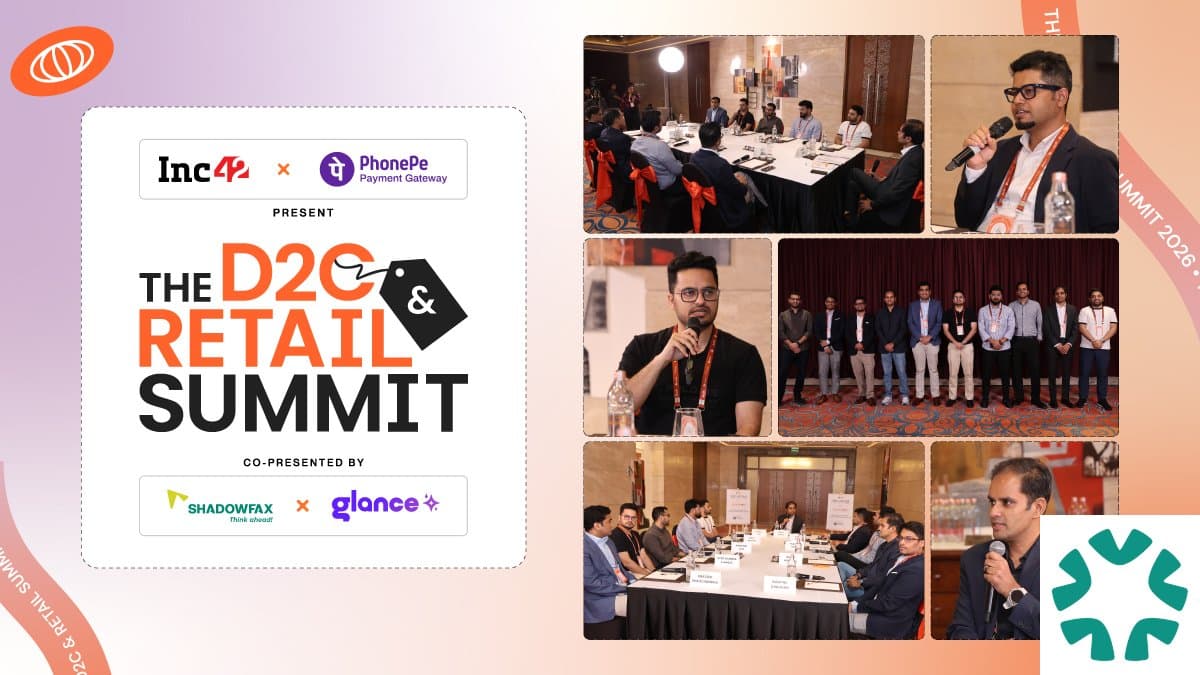
D2C founders face growing complexity as they expand across marketplaces, quick commerce, and offline channels. A recent closed-door roundtable hosted by Inc42 and PhonePe Payment Gateway brought together founders and leaders from eight consumer brands to discuss how to maintain profitability and control while scaling.

Editor, Lazyfounder
Inventory and returns erode margins as brands grow
According to Inc42, D2C brands often lose visibility into SKU-level margins, inventory ageing, and returns as they scale. Founders at the roundtable reported that these issues can quietly erode profitability, even when sales numbers appear strong.
Anuj Nevatia, cofounder of Bacca Bucci, explained that dead stock accumulates when certain SKUs stop selling, despite overall product performance looking healthy. The brand tracks contribution margins and inventory ageing at the SKU level, flagging stock held beyond 90 days for intervention.
Alok Paul, COO of Littlebox, shared that the brand maintains finished goods inventory for 17-20 days and forecasts demand 15 days ahead. When inventory rises and sales slow, discounts become necessary to clear stock.
Akash Agarwal, VP and head of international business at Noise, highlighted returns as a major challenge, particularly in electronics where gross margins are relatively low. Noise analyses customer drop-offs in the purchase journey and closely monitors return patterns to manage profitability.
Channel economics demand tailored strategies
Expanding into new sales channels—such as marketplaces, quick commerce, and offline retail—introduces distinct customer behaviors, costs, and operating requirements. Founders emphasized that a product’s success on one channel does not guarantee profitability on another.
Shreyansh Jain, founder of Nutrabay, described the concept of "category-channel fit," which involves assessing whether a product can sustain margins in a specific channel. This evaluation is critical before committing resources to expansion.
Syed Shamoail Haque, founder of Barosi, shared how the brand uses trial subscriptions to reduce customer acquisition friction. Tracking retention at 30 and 90 days revealed that customers who stayed beyond 90 days were significantly more likely to remain loyal, guiding the brand’s channel strategy.
Founders must build systems to maintain control
As D2C brands scale, founders can no longer oversee every operational detail directly. The roundtable discussion emphasized the need to transition from founder-driven oversight to scalable systems and processes.
Harshit Vij, founder and CEO of FREECULTR, noted that founders should focus on building control measures and hiring capable teams to distribute decision-making. This ensures visibility into key metrics without creating bottlenecks.
Shreyansh Jain added that Nutrabay uses a product-classification framework to group SKUs based on revenue, gross margin, and potential. This system allows teams to make data-driven decisions aligned with the brand’s broader goals.
Prateek Bhagchandka, founder and CEO of M.O.M Meal of the Moment, highlighted the operational challenges of managing disparate channels like airlines, railways, and quick commerce. Each channel requires tailored execution, making robust systems essential to avoid losing control.
What this means
Lazyfounder analysis — our interpretation, not reported fact.
For D2C founders and operators, the roundtable’s insights underscore that scaling is not just about expanding reach—it’s about managing the hidden costs and complexities that come with growth. Inventory inefficiencies, returns, and mismatched channel economics can erode margins, even when sales are rising. The brands that succeed will be those that prioritize visibility into these factors, treating them as core components of their strategy rather than afterthoughts.
For founders outside the D2C space, these lessons are equally relevant. Any startup expanding into new markets or sales channels must assess the unique costs, customer behaviors, and operational demands of each channel. Building scalable systems early—such as SKU-level tracking or retention frameworks—can prevent costly mistakes and ensure sustainable growth.
Sources
- inc42.com · 2026-09-08
How Can D2C Founders Scale Business Without Losing Control?
This story is an original summary drafted with AI by Lazyfounder from the reporting listed above and checked by automated validation. Facts are attributed to their original publishers; sections marked as analysis are Lazyfounder's. Where a source is in another language, facts were machine-translated and quotations are reported, not reproduced. Read the original coverage via the links, and see our AI policy and corrections policy.

About the author
Editor, Lazyfounder
Tarun Mottlia edits LazyFounders, covering Indian startups, funding rounds, AI and product launches. Every story on the site is AI-assisted and checked against its cited sources before publication.
More stories by Tarun MottliaGet the LazyFounder Brief
Startup, funding and AI news in a five-minute read. Join the early-access list.
