

Tata Trusts vice-chairmen publicly break ranks over listing and leadership
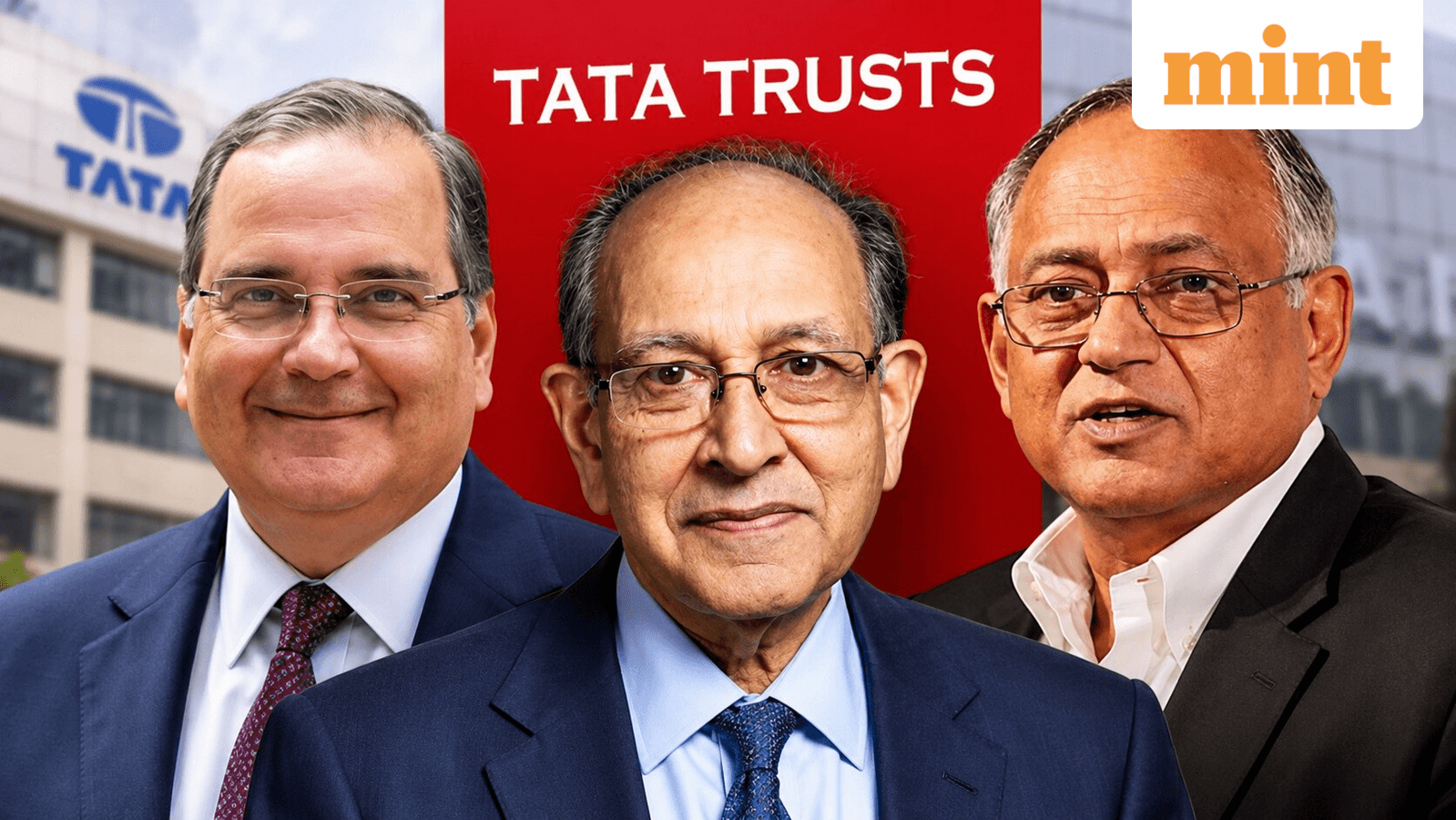
Tata Trusts vice-chairmen Venu Srinivasan and Vijay Singh have publicly rejected trustee Darius Khambata’s opposition to Tata Sons’ proposed stock market listing and N. Chandrasekaran’s reappointment. Their 11 November letter exposes deep divisions within the Trusts, which control 66% of Tata Sons, the holding company of India’s $277 billion conglomerate. The dispute threatens to delay critical decisions and raise investor concerns about governance at flagship companies like TCS.

Editor, Lazyfounder
30 SEC SUMMARY
- Two Tata Trusts vice-chairmen, Venu Srinivasan and Vijay Singh, publicly rebuked trustee Darius Khambata in an 11 November letter.
- The dispute focuses on the Reserve Bank of India’s 2026 order forcing Tata Sons to list—a decision the Trusts oppose but the Tata Sons board supports.
- N. Chandrasekaran’s reappointment as chairman remains unresolved after a seven-month deferral, deepening instability across the $277 billion Tata Group.
- Khambata’s recent exit from the Trusts has left Chairman Noel Tata isolated in his opposition to both the listing and Chandrasekaran’s continued leadership.
- The rift threatens governance at flagship companies like TCS, where investors may doubt the resilience of the Tata model under public ownership.
TABLE OF CONTENTS
- Tata Trusts vice-chairmen challenge trustee’s stance on listing and leadership
- Listing risk or governance strength? Trusts trade barbs
- Seven months without a decision: Chandrasekaran’s leadership in limbo
- Board independence at the heart of the dispute
- Khambata’s exit leaves Noel Tata isolated
- RBI’s 2026 order leaves Tata Sons no choice but to list
- What this means
- Key takeaways
- Sources
KEY HIGHLIGHTS
- Venu Srinivasan and Vijay Singh accused trustee Darius Khambata of misrepresenting disputes over Tata Sons’ proposed listing and N. Chandrasekaran’s reappointment.
- The Reserve Bank of India’s 2026 mandate requires Tata Sons to list, a decision the Trusts oppose but the Tata Sons board supports.
- Chandrasekaran’s reappointment, recommended by two Trusts in July 2025, was deferred until February 2026—leaving his role unresolved for seven months.
- Khambata’s November exit from the Trusts removed a key ally of Chairman Noel Tata, who opposes both the listing and Chandrasekaran’s continuation.
- Srinivasan and Singh argued that strong governance—not private ownership—preserves the Tata model, citing TCS as an example.
- The Tata Sons board reaffirmed Chandrasekaran’s reappointment in September 2026 despite Noel Tata’s opposition, calling it necessary to end leadership uncertainty.
Tata Trusts vice-chairmen challenge trustee’s stance on listing and leadership
Tata Trusts vice-chairmen Venu Srinivasan and Vijay Singh broke weeks of silence in an 11 November letter. They accused trustee Darius Khambata of distorting the facts in Tata Sons’ disputes over a proposed stock market listing and N. Chandrasekaran’s reappointment. Their public rebuke, the first in the Trusts’ history, laid bare divisions that had until now played out behind closed doors.
The Trusts control 66% of Tata Sons, the holding company of India’s largest conglomerate—a $277 billion empire that includes everything from steel mills to software giant TCS.
Listing risk or governance strength? Trusts trade barbs
Srinivasan and Singh dismissed Khambata’s argument that listing Tata Sons would destroy the group’s governance model. They countered that the character of an organisation depends on its governance, not whether it is publicly traded. TCS, they noted, remains majority-owned by the Trusts yet operates under public scrutiny without compromising Tata values.
The letter also defended Tata Sons’ two-year engagement with the Reserve Bank of India. The RBI’s 2026 decision to block deregistration and require listing followed a formal review, not allegations of mismanagement.
Seven months without a decision: Chandrasekaran’s leadership in limbo
Chandrasekaran’s reappointment has been in limbo since July 2025. The Sir Dorabji Tata Trust and Sir Ratan Tata Trust unanimously recommended his continuation, but the decision was deferred until February 2026. That left him in charge for seven months without formal confirmation.
Srinivasan and Singh questioned Khambata’s silence during the deferral. They only heard objections after the Tata Sons board moved to confirm the reappointment in September. The board called the move necessary to end uncertainty and protect the chairman’s office.
Board independence at the heart of the dispute
The vice-chairmen framed the dispute as a fight for board independence. A Supreme Court ruling in the Tata-Mistry case, they argued, requires Trust-nominated directors to act in Tata Sons’ interest—not the Trusts’ instructions. Their letter also raised governance concerns about changes to the Sir Dorabji Tata Trust in November 2025, claiming the process lacked unanimous consent and risked sidelining collective decision-making.
Khambata’s exit leaves Noel Tata isolated
The rift deepened after Khambata declined reappointment earlier this month. His exit stripped Noel Tata, chairman of Tata Trusts, of a key ally. Both men oppose Chandrasekaran’s reappointment and the proposed listing, arguing public ownership would weaken the governance structure that protects the group’s long-term interests. Srinivasan and Singh now openly reject that stance.
The Trusts’ split leadership complicates compliance with the RBI’s 2026 listing mandate.
RBI’s 2026 order leaves Tata Sons no choice but to list
The Reserve Bank of India rejected Tata Sons’ bid to surrender its Core Investment Company registration in September 2026. The RBI classified the holding company as an upper-layer non-banking financial company, making listing unavoidable. Earlier LazyFounder reporting revealed the Trusts had explored merging operating companies into Tata Sons to avoid listing—but the plan stalled amid resistance from the Tata Sons board and uncertain regulatory approval.
What this means
Lazyfounder analysis — our interpretation, not reported fact.
The Reserve Bank of India’s 2026 listing mandate leaves Tata Trusts with no regulatory path to avoid public ownership, and the public feud risks delaying critical decisions at group companies already facing investor scrutiny.
Key takeaways
- The RBI’s 2026 order to list Tata Sons is final, and internal divisions make compliance harder without a unified Trusts position.
- Chandrasekaran’s unresolved reappointment creates operational risks for Tata Group subsidiaries needing board approvals for foreign listings or capital raises.
- Flagship companies like TCS must now defend their governance model to investors, as doubts about the Tata model’s resilience under public ownership surface in earnings calls.
- Strategic decisions—from mergers to debt restructuring—may stall until Tata Trusts resolves its leadership split.
Related on Lazyfounder
Sources
- Mint (Technology) · 2026-11-13
Tata Trusts feud deepens as Venu Srinivasan, Vijay Singh challenge Khambata's stand on listing, leadership
This story is an original summary drafted with AI by Lazyfounder from the reporting listed above and checked by automated validation. Facts are attributed to their original publishers; sections marked as analysis are Lazyfounder's. Where a source is in another language, facts were machine-translated and quotations are reported, not reproduced. Read the original coverage via the links, and see our AI policy and corrections policy.

About the author
Editor, Lazyfounder
Tarun Mottlia edits LazyFounders, covering Indian startups, funding rounds, AI and product launches. Every story on the site is AI-assisted and checked against its cited sources before publication.
More stories by Tarun MottliaGet the LazyFounder Brief
Startup, funding and AI news in a five-minute read. Join the early-access list.
