
Safaricom Fuliza revenue jumps 86% to $38M as borrowers double
Safaricom’s overdraft service Fuliza more than doubled its borrower base to 17.2 million in the six months to September 2026, driving an 86% surge in revenue to KES 4.9 billion ($38 million). The growth came even as average loan sizes shrank and repayment ratios slipped across Safaricom’s lending products.

Editor, Lazyfounder
30 SEC SUMMARY
- Safaricom’s M-PESA overdraft service Fuliza reported 86% revenue growth to KES 4.9 billion ($38 million) in H1 2026.
- Borrower numbers nearly doubled to 17.2 million, but average loan sizes shrank 24.6% to KES 192 ($1.49).
- Fuliza now accounts for 71% of Safaricom’s lending revenue, as repayment ratios decline across its credit products.
Revenue soars, loan sizes shrink
Safaricom’s M-PESA overdraft facility Fuliza generated KES 4.9 billion ($38 million) in revenue in the six months ending September 2026, an 86% increase from the same period a year earlier. The service, a partnership with NCBA Bank and Kenya Commercial Bank (KCB), saw its borrower base nearly double to 17.2 million users, according to investor disclosures released in Nairobi this week.
The average Fuliza loan size fell 24.6% to KES 192 ($1.49), even as total disbursements rose 84% to KES 1.16 trillion ($8.97 billion). TechCabal calculates that Fuliza now accounts for 71% of the revenue from Safaricom’s six lending products—up from a smaller share a year ago.
Repayment ratios decline as borrowing base widens
Repayment performance weakened across Safaricom’s credit portfolio. Fuliza’s repayment-to-disbursement ratio slipped to 99.6% from 102.4% a year earlier, KCB M-PESA’s ratio dropped to 96.7% from 99.5%, and M-Shwari’s fell to 105.3% from 108%. Active customers for KCB M-PESA and M-Shwari both declined—by 7% and 5.8%, respectively—while Fuliza’s user base surged.
CEO Peter Ndegwa told investors that behavioral scoring and multiple funding partners are helping the company extend "responsible credit" and manage portfolio risk. However, Safaricom has not disclosed either the non-performing loan ratio for Fuliza or how credit risk is shared with its banking partners.
Credit outpaces payments revenue
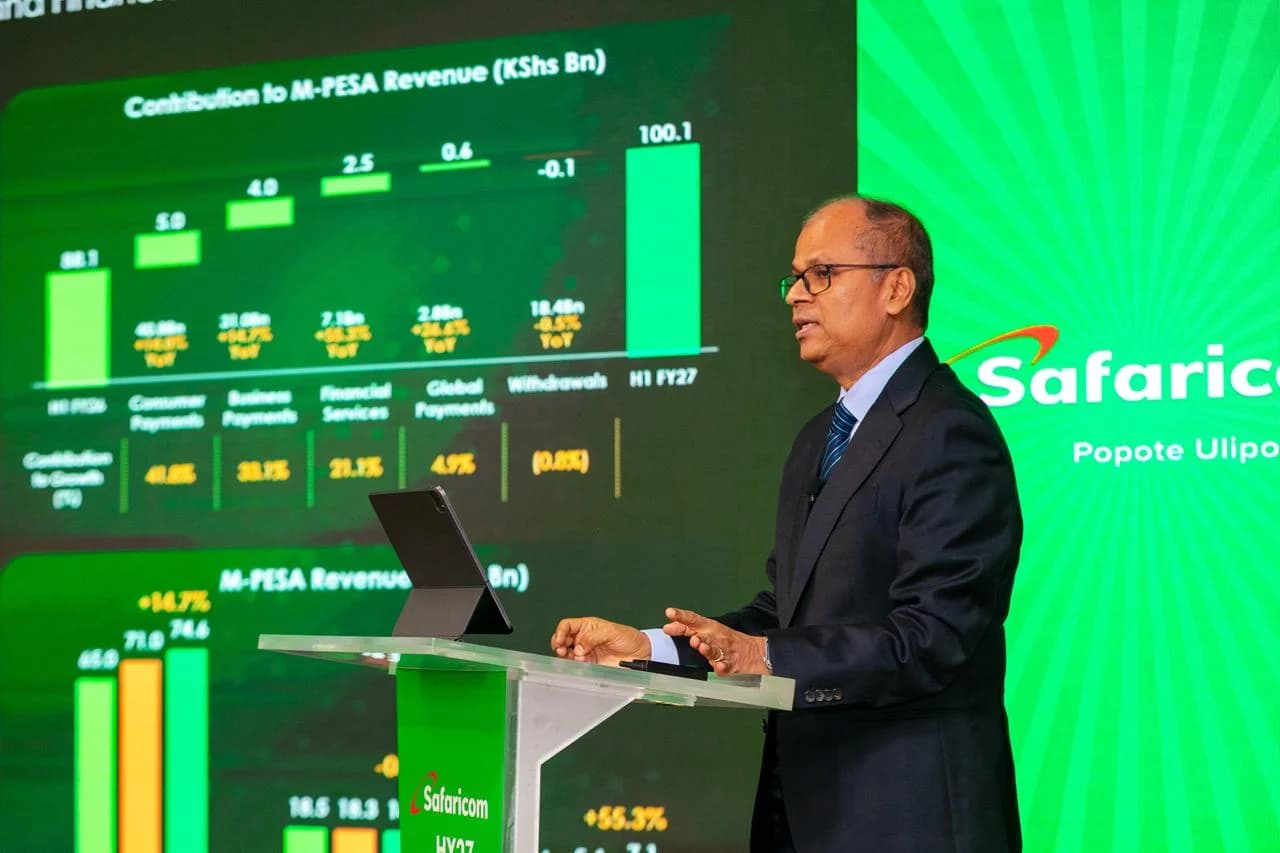
Safaricom’s broader financials show the same pattern. Overall M-PESA revenue grew 13.6% to KES 100.07 billion ($775.7 million), while the company’s credit revenue jumped 54.4% to KES 7 billion ($54.3 million).
Earlier reporting on Kenya’s mobile money ecosystem noted a shift away from physical agents toward direct digital transactions. Fuliza’s growth aligns with that trend: smaller, more frequent advances appear to be replacing traditional cash-based lending for many users.
What this means
Lazyfounder analysis — our interpretation, not reported fact.
Safaricom’s results show two competing trends: rapid adoption of mobile credit is driving top-line growth, while smaller ticket sizes and slipping repayment ratios suggest borrowers may be under growing strain. For operators considering similar lending products, Fuliza’s dominance of Safaricom’s credit portfolio is a proof point—but the falling repayment-to-disbursement ratio (now 99.6%) signals elevated risk that partners and platforms will need to monitor closely.
Key takeaways
- Fuliza’s 86% revenue growth outpaces Safaricom’s overall M-PESA revenue growth of 13.6%, confirming mobile credit as the fastest-growing segment.
- The 24.6% drop in average loan size—while borrower numbers surged—points to a broader base of users taking smaller, more frequent advances.
- Repayment ratios for Fuliza, KCB M-PESA, and M-Shwari all declined, raising questions about asset quality amid rising loan volumes.
- With Fuliza generating 71% of Safaricom’s lending revenue, its performance now dictates the economics of the company’s credit strategy.
Related on Lazyfounder
Sources
- TechCabal · 2026-11-05
Safaricom makes more from M-PESA overdrafts as borrower numbers surge
This story is an original summary drafted with AI by Lazyfounder from the reporting listed above and checked by automated validation. Facts are attributed to their original publishers; sections marked as analysis are Lazyfounder's. Where a source is in another language, facts were machine-translated and quotations are reported, not reproduced. Read the original coverage via the links, and see our AI policy and corrections policy.

About the author
Editor, Lazyfounder
Tarun Mottlia edits LazyFounders, covering Indian startups, funding rounds, AI and product launches. Every story on the site is AI-assisted and checked against its cited sources before publication.
More stories by Tarun MottliaGet the LazyFounder Brief
Startup, funding and AI news in a five-minute read. Join the early-access list.
