
Roku Pro Series OLED TV review: Affordable but with trade-offs
Roku’s Pro Series OLED TV, released in September 2026, aims to bring OLED technology to budget-conscious consumers. Priced at $799 for the 65-inch model, it offers key features like Dolby Vision and 120Hz refresh rate but sacrifices brightness, sound quality, and premium features.

Editor, Lazyfounder
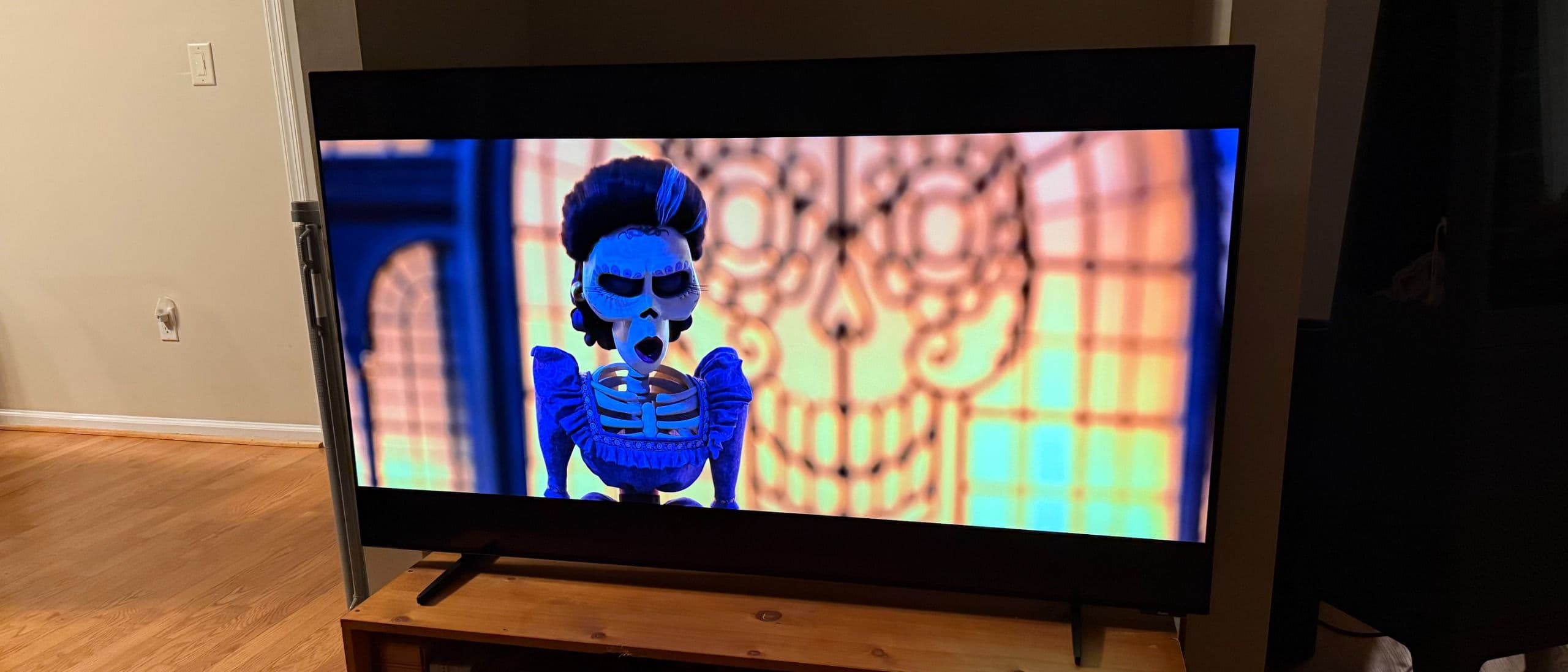
Roku’s Pro Series OLED TV, released in September 2026, aims to bring OLED technology to budget-conscious consumers. Priced at $799 for the 65-inch model, it offers key features like Dolby Vision and 120Hz refresh rate but sacrifices brightness, sound quality, and premium features.
30 SEC SUMMARY
- Roku launched its Pro Series OLED TV in September 2026, offering 55-inch and 65-inch models at $999.99 and $1,199.99, respectively.
- The 65-inch model’s price has since dropped to $799, positioning it as an affordable OLED option.
- The TV features a 120Hz refresh rate, Dolby Vision, HDR10+, and Dolby Atmos but lacks premium features like hands-free control and Dolby Vision IQ.
- Reviewers note trade-offs in brightness (462 nits), sound quality, and cable management for affordability.
TABLE OF CONTENTS
- Roku Pro Series OLED TV debuts as budget-friendly option
- Trade-offs for affordability
- Smart home integration and ecosystem support
- Competitive landscape
- What this means
- Key takeaways
- FAQ
- Sources
KEY HIGHLIGHTS
- Roku released the Pro Series OLED TV in September 2026, with 55-inch and 65-inch models priced at $999.99 and $1,199.99 at launch.
- The 65-inch model is now available for $799, making it one of the more affordable OLED TVs on the market.
- Features include a 120Hz refresh rate, Dolby Vision, HDR10+, and Dolby Atmos, but lack hands-free control and Dolby Vision IQ.
- Brightness measured at 462 nits in HDR Filmmaker Mode, lower than premium competitors.
- Design changes reduce cable management options and sound quality compared to previous Roku models.
Roku Pro Series OLED TV debuts as budget-friendly option
In September 2026, Roku released its Pro Series OLED TV, marking the company’s entry into the OLED television market. The lineup includes a 55-inch model launched at $999.99 and a 65-inch model at $1,199.99. According to TechRadar, the 65-inch version is now available for $799, a price cut that positions it as one of the more affordable OLED TVs currently on the market.
The TV features an OLED panel, which TechRadar notes delivers deeper blacks and improved contrast compared to traditional LED screens. It supports a 120Hz refresh rate, Dolby Vision, HDR10+, and Dolby Atmos, catering to both movie enthusiasts and gamers. However, it lacks some premium features, including hands-free control, Dolby Vision IQ, and DTS support.
Trade-offs for affordability
TechRadar’s review highlights several compromises Roku made to keep the Pro Series OLED TV at an accessible price point. Brightness was measured at 462 nits in HDR Filmmaker Mode using a 10% window, which is lower than higher-end OLED TVs from competitors like LG and Samsung. The reviewer also noted that reflections in bright rooms were manageable but emphasized that the TV is not designed for well-lit environments.
Sound quality has also been reduced compared to previous Roku Pro models. The review describes the audio performance as a noticeable downgrade, though the TV still supports Dolby Atmos for spatial audio.
Design changes include a thinner profile, but cable management has been simplified, and the reviewer noted this as a drawback for users with multiple devices. Additionally, the TV lacks a dedicated gaming menu, though it supports 4K gaming at 120Hz, a feature valued by gamers.
Smart home integration and ecosystem support
The Roku Pro Series OLED TV integrates with multiple smart home ecosystems, including Roku Smart Home, Apple Home, Alexa, and Google Home. This versatility allows users to control the TV and other connected devices through their preferred platform.
The TV’s color performance was measured at 71% coverage of the BT.2020 color gamut and 96% of DCI-P3 in Filmmaker Mode, delivering vibrant and accurate colors for most content. However, the review suggests that while these numbers are solid, they may not match the performance of more expensive OLED models.
Competitive landscape
Roku’s entry into the OLED TV market intensifies competition among budget-friendly options. Competitors like TCL, Hisense, and LG offer OLED or high-end LED TVs at similar price points, often with additional features or higher brightness levels. For example, Sony’s partnership with TCL for manufacturing, announced earlier in 2026, could lead to more competitive pricing in the premium TV segment.
The Pro Series OLED TV’s affordability may appeal to consumers who prioritize OLED technology but are unwilling to invest in higher-end models. However, its trade-offs in brightness, sound, and design could deter buyers seeking a more premium experience.
What this means
Lazyfounder analysis — our interpretation, not reported fact.
Roku’s Pro Series OLED TV is a practical choice for consumers who want OLED picture quality without the premium price tag. However, its compromises—lower brightness, reduced sound quality, and fewer features—reflect its budget positioning. Founders and operators in the consumer electronics space should note the demand for affordable OLED options, but also recognize that price-sensitive buyers may still expect a baseline of performance and features.
For startups in smart home or entertainment ecosystems, Roku’s integration with multiple platforms (Apple Home, Alexa, Google Home) demonstrates the importance of cross-compatibility. However, the lack of hands-free control and other premium features suggests that Roku is prioritizing cost over innovation in this segment. Competitors may find opportunities to differentiate by focusing on brighter screens, better sound, or more robust smart features at similar price points.
Key takeaways
- The Roku Pro Series OLED TV is targeted at budget-conscious consumers looking for OLED technology.
- It supports key formats like Dolby Vision, HDR10+, and Dolby Atmos but omits premium features found in higher-end models.
- Brightness and sound quality are notably lower than competitors, reflecting its entry-level positioning.
- The TV integrates with smart home ecosystems, including Roku Smart Home, Apple Home, Alexa, and Google Home.
- Design changes prioritize thinner profiles but compromise cable management and audio performance.
FAQ
What are the key features of the Roku Pro Series OLED TV?
The Roku Pro Series OLED TV includes an OLED panel, 120Hz refresh rate, Dolby Vision, HDR10+, Dolby Atmos, and support for smart home ecosystems like Apple Home, Alexa, and Google Home. It lacks hands-free control, Dolby Vision IQ, and DTS support.
How does the Roku Pro Series OLED TV compare to competitors in brightness?
The TV’s brightness was measured at 462 nits in HDR Filmmaker Mode, which is lower than many premium OLED TVs from competitors like LG and Samsung. This makes it less suitable for brightly lit rooms.
Is the Roku Pro Series OLED TV a good choice for gamers?
While it supports 4K gaming at 120Hz, the lack of a dedicated gaming menu may disappoint some gamers. However, its 120Hz refresh rate and OLED panel make it a viable option for casual gaming.
What are the main drawbacks of the Roku Pro Series OLED TV?
The main drawbacks include lower brightness, reduced sound quality, simplified cable management, and the absence of premium features like hands-free control and Dolby Vision IQ.
Why did Roku release a cheaper OLED TV?
Roku likely aimed to make OLED technology more accessible to a broader audience by offering a lower-priced option. However, this required compromises in brightness, sound, and design to maintain affordability.
Related on Lazyfounder
Sources
- TechRadar · 2026-10-06
'I'm a little conflicted': I tested the Roku Pro Series OLED TV for two weeks, and while it's a good affordable way into OLED, it's lacking some key features that I enjoy
This story is an original summary drafted with AI by Lazyfounder from the reporting listed above and checked by automated validation. Facts are attributed to their original publishers; sections marked as analysis are Lazyfounder's. Where a source is in another language, facts were machine-translated and quotations are reported, not reproduced. Read the original coverage via the links, and see our AI policy and corrections policy.

About the author
Editor, Lazyfounder
Tarun Mottlia edits LazyFounders, covering Indian startups, funding rounds, AI and product launches. Every story on the site is AI-assisted and checked against its cited sources before publication.
More stories by Tarun MottliaGet the LazyFounder Brief
Startup, funding and AI news in a five-minute read. Join the early-access list.
