

Chennai startup builds software-defined radios for 6G research bands
A Chennai-based startup is developing software-defined radios for the 7–24 GHz FR3 band, a range expected to be critical for 6G research. REIO Systems, incorporated in July 2023, is targeting institutional customers like research labs and telecom companies with modular, cost-competitive hardware.

Editor, Lazyfounder
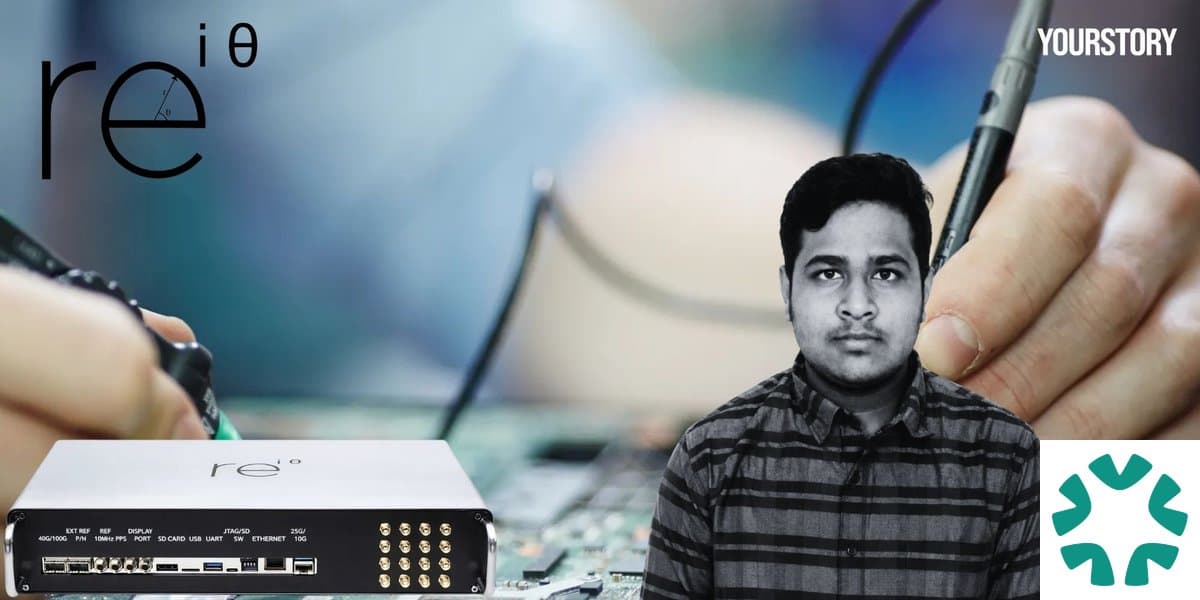
TABLE OF CONTENTS
KEY HIGHLIGHTS
- REIO Systems builds software-defined radios covering the 7–24 GHz FR3 band, a key range for 6G research.
- Incorporated in July 2023 in Chennai with directors Lakshman Bhaskaran and Ravi Teja Devara.
- Platform competes with American and European test equipment, offering modular and synchronisable hardware with onboard FPGA processing.
- Customers include research groups, telecom equipment makers, defence electronics firms and drone manufacturers.
- Reported revenue under ₹10 crore for the year ended March 2025; raised about $52,000 in seed funding.
- Selected for Bharat Innovates 2026, exploring partnerships with European research institutions.
What the company builds
REIO Systems, incorporated in Chennai in July 2023, develops software-defined radio (SDR) platforms covering the 7 to 24 GHz FR3 band. This range is critical for 6G research because it balances bandwidth and range, sitting between the frequencies used by current mobile networks and millimetre-wave bands.
The hardware is designed for modularity and synchronisation, allowing multiple units to be linked for experiments like massive MIMO and beamforming. According to YourStory, the platform uses field-programmable gate arrays (FPGAs) to handle real-time processing on the board, reducing the need for external graphics processors in laboratory setups.
Target markets and competition
The company targets research groups, telecom equipment manufacturers, defence electronics companies and drone makers. These customers typically purchase test equipment from American or European suppliers. REIO Systems competes by offering lower costs and an open architecture.
While the company’s public materials reference defence research groups and wireless startups as users, it has not disclosed specific customer names, order values or units sold.
Financials and partnerships
REIO Systems reported revenue under ₹10 crore for the fiscal year ending March 2025. Corporate filings cited by YourStory show the company raised about $52,000 in seed funding and has a paid-up capital of ₹1 lakh.
The startup was selected for the Bharat Innovates 2026 cohort and presented in Nice in June. It indicated plans to collaborate with European research institutions on FR3 and massive MIMO testbeds.
Why early revenue is possible
Test and measurement equipment is typically purchased by institutions with dedicated budgets, unlike consumer hardware, which often requires larger funding rounds before generating revenue. This dynamic allows hardware startups like REIO Systems to achieve early sales.
The company’s focus on the FR3 band and its ties to IIT Madras reflect a strategy of serving research-driven demand ahead of 6G standardisation.
What this means
Lazyfounder analysis — our interpretation, not reported fact.
REIO Systems demonstrates that niche hardware startups can generate revenue early by targeting institutional customers with specific technical needs. The FR3 band is a near-term opportunity for companies building test equipment, particularly as 6G research accelerates globally. For founders in India, it highlights a path to compete with foreign manufacturers by focusing on cost, modularity, and open architectures—key considerations for research labs and defence applications. This model also reduces dependence on large funding rounds, making it viable for startups with limited capital.
Key takeaways
- The FR3 band (7–24 GHz) is critical for 6G development, creating demand for radios that current hardware does not support—an opportunity for hardware startups in this space.
- Early revenue in test and measurement equipment is achievable due to institutional budgets, unlike consumer hardware, which often requires longer funding runways.
- Cost and open architecture are differentiators in a market dominated by foreign manufacturers, particularly for research institutions with limited budgets.
- Modular, synchronisable hardware for massive MIMO and beamforming tests provides a technical edge for startups targeting telecom R&D and defence applications.
Sources
This story is an original summary drafted with AI by Lazyfounder from the reporting listed above and checked by automated validation. Facts are attributed to their original publishers; sections marked as analysis are Lazyfounder's. Where a source is in another language, facts were machine-translated and quotations are reported, not reproduced. Read the original coverage via the links, and see our AI policy and corrections policy.

About the author
Editor, Lazyfounder
Tarun Mottlia edits LazyFounders, covering Indian startups, funding rounds, AI and product launches. Every story on the site is AI-assisted and checked against its cited sources before publication.
More stories by Tarun MottliaGet the LazyFounder Brief
Startup, funding and AI news in a five-minute read. Join the early-access list.
