
Razer Blade 16 (2026) Launches as Premium Gaming Laptop with RTX 5090 and OLED Display
Razer has launched the Blade 16 (2026), a premium gaming laptop featuring an Nvidia RTX 5090 GPU, Intel Core Ultra 9 CPU, and a 16-inch OLED display. While praised for its performance and design, the laptop faces criticism for its high price and lack of an Ethernet port.

Editor, Lazyfounder
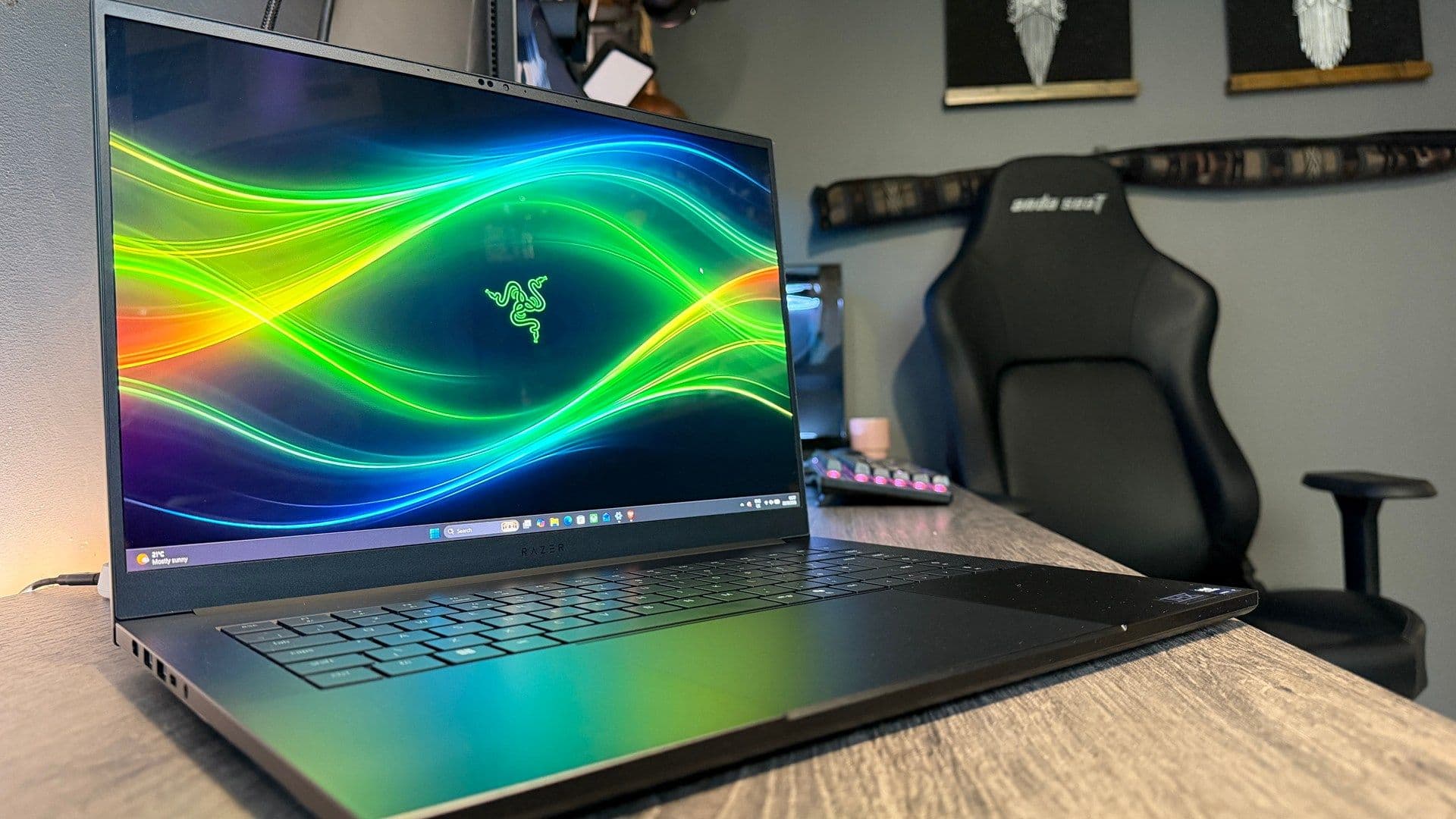
Razer has launched the Blade 16 (2026), a premium gaming laptop featuring an Nvidia RTX 5090 GPU, Intel Core Ultra 9 CPU, and a 16-inch OLED display. While praised for its performance and design, the laptop faces criticism for its high price and lack of an Ethernet port.
30 SEC SUMMARY
- Razer has launched the Blade 16 (2026), a high-end gaming laptop with an Nvidia RTX 5090 GPU and Intel Core Ultra 9 386H CPU.
- The laptop features a 16-inch OLED display with 2560 x 1600 resolution and a 240Hz refresh rate, targeting gamers and professionals.
- Starting at $3,499, the Blade 16 (2026) is criticized for its high price and lack of an Ethernet port.
- Battery life is limited to 81 minutes for gaming and 3.5 hours for video streaming.
- The laptop is available globally but faces high demand or supply constraints in some regions.
TABLE OF CONTENTS
- Razer Unveils Blade 16 (2026) with High-End Gaming Hardware
- Design and Build: Premium but With Trade-Offs
- Performance and Battery Life: Strong but Not Without Flaws
- Pricing and Availability
- Background: Razer’s Market Position
- What this means
- Key takeaways
- FAQ
- Sources
KEY HIGHLIGHTS
- Razer Blade 16 (2026) launches with an Nvidia RTX 5090 GPU and Intel Core Ultra 9 386H CPU.
- Features a 16-inch OLED display with 2560 x 1600 resolution and 240Hz refresh rate.
- Priced at $3,499 in the US, £3,499 in the UK, and AU$5,999 in Australia.
- Lacks an Ethernet port; RAM is soldered, preventing upgrades.
- Battery life lasts 81 minutes for gaming and 3.5 hours for video streaming.
Razer Unveils Blade 16 (2026) with High-End Gaming Hardware
Razer has launched the Blade 16 (2026), a premium gaming laptop featuring an Nvidia GeForce RTX 5090 GPU with 175W power delivery. According to TechRadar, the laptop also includes an Intel Core Ultra 9 386H CPU and 32GB of LPDDR5X RAM running at 9,600 MT/s. The combination of these components positions the Blade 16 as a high-performance machine for gaming and demanding workloads.
The laptop sports a 16-inch OLED display with a 2560 x 1600 resolution and a 240Hz refresh rate. TechRadar notes that the display’s pixel density of around 189 PPI offers sharper visuals compared to standard 4K displays, making it suitable for both gaming and creative tasks.
Design and Build: Premium but With Trade-Offs
The Blade 16 (2026) features a premium aluminum chassis with a soft-touch satin finish, described by TechRadar as simple, elegant, and sleek. However, the laptop lacks an Ethernet port, relying instead on Wi-Fi 7 and Bluetooth 6.0 for connectivity. This omission may frustrate users who prioritize wired network stability.
Another compromising design choice is the soldered RAM, which prevents future upgrades. This could be a drawback for users looking to extend the laptop’s lifespan through memory upgrades.
Performance and Battery Life: Strong but Not Without Flaws
Performance benchmarks reported by TechRadar highlight the laptop’s capabilities. In Cyberpunk 2077, the Blade 16 achieved 35 frames per second (fps) on the Ray Tracing: Ultra preset without DLSS or Multi Frame Gen (MFG). When DLSS was set to Quality with MFG enabled, the frame rate increased to an average of 115.6 fps. The laptop also scored 128 points in Cinebench’s single-core test, reportedly the highest result TechRadar has seen for a laptop.
Storage is handled by a Lexar NM790 PCIe 4.0 SSD, though specific performance metrics were not provided. Battery life, however, remains a weak point. TechRadar reported that the laptop lasted 81 minutes in PC Mark’s gaming test and approximately 3.5 hours for video streaming. The reviewer also encountered crashes during the PC Mark Video benchmark, indicating potential stability issues.
The laptop is powered by a 280W power brick, reflecting its high energy demands.
Pricing and Availability
The Razer Blade 16 (2026) is priced at $3,499 in the US, £3,499 in the UK, and AU$5,999 in Australia. This positions it as a luxury product, likely targeting enthusiasts and professionals willing to invest in top-tier hardware.
According to TechRadar, the laptop is available globally, though high demand has led to pre-order situations or stock shortages in some regions.
Background: Razer’s Market Position
Razer has long been a key player in the gaming laptop market, competing with brands like Dell’s Alienware and other premium manufacturers. The Blade series is known for its sleek design and high-performance hardware, often appealing to gamers and creative professionals who prioritize portability and power. However, the high price points of Razer’s offerings have consistently been a point of contention among budget-conscious buyers.
What this means
Lazyfounder analysis — our interpretation, not reported fact.
The Razer Blade 16 (2026) is a statement product, reinforcing Razer’s commitment to pushing the boundaries of gaming laptop performance. For founders and operators in the hardware space, it underscores the ongoing demand for high-end components, such as OLED displays and top-tier GPUs, even at premium price points. However, the laptop’s trade-offs—like soldered RAM and the absence of an Ethernet port—highlight the challenges of balancing performance, design, and user flexibility.
For startups in the gaming or creative industries, the Blade 16’s launch is a reminder of the importance of catering to niche audiences willing to pay for cutting-edge technology. At the same time, its limitations serve as a cautionary note about the potential pitfalls of prioritizing performance over practicality. The high price tag and supply constraints may also limit its immediate adoption, leaving room for competitors to capture market share with more affordable or versatile alternatives.
Key takeaways
- The Razer Blade 16 (2026) is positioned as a premium gaming laptop with cutting-edge hardware, including an Nvidia RTX 5090 GPU and Intel Core Ultra 9 CPU.
- Its 16-inch OLED display and high refresh rate cater to both gamers and creative professionals.
- The high price point and soldered RAM may limit its appeal to budget-conscious buyers.
- Performance benchmarks highlight strong results in gaming and processing power, though battery life remains a weak point.
- Availability may be constrained due to high demand, particularly in certain regions.
FAQ
What are the key specifications of the Razer Blade 16 (2026)?
The Razer Blade 16 (2026) features an Nvidia RTX 5090 GPU with 175W power delivery, an Intel Core Ultra 9 386H CPU, 32GB of LPDDR5X RAM, and a 16-inch OLED display with a 2560 x 1600 resolution and 240Hz refresh rate. It also includes a Lexar NM790 PCIe 4.0 SSD.
Why is the Razer Blade 16 (2026) criticized?
The laptop has faced criticism for its high price tag ($3,499 in the US), lack of an Ethernet port, and soldered RAM, which prevents future upgrades. Battery life is also a weak point, lasting only 81 minutes for gaming.
How does the Razer Blade 16 (2026) perform in gaming benchmarks?
According to TechRadar, the laptop achieved 35 fps in Cyberpunk 2077 on the Ray Tracing: Ultra preset without DLSS or Multi Frame Gen (MFG). With DLSS set to Quality and MFG enabled, it reached an average of 115.6 fps.
Is the Razer Blade 16 (2026) available globally?
Yes, the laptop is available globally, but high demand has led to pre-order situations or stock shortages in some regions.
Related on Lazyfounder
Sources
- TechRadar · 2026-09-30
It comes with a mighty price tag, but the Razer Blade 16 (2026) is exceptional in almost every way
This story is an original summary drafted with AI by Lazyfounder from the reporting listed above and checked by automated validation. Facts are attributed to their original publishers; sections marked as analysis are Lazyfounder's. Where a source is in another language, facts were machine-translated and quotations are reported, not reproduced. Read the original coverage via the links, and see our AI policy and corrections policy.

About the author
Editor, Lazyfounder
Tarun Mottlia edits LazyFounders, covering Indian startups, funding rounds, AI and product launches. Every story on the site is AI-assisted and checked against its cited sources before publication.
More stories by Tarun MottliaGet the LazyFounder Brief
Startup, funding and AI news in a five-minute read. Join the early-access list.
