
Valve’s Poker Face Around the Steam Deck 2 Is Finally Starting to Crack
Valve’s next-gen handheld could run the ‘Gainsborough’ chip, and only nerds will understand the significance.
Via Gizmodo
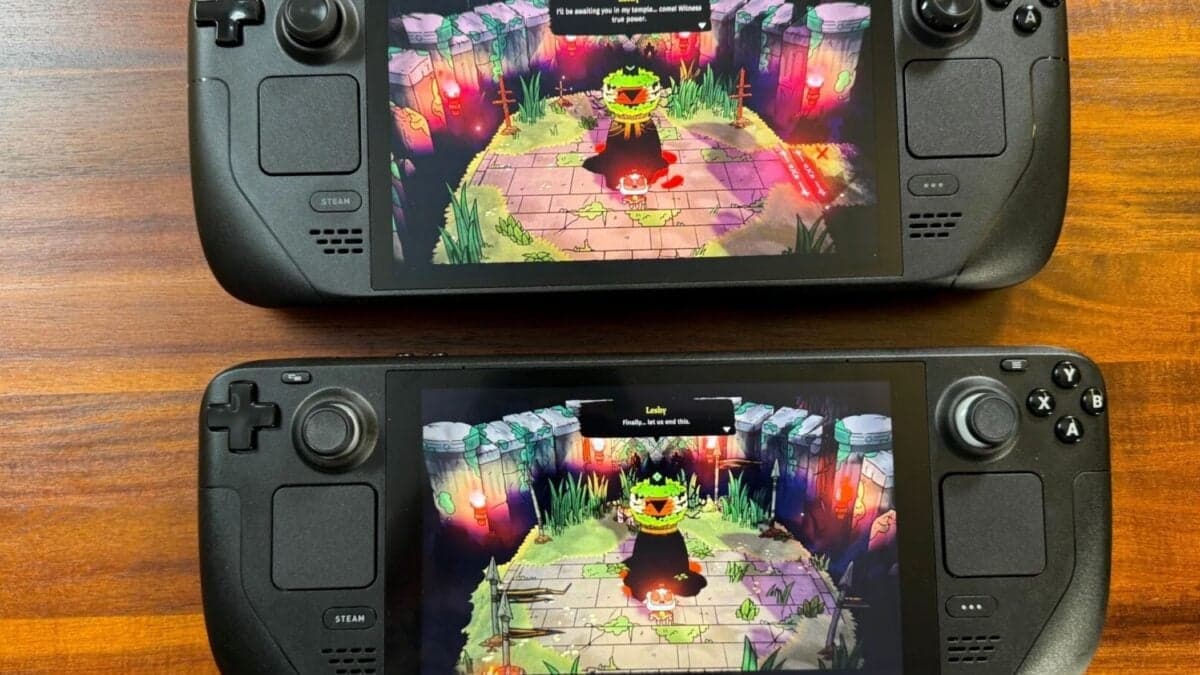
Valve has been very closed-lipped about its sequel to the Steam Deck. The company constantly repeats the line that it wants a “generational leap” between the 2022 handheld and one designed for the modern era. Well, we may be getting just that, according to new leaks that show how Steam Deck 2 could be one of the beefy crows on a wire that may also include the powerful PS6 handheld.
The mostly reliable leaker and YouTuber Moore’s Law is Dead noticed several message boards referring to a “Gainsborough” chip inside AMD’s driver documents. According to the YouTuber’s own documentation, Gainsborough is indeed a new chip, and at the moment all signs point to it being developed for Valve in what could be a next-gen Steam Deck. Moore’s Law is Dead suggests that if we’re reading about it now, then we could see a new handheld arrive in late 2027 or early 2028.
The Steam Deck OLED launched with a special version that included a translucent plastic shell. We hope Valve goes even more off the rails for a Steam Deck 2. © Jorge Jimenez / Gizmodo
There’s an incredibly strong and incredibly nerdy connection between this supposed chip and a sequel to Valve’s popular handheld PC. You see, the original chip designed by AMD for the Steam Deck was codenamed Aerith—the beloved character from Final Fantasy VII. If you’re not up on your JRPG lore, Aerith’s last name is Gainsborough. Not to put the cart before the horse, but that seems like a pretty strong hint, doesn’t it?
Gainsborough is supposedly a “semi-custom” chip made by AMD, much like all the semi-custom processors built for both the original Steam Deck and Steam Machine. However, the one supposedly slated for the Steam Deck 2 is built on a 3nm process—specifically the TSMC-made N3P process—which will make it more efficient than the supposedly larger process node built for the chip inside the Steam Machine.
There’s already been a lot of rigamarole surrounding the Steam Machine’s performance at launch. Valve originally suggested it designed its PC/console hybrid for 4K gaming but later revised its own store page to mention that it’s better for lower resolutions like 1440p. That chip was designed around the older RDNA 3.5 GPU microarchitecture as well as AMD’s Zen 4 CPU. The leaks suggest Gainsborough may be based around AMD’s rumored Zen 6 microarchitecture.
RDNA 5 is supposedly going to allow new chips to improve native rasterization (an integral part of the in-game rendering process for turning basic shapes into pixels on screen) by 5 to 10% compared to today’s current RDNA 4, according to Moore’s Law is Dead’s leaks. The real benefit may be more in how these chips can incorporate next-gen upscaling technology—taking scenes rendered at lower resolutions and upgrading them to a higher resolution while keeping the performance benefits. AMD has been working hand in hand with PlayStation on what has become FSR (FidelityFX super resolution) Redstone and PSSR 2 for the PlayStation 5 Pro. That same technology could come to the Steam Deck 2.
Judging by where the Steam Deck is today, a new chip could bring gamers massive improvements in both performance and battery life. That being said, we don’t have specifics on core counts or clock speeds that would actually give us an idea of how powerful it is compared to the last gen. Moore’s Law is Dead supposes it could be close to the PS6 codenamed Canis handheld, but we’ll have to sit on our hands and wait for a clearer picture.
Nobody, not even Valve, can possibly guesstimate what the Steam Deck 2 may cost. RAM prices decimated any chance of a Steam Machine or Steam Frame VR headset costing less than $1,000. In an interview with IGN, Valve software developer Pierre-Loup Griffais said that the RAM crisis hasn’t changed their plans for what they’re working on with Steam Deck 2. Just don’t get your hopes up for something as cheap as the original $400 Steam Deck four years ago.
Courtesy
This story was originally published by Gizmodo. All rights belong to the original publisher.
Read the original on gizmodo.com ↗