
Prediction markets struggle to escape the gambling label
Prediction markets are gaining traction as tools for crowd-sourced intelligence, but their resemblance to gambling platforms creates regulatory and perceptual challenges. African startups like Bayse Markets and Busha’s Signal are processing millions in trades, yet they struggle with liquidity, market manipulation, and the gambling label. Meanwhile, global platforms like Polymarket and Kalshi see most of their volume driven by sports betting, raising questions about their long-term legitimacy.

Editor, Lazyfounder
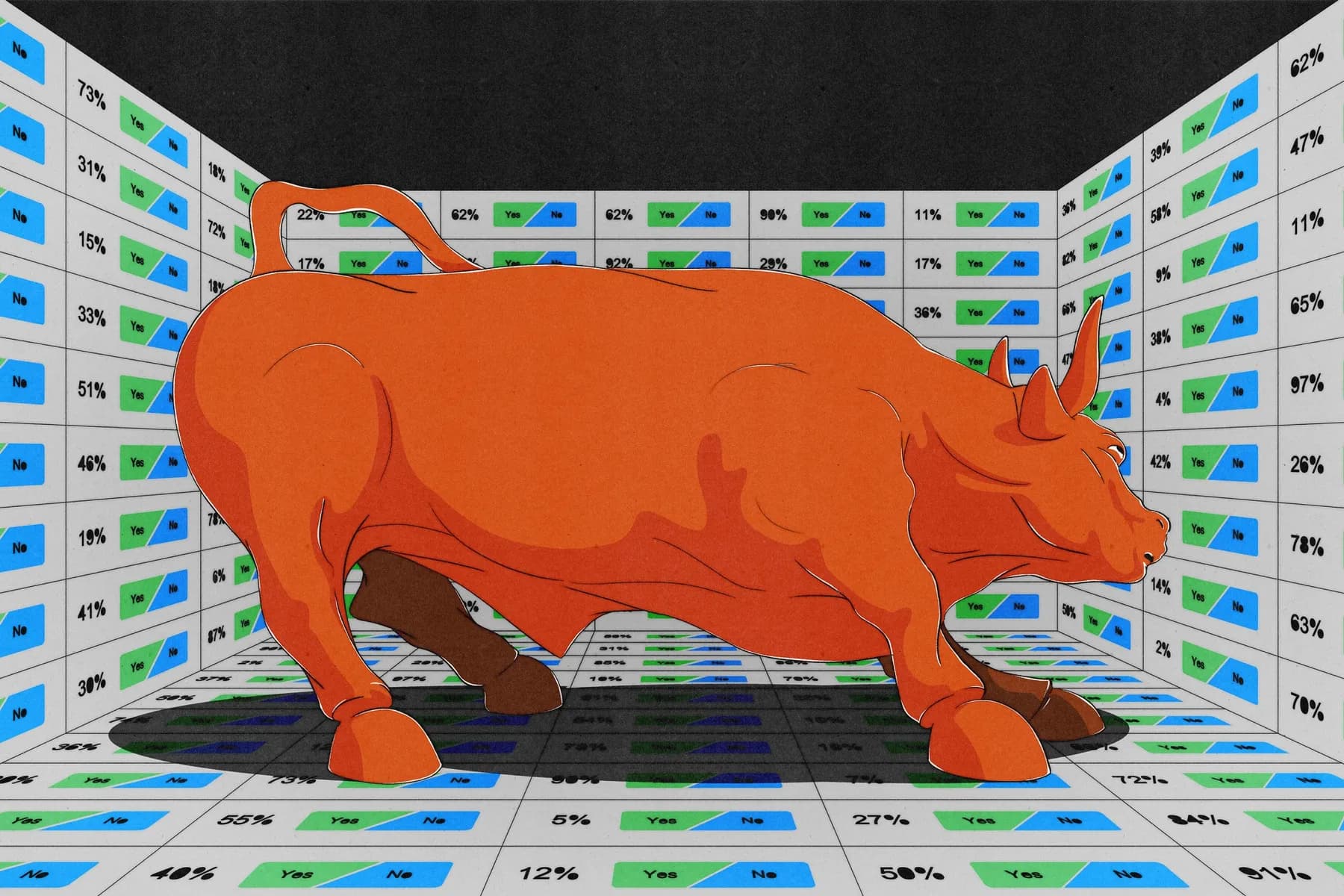
Prediction markets are gaining traction as tools for crowd-sourced intelligence, but their resemblance to gambling platforms creates regulatory and perceptual challenges. African startups like Bayse Markets and Busha’s Signal are processing millions in trades, yet they struggle with liquidity, market manipulation, and the gambling label. Meanwhile, global platforms like Polymarket and Kalshi see most of their volume driven by sports betting, raising questions about their long-term legitimacy.
30 SEC SUMMARY
- Prediction markets allow users to bet on event outcomes, with platforms like Polymarket and Kalshi dominating trading volumes, particularly in sports.
- Regulatory and perception challenges link prediction markets to gambling, complicating their adoption and legitimacy.
- African platforms like Bayse Markets and Busha’s Signal are emerging, processing millions in trading volume but struggling with liquidity and market manipulation.
- Users like Micheal treat prediction markets as investments, using probability and analysis to earn profits despite being wrong 30% of the time.
- Early studies showed prediction markets outperformed traditional polls in forecasting elections, but their financial incentives blur the line with gambling.
TABLE OF CONTENTS
- Prediction markets: intelligence or gambling?
- Sports betting dominates trading volume
- African prediction markets: growth and challenges
- User perspectives and market dynamics
- Background on prediction markets
- What this means
- Key takeaways
- FAQ
- Sources
KEY HIGHLIGHTS
- Prediction markets, such as Polymarket and Kalshi, primarily see trading volume from sports contracts, with politics playing a smaller role.
- African platforms like Bayse Markets and Busha’s Signal are emerging, processing over $13 million in trading volume by early 2026.
- Users like Micheal treat prediction markets as investments, earning profits through social media and probability-based trading.
- Regulators in Lagos have issued gaming permits to prediction market platforms, blurring the line between gambling and crowd-sourced intelligence.
- Liquidity and market manipulation remain significant challenges, with experts warning of risks like the $158 million bet on Egypt during the 2026 World Cup.
Prediction markets: intelligence or gambling?
Prediction markets allow users to trade contracts based on the outcome of events, such as elections or sports matches. The Iowa Electronic Markets, one of the earliest examples, demonstrated that these platforms could outperform traditional polls in forecasting US elections. According to a 2008 study from the University of Iowa, the market’s predictions were closer to the final result than 964 national polls 74% of the time.
Despite this potential, prediction markets often face skepticism. Their financial incentives and risk-reward mechanisms lead to comparisons with gambling, a perception that platforms struggle to shake off. For example, the Lagos State Lottery and Gaming Authority has issued gaming permits to companies like Bayse Markets and Busha, reinforcing the regulatory overlap between prediction markets and gambling.
Sports betting dominates trading volume
On platforms like Polymarket and Kalshi, sports contracts account for the majority of trading volume. During the 2026 FIFA World Cup, traders on these platforms bet $158 million on Egypt to win, despite the team’s low probability of success. This trend highlights how prediction markets often attract speculative bets rather than purely analytical trades.
Politics and other events also draw activity, but sports remain the dominant driver. For instance, politics accounted for a smaller share of trading volume on Kalshi and Polymarket, suggesting that users are more inclined to engage with familiar or high-stakes events.
African prediction markets: growth and challenges
African prediction markets are emerging as players in the space. Bayse Markets, launched in Nigeria, had processed over $13 million in trading volume by January 2026, with more than 200,000 users. The platform’s dashboard showed nearly $11,000 in liquidity rewards paid out as of April 1. Similarly, Busha, a Nigerian crypto exchange, launched its prediction market called Signal in August 2026, timed to coincide with the English Premier League season.
However, these platforms face significant challenges. Liquidity remains a hurdle, with experts like Andy Tudhope, CTO of LAVA, warning that low liquidity can lead to market manipulation. Oluwaleke Fakorede, CTO of Bayse Markets, acknowledged this risk but argued that the platform’s growth potential justifies the effort, predicting the emergence of a $100 million African prediction market startup.
The collapse of Nigeria’s CBEX, which promised to double deposits in 30 days before shutting down in April 2025, serves as a cautionary tale. Such failures heighten regulatory concerns and make it harder for legitimate platforms to gain trust.
User perspectives and market dynamics
Users like Micheal, a trader on Bayse Markets, approach prediction markets as investments. Micheal earns about ₦100,000 by trading on social media trends, such as predicting the number of likes on a post. He uses probability and math to guide his trades, though he is wrong about 30% of the time. His strategy reflects how many users treat prediction markets as a way to monetize insights rather than purely gamble.
Diran Otegbade, an early investor in Bayse Markets, sees these platforms as tools for staying informed about finance. He believes they allow traders to apply deep analysis to pricing, making them valuable for both profit and knowledge. However, Andy Tudhope of LAVA noted that most platforms fail to target the right audience. Instead of appealing to users who prioritize signal over high returns, they pitch to a broad audience, diluting their value proposition.
Background on prediction markets
Prediction markets have existed for decades, with the Iowa Electronic Markets launching in 1988 to test whether financial incentives could improve forecasting accuracy. Early results were promising, with the platform outperforming traditional polling methods. However, their evolution has been uneven, with sports betting often overshadowing other use cases like politics or economics.
The rise of blockchain technology has renewed interest in prediction markets, enabling decentralized platforms like Polymarket to emerge. These platforms leverage crypto assets to facilitate trading, but their association with speculative activities has drawn regulatory attention. In the US and Europe, prediction markets operate in a legal gray area, while in Africa, regulators are beginning to classify them under gaming laws.
What this means
Lazyfounder analysis — our interpretation, not reported fact.
Prediction markets sit in an uneasy space between legitimate crowd-sourced intelligence and gambling. For founders, this duality presents both an opportunity and a risk. The data suggests these markets can outperform traditional forecasting methods—like polls—when used correctly, but their association with sports betting and financial speculation opens them to regulatory scrutiny.
In Africa, where platforms like Bayse Markets and Busha’s Signal are gaining traction, the challenge is twofold: building liquidity to avoid manipulation while distancing themselves from gambling perceptions. The gaming permits issued in Lagos highlight how regulators view these platforms, and founders must navigate this carefully to avoid shutdowns or reputational damage.
For operators, the key question is whether prediction markets can evolve into something more than a niche tool for traders. If they remain tied to sports and low-probability bets, they risk being dismissed as speculative platforms rather than serious intelligence tools. The goal should be clarity—positioning these markets as a way to surface truth, not just generate profits.
Key takeaways
- Prediction markets blend forecasting and gambling, creating regulatory and perceptual challenges for startups.
- Sports betting dominates trading volumes on global platforms, overshadowing other use cases like politics or finance.
- African prediction markets are growing but face liquidity and manipulation risks, which could limit their scalability.
- Users approach these platforms as investments, but their reliance on probability and social media trends keeps them in a speculative gray area.
- Regulatory treatment, such as gaming permits, could shape the future of prediction markets, particularly in regions like Africa.
FAQ
What are prediction markets?
Prediction markets are platforms where users trade contracts based on the outcome of events, such as elections or sports matches. The market price reflects the perceived probability of an outcome, with users profiting if their predictions are correct.
How do prediction markets differ from gambling?
While both prediction markets and gambling involve financial risk, prediction markets are designed to aggregate information and improve forecasting accuracy. However, their financial incentives and speculative nature often lead to comparisons with gambling, particularly when regulators classify them under gaming laws.
Why do sports contracts dominate prediction markets?
Sports contracts attract more trading volume because they are familiar, high-stakes, and offer frequent opportunities for betting. This dominance can overshadow other use cases, such as politics or economics, which may have lower user engagement.
What challenges do African prediction markets face?
African prediction markets like Bayse Markets and Busha’s Signal face challenges such as liquidity constraints, market manipulation risks, and regulatory scrutiny. The collapse of platforms like CBEX has also made it harder for legitimate operators to build trust with users and regulators.
Can prediction markets be used for serious forecasting?
Yes, studies have shown that prediction markets can outperform traditional polling methods in forecasting elections. However, their effectiveness depends on factors like liquidity, user engagement, and the avoidance of speculative biases.
Related on Lazyfounder
Sources
- TechCabal · 2026-10-07
What prediction markets must fix to remove the “gambling” label
This story is an original summary drafted with AI by Lazyfounder from the reporting listed above and checked by automated validation. Facts are attributed to their original publishers; sections marked as analysis are Lazyfounder's. Where a source is in another language, facts were machine-translated and quotations are reported, not reproduced. Read the original coverage via the links, and see our AI policy and corrections policy.

About the author
Editor, Lazyfounder
Tarun Mottlia edits LazyFounders, covering Indian startups, funding rounds, AI and product launches. Every story on the site is AI-assisted and checked against its cited sources before publication.
More stories by Tarun MottliaGet the LazyFounder Brief
Startup, funding and AI news in a five-minute read. Join the early-access list.
