
Boston Dynamics Appoints Ex-Amazon AI Chief as CEO Amid Shift to Humanoid Robot Manufacturing
Boston Dynamics has appointed Rohit Prasad, former Amazon Senior VP and Head Scientist for AI and Alexa, as its new CEO. The move coincides with the company’s strategic pivot toward industrial-scale manufacturing of humanoid robots, aiming to produce 30,000 units by 2028 for Hyundai and Kia.

Editor, Lazyfounder
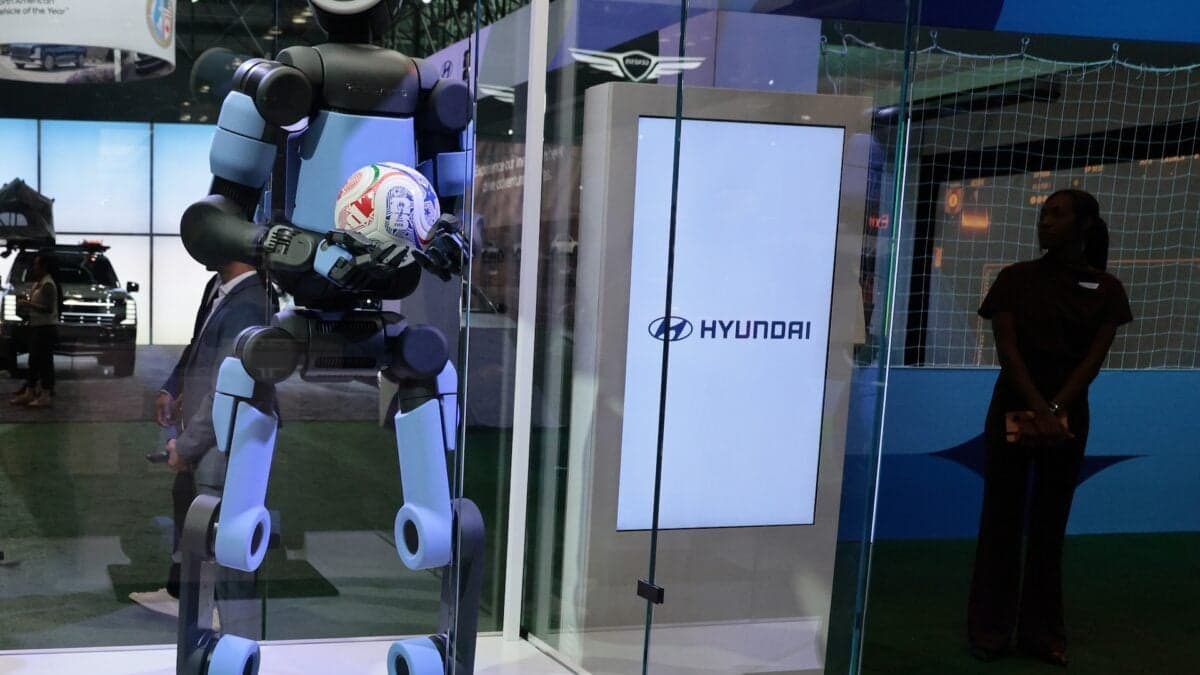
Boston Dynamics has appointed Rohit Prasad, former Amazon Senior VP and Head Scientist for AI and Alexa, as its new CEO. The move coincides with the company’s strategic pivot toward industrial-scale manufacturing of humanoid robots, aiming to produce 30,000 units by 2028 for Hyundai and Kia.
30 SEC SUMMARY
- Boston Dynamics has appointed Rohit Prasad, former Amazon AI chief, as its new CEO to lead a strategic shift toward large-scale humanoid robot manufacturing.
- Prasad replaces Robert Playter as CEO amid a reported "C-suite exodus" at the company.
- Boston Dynamics plans to produce 30,000 Atlas humanoid robots by 2028, with 25,000 allocated for Hyundai and Kia factories.
- Current production of Atlas robots is limited to four units per month, with costs estimated at $130,000–$140,000 per unit.
- Hyundai’s Savannah, Georgia factory will serve as a production hub for humanoid robots and a testing ground for their industrial use.
TABLE OF CONTENTS
- Leadership Change at Boston Dynamics
- Strategic Shift Toward Industrial Robotics
- What this means
- Key takeaways
- FAQ
- Sources
KEY HIGHLIGHTS
- Rohit Prasad appointed as CEO of Boston Dynamics, replacing Robert Playter.
- Boston Dynamics shifts focus from viral demonstrations to large-scale humanoid robot production.
- Target production of 30,000 Atlas robots by 2028, with 25,000 for Hyundai and Kia.
- Current Atlas production is four units per month, with estimated costs of $130,000–$140,000 per unit.
- Hyundai’s Savannah, Georgia factory will produce robots and integrate them into industrial workflows.
Leadership Change at Boston Dynamics
Boston Dynamics has named Rohit Prasad, former Amazon Senior VP and Head Scientist for AI and Alexa, as its new CEO. According to Gizmodo, Prasad will assume the role starting Wednesday, succeeding Robert Playter. This leadership change comes as Boston Dynamics undergoes a strategic shift toward large-scale manufacturing of humanoid robots for industrial applications.
Prasad’s background is primarily in AI, not robotics, though he has experience integrating AI software into physical products. His appointment follows a reported "C-suite exodus" at Boston Dynamics, which has focused in recent years on viral demonstrations of its robots, such as dancing and parkour videos.
Strategic Shift Toward Industrial Robotics
Under Hyundai’s ownership, Boston Dynamics is pivoting from entertainment-focused robotics to industrial automation. The company plans to produce 30,000 humanoid robots by 2028, with 25,000 earmarked for Hyundai and Kia factories. Current production of the Atlas robot is limited to four units per month, a bottleneck the company aims to overcome.
Hyundai’s Savannah, Georgia factory will partly transition into a robot manufacturing hub. The facility will also serve as a testing ground for integrating humanoid robots into automotive production lines. This move aligns with Hyundai’s broader strategy to deploy robotics in its industrial operations.
The Atlas robot, Boston Dynamics’ flagship humanoid model, is designed for heavy lifting and reaching heights of up to 7.5 feet. It can lift up to 110 pounds, making it suitable for tasks in automotive and industrial environments. However, estimates suggest each unit currently costs between $130,000 and $140,000 to produce, a figure the company expects to reduce to $30,000 per unit after scaling production to 50,000 units.
What this means
Lazyfounder analysis — our interpretation, not reported fact.
Boston Dynamics’ appointment of Rohit Prasad signals a deliberate bet on AI-driven robotics at scale. Prasad’s lack of robotics experience may seem unusual, but his background in AI—particularly in embedding software into physical products like Alexa—suggests the company is prioritizing intelligence and usability over mechanical ingenuity alone. This could accelerate Boston Dynamics’ transition from a research-driven firm to a manufacturing powerhouse, but the pivot is not without risks.
The ambitious production targets—30,000 robots by 2028—imply a massive ramp-up from today’s four units per month. For founders and operators, this underscores the challenges of scaling hardware production, where supply chain constraints, labor costs, and quality control can derail even the most innovative companies. The projected cost reduction from $130,000 to $30,000 per unit highlights the potential of economies of scale, but achieving it will require flawless execution.
Hyundai’s role is critical here. By anchoring Boston Dynamics’ robots in its own factories, Hyundai is not just a customer but a testing partner. This vertical integration could give Boston Dynamics a competitive edge over rivals like Tesla, which is also betting big on humanoid robots but lacks a built-in industrial use case. For startups in robotics or AI, Boston Dynamics’ shift offers a case study in how to balance innovation, scalability, and real-world adoption—especially when backed by a deep-pocketed corporate parent.
Key takeaways
- Rohit Prasad, former Amazon Senior VP and Head Scientist for AI and Alexa, is the new CEO of Boston Dynamics.
- Boston Dynamics aims to transition from viral robot videos to industrial-scale manufacturing of humanoid robots.
- The company plans to produce 30,000 Atlas robots by 2028, with 25,000 destined for Hyundai and Kia factories.
- Production costs for Atlas robots are currently high but are expected to drop significantly after reaching scale.
- Hyundai’s Savannah factory will play a dual role as a robot manufacturing site and a workplace for humanoid robots.
FAQ
Who is Rohit Prasad?
Rohit Prasad is the incoming CEO of Boston Dynamics, formerly Amazon’s Senior VP and Head Scientist for AI and Alexa. His background is primarily in AI, with experience in integrating software into physical products.
Why is Boston Dynamics shifting from viral robot videos to industrial manufacturing?
Under Hyundai’s ownership, Boston Dynamics is pivoting to large-scale production of humanoid robots for industrial use, particularly in automotive manufacturing. This shift aims to commercialize its technology and meet demand from Hyundai and Kia.
How many robots does Boston Dynamics plan to produce, and by when?
Boston Dynamics aims to produce 30,000 humanoid robots by 2028, with 25,000 allocated for Hyundai and Kia factories. Current production is limited to four Atlas robots per month.
What is the current cost of producing an Atlas robot?
Estimates suggest it costs between $130,000 and $140,000 to produce one Atlas robot. Boston Dynamics expects this cost to drop to $30,000 per unit after producing 50,000 units.
How does Hyundai’s Savannah factory fit into Boston Dynamics’ plans?
Hyundai’s Savannah, Georgia factory will partly function as a robot manufacturing site and a workplace for humanoid robots. This dual role will help test and refine the robots for industrial use.
Related on Lazyfounder
Sources
- Gizmodo · 2026-10-07
Amid Its Big Humanoid Robot Rollout, an Ex-Amazon AI Chief Will Now Lead Boston Dynamics
This story is an original summary drafted with AI by Lazyfounder from the reporting listed above and checked by automated validation. Facts are attributed to their original publishers; sections marked as analysis are Lazyfounder's. Where a source is in another language, facts were machine-translated and quotations are reported, not reproduced. Read the original coverage via the links, and see our AI policy and corrections policy.

About the author
Editor, Lazyfounder
Tarun Mottlia edits LazyFounders, covering Indian startups, funding rounds, AI and product launches. Every story on the site is AI-assisted and checked against its cited sources before publication.
More stories by Tarun MottliaGet the LazyFounder Brief
Startup, funding and AI news in a five-minute read. Join the early-access list.
