
Post-2026 election U.S. venture funding drops to 2% for red states, Crunchbase data shows
U.S. venture funding in 2026 has become even more concentrated in blue states, with red states receiving less than 2% of the total after five states shifted to purple status following the 2026 elections. The data, compiled by Crunchbase, highlights a growing divide in startup investment distribution across political lines.

Editor, Lazyfounder
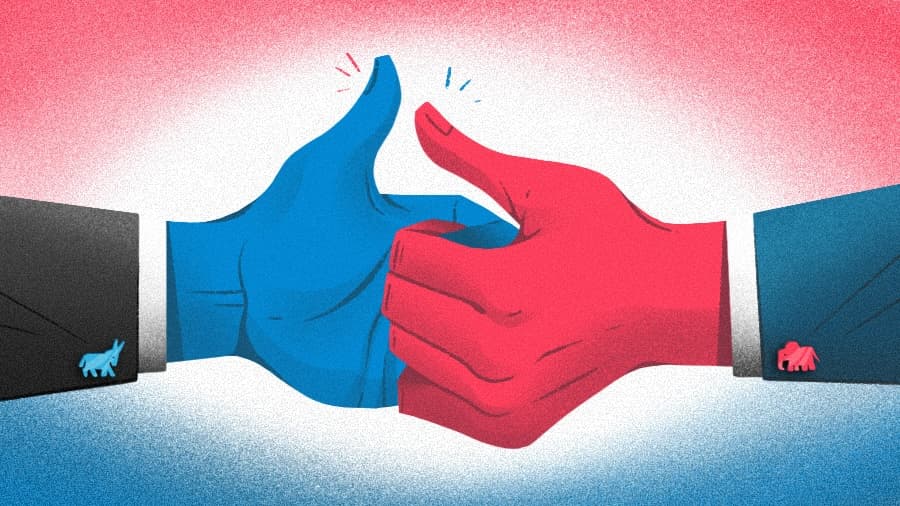
Funding plummets for post-election red states
Less than 2% of U.S. venture funding in 2026 went to states classified as red after the November elections, according to Crunchbase data. Red states—defined as those with a Republican governor and two Republican U.S. senators—pulled in $8.6 billion, an amount smaller than the typical nationwide weekly total.
The 2026 elections triggered a political shift in five states, including Texas and Ohio, which moved from red to purple status. This reduced the number of red states and further consolidated venture funding in blue-leaning regions.
Purple and blue states dominate venture capital
Purple states, which Crunchbase defines as those with mixed political leadership, attracted $28.6 billion in venture funding in 2026, representing less than 6% of the U.S. total. While these states are home to over a quarter of the American population, their share of funding remains disproportionately low compared to blue states.
Blue states, meanwhile, received over 90% of U.S. startup funding. California alone accounted for more than three-fourths of the national total, driven largely by mega-rounds for AI companies like OpenAI and Anthropic in San Francisco. New York and Massachusetts followed as the next largest recipients.
The data also shows that about 12% of startup financings of $1 million or more went to companies in purple states, compared to just 9% for red states.
Key drivers behind the geographic divide
The concentration of funding in blue states is amplified by the dominance of AI and tech hubs like San Francisco, Austin, and New York. Crunchbase notes that much of California’s funding stemmed from multi-billion-dollar rounds for OpenAI and Anthropic, reflecting the state’s outsized role in AI innovation.
Among red states, Florida, Tennessee, and Utah were the largest contributors to venture funding. Utah, in particular, has cultivated a sophisticated startup ecosystem, though it remains an outlier in a broader trend of underinvestment in red states.
Texas’s shift to purple status, following the election of Democratic Senator James Talarico and Governor Gina Hinojosa, did little to slow its momentum as a tech hub. Austin, a major center for startups, continues to thrive even as the state’s political landscape evolves.
What this means
Lazyfounder analysis — our interpretation, not reported fact.
The Crunchbase data underscores how political and economic priorities are shaping venture capital distribution in the U.S. For founders outside blue and purple states, the numbers are a stark reminder of the challenges in securing funding—particularly in sectors like AI, where investment is increasingly concentrated in a handful of hubs. The shift of Texas and Ohio to purple status could hint at a broader realignment, but for now, the vast majority of capital remains locked in traditional tech strongholds.
For investors, the trend raises questions about untapped opportunities in red states, where funding flows may not yet reflect the potential of emerging ecosystems like Utah’s. Meanwhile, the dominance of AI-focused mega-rounds in California suggests that sector-specific trends could further widen the geographic divide if other regions fail to cultivate comparable expertise or infrastructure.
Key takeaways
- Founders in red states may face heightened competition for capital, as investors continue to prioritize blue and purple markets like California, New York, and Texas.
- Texas’s shift to purple status could signal a longer-term trend for venture capital flows, particularly if other historically red states follow.
- The outsized influence of AI-focused mega-rounds in California underscores how sector-specific trends can magnify geographic funding imbalances.
Related on Lazyfounder
Sources
- Crunchbase News · 2026-11-04
Crunchbase Data: Less Than 2% Of 2026 Venture Funding Went To Post-Election Red States
This story is an original summary drafted with AI by Lazyfounder from the reporting listed above and checked by automated validation. Facts are attributed to their original publishers; sections marked as analysis are Lazyfounder's. Where a source is in another language, facts were machine-translated and quotations are reported, not reproduced. Read the original coverage via the links, and see our AI policy and corrections policy.

About the author
Editor, Lazyfounder
Tarun Mottlia edits LazyFounders, covering Indian startups, funding rounds, AI and product launches. Every story on the site is AI-assisted and checked against its cited sources before publication.
More stories by Tarun MottliaGet the LazyFounder Brief
Startup, funding and AI news in a five-minute read. Join the early-access list.
