
Paris La Défense plans 20% office-to-apartment conversion
Paris La Défense is converting up to 20% of its office buildings into residential apartments as demand for workspace falls nearly a third since the pandemic. The trend is mirrored in Washington DC, New York, and London, where tax incentives and relaxed planning rules are accelerating similar projects—but French regulations are raising costs and slowing progress.

Editor, Lazyfounder
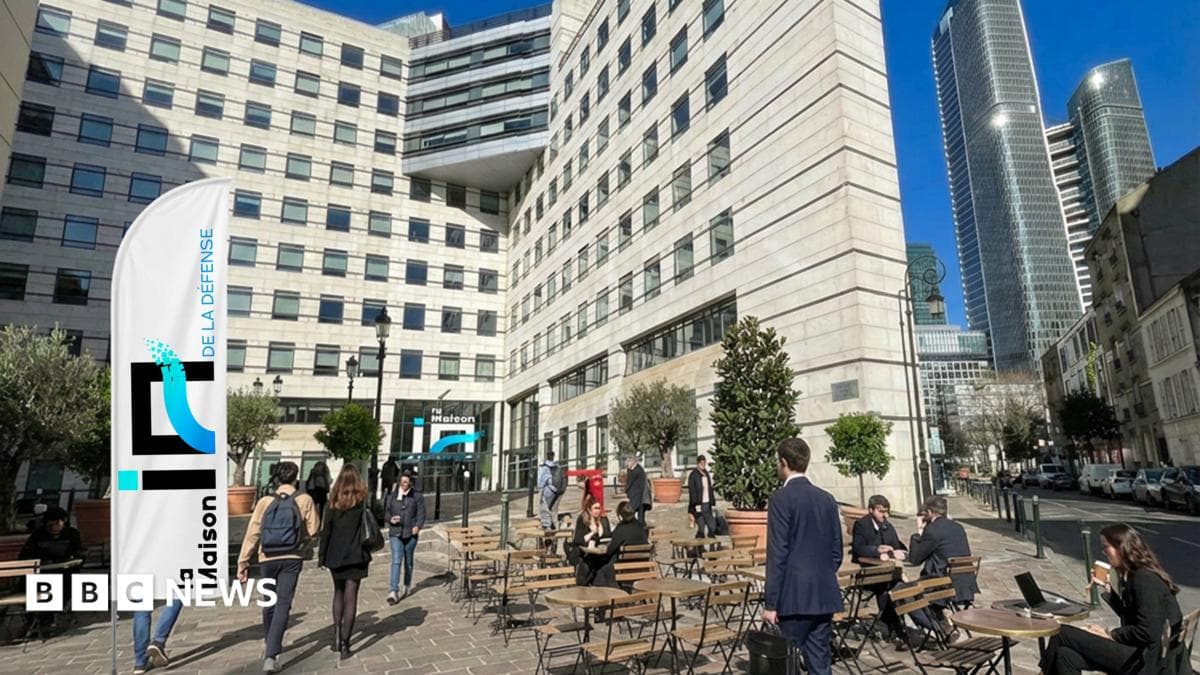
Cities turn vacant offices into apartments
Groupama Immobilier is converting Le Diamant, a nine-storey office building in Paris’s La Défense district, into residential apartments. The project is part of a wider push by Paris La Défense, the public agency managing the business hub, to repurpose up to a fifth of its office stock.
La Défense’s office vacancy rate has climbed to 14–15%, compared with single digits before the pandemic. Demand for office space in Paris has dropped nearly a third over the past five to six years, according to Colliers.
The trend mirrors moves in Washington DC, New York, and London. Washington DC aims to add 15,000 new downtown residents by 2028, while New York and DC lead the US with 8,310 and 6,533 office-to-apartment units in development, respectively. London has seen a 60% increase in conversion projects compared to pre-Covid levels.
Regulatory hurdles shape the pace of change
Eased planning rules and tax incentives in the US and UK are accelerating conversions. Washington DC’s Department of Buildings has streamlined approvals for office-to-residential projects, while New York City has offered tax breaks to developers. London has waived some planning restrictions, contributing to the 60% rise in projects.
In France, however, regulatory hurdles persist. Groupama Immobilier’s Roland Cubin notes that converting an office building triggers the same compliance costs as constructing a new one—including requirements for parking, accessibility, and fire safety. These rules, combined with higher taxation, are slowing projects compared to the US and UK.
The gap in incentives could shape where developers focus. In Washington DC and New York, hundreds of millions of dollars in private investment have already flowed into conversions, while Parisian developers are advocating for similar measures to unlock more vacant offices.
Mixed-use districts become a priority
Leaders in La Défense and Washington DC emphasize that mixed-use districts—with housing, retail, and leisure—are critical to retaining talent and businesses. Pierre-Yves Guice, CEO of Paris La Défense, argues that diversifying beyond office towers is necessary to keep companies in Western Europe.
Colliers France CEO Ludovic Delaisse adds that work hubs still need vibrant off-hours economies, such as restaurants, gyms, and cinemas, to remain attractive. The shift may also ease pressure on urban housing markets in cities where residential supply is constrained.
What this means
Lazyfounder analysis — our interpretation, not reported fact.
The surge in office-to-residential conversions in global business districts creates tangible opportunities—and risks—for startups and operators. For proptech ventures, the shift opens demand for software that streamlines compliance with new planning rules, or tools that model conversions for developers racing to repurpose vacant space. Coworking operators may find leases cheaper in districts like La Défense or downtown DC, but they will compete with residential tenants for ground-floor retail sites that were once office-centric. Investors, meanwhile, now have a signal that traditional office assets in Western Europe and North America may underperform unless they are repositioned, possibly accelerating write-downs and restructuring in commercial real-estate portfolios. Founders eyeing physical expansion should watch local tax incentives: the same jurisdictions offering relief for conversions may soon cut subsidies, tightening the window for cost-effective deals.
Key takeaways
- Paris La Défense will convert up to 20% of its office stock into housing, setting a benchmark for European business districts facing persistent vacancy.
- Washington DC’s target of 15,000 new downtown residents by 2028 is powered by eased permitting and tax relief—a playbook other cities may copy, changing real-estate risk profiles.
- With 14–15% vacancy in La Défense, startups negotiating leases can push for shorter terms or performance-linked rent clauses in prime submarkets.
- US and UK planners are cutting red tape for conversions, but French rules still treat repurposed offices as new builds—keeping compliance costs high and limiting smaller developers.
Related on Lazyfounder
Sources
- BBC News (Tech & Business) · 2026-11-12
From Paris to DC - why offices are being turned into apartments
This story is an original summary drafted with AI by Lazyfounder from the reporting listed above and checked by automated validation. Facts are attributed to their original publishers; sections marked as analysis are Lazyfounder's. Where a source is in another language, facts were machine-translated and quotations are reported, not reproduced. Read the original coverage via the links, and see our AI policy and corrections policy.

About the author
Editor, Lazyfounder
Tarun Mottlia edits LazyFounders, covering Indian startups, funding rounds, AI and product launches. Every story on the site is AI-assisted and checked against its cited sources before publication.
More stories by Tarun MottliaGet the LazyFounder Brief
Startup, funding and AI news in a five-minute read. Join the early-access list.
