
Palantir CTO Shyam Sankar on AI safety, model flexibility and China competition
Palantir Technologies Chief Technology Officer Shyam Sankar recently shared perspectives on the company’s role in Anthropic’s work with the US national security system, AI safety debates, and competition with Chinese AI labs. In an interview with Stratechery, Sankar also detailed Palantir’s approach to AI model flexibility and its collaborations with frontier AI labs.

Editor, Lazyfounder
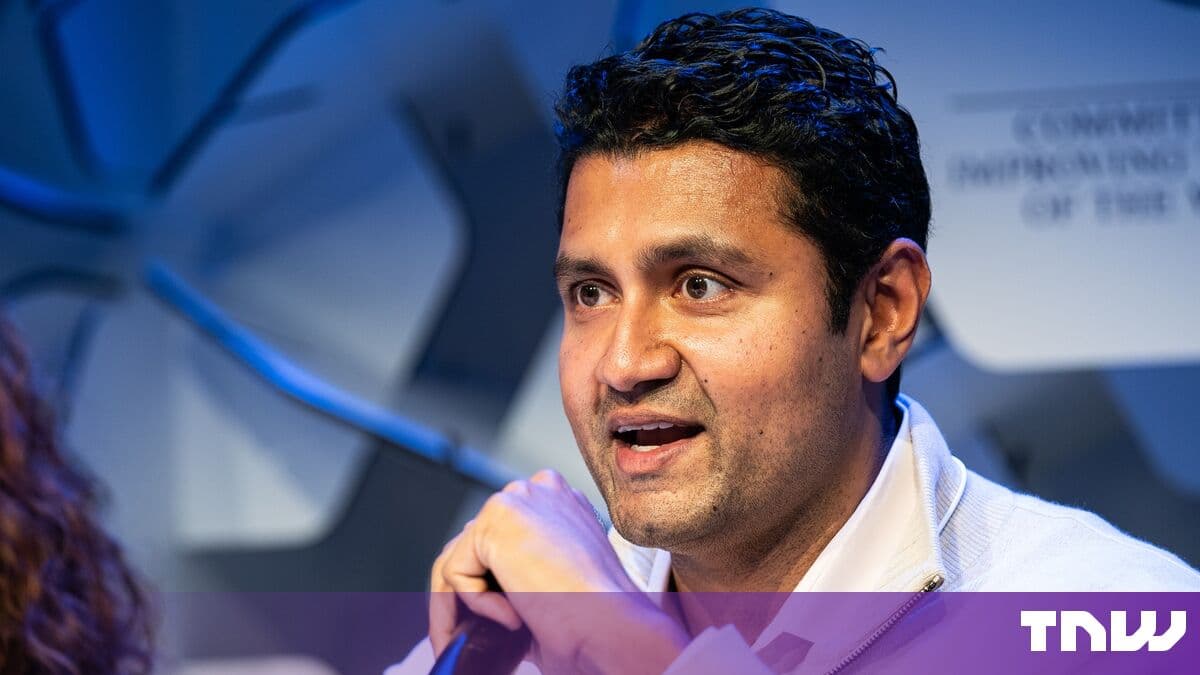
TABLE OF CONTENTS
Palantir’s role in Anthropic’s US national security work
Palantir was involved in Anthropic’s work for the US national security system, which led to a clash with the US Department of War. According to The Next Web, Sankar confirmed Palantir’s role but expressed no regret over the dispute. He also noted that the Pentagon had replaced Anthropic’s AI by October, though the reasons for the replacement remain unclear.
Sankar’s remarks underscore Palantir’s ongoing collaborations with frontier AI labs like Anthropic, despite political or operational friction. This aligns with Palantir’s broader strategy of integrating AI into high-stakes environments, including defense and national security.
AI model flexibility and customer strategies
Sankar highlighted Palantir’s investment in capabilities allowing customers to safely swap AI models. This flexibility is critical for organizations that prioritize adaptability in dynamic operational environments, such as defense or enterprise software.
The interview also revealed that customers using AI primarily for cost-cutting have largely failed to achieve their goals. Sankar emphasized that successful adopters focus on leveraging AI to gain a competitive edge in their markets, rather than merely reducing operational expenses.
Critique of AI safety narratives and effective altruism
Sankar critiqued what he described as the secular religion of effective altruism, arguing that apocalyptic or utopian narratives about AI reject human agency. He cautioned against framing AI safety debates as technical critiques when they may instead reflect ideological beliefs.
Anthropic’s safety warnings, according to Sankar, align with its business model—a dynamic he suggested could make the company a political target. He drew parallels to Palantir’s own positioning, where arguments about AI safety and ethics are intertwined with commercial interests.
Competition with Chinese AI labs
Sankar acknowledged that Chinese AI labs, including DeepSeek, are currently behind frontier labs like Anthropic. However, he predicted that once Chinese labs reach parity, they may stop releasing open-weight models—a shift that could reshape the global AI landscape.
Palantir does not use DeepSeek’s models but allows commercial customers to choose their preferred AI systems. This approach reflects Palantir’s focus on providing flexibility rather than tying customers to a single model or vendor.
Background: Palantir and Anthropic’s evolving partnerships
Earlier reporting from LazyFounder highlighted Anthropic’s unconventional hiring practices, including its decision to eliminate coding interviews on the grounds that AI outperforms humans in such tests. This shift reflects Anthropic’s broader emphasis on ambition and impact over traditional technical assessments—a philosophy that may influence its collaborations with partners like Palantir.
The Pentagon’s investigation into suspected cyberattacks on military commissary freezers, also covered by LazyFounder, underscores the high-stakes environment in which Palantir operates. The incident highlights the critical role of AI and cybersecurity in national security, reinforcing Palantir’s relevance in this space.
What this means
Lazyfounder analysis — our interpretation, not reported fact.
Sankar’s comments provide a rare glimpse into how a defense-focused AI company navigates technical, political, and competitive challenges. For founders and operators, the takeaways are twofold: first, the importance of building flexible AI systems that allow customers to adapt to evolving needs, and second, the risks of tying AI adoption solely to cost-cutting rather than market-winning strategies.
The tensions between US and Chinese AI labs also signal a shifting landscape for global AI competition. Palantir’s stance—prioritizing customer choice while acknowledging geopolitical realities—may offer a template for how other companies balance innovation with regulatory and ethical considerations.
Related on Lazyfounder
Sources
- The Next Web · 2026-11-01
Palantir CTO tells Stratechery he doesn’t regret working with Anthropic
This story is an original summary drafted with AI by Lazyfounder from the reporting listed above and checked by automated validation. Facts are attributed to their original publishers; sections marked as analysis are Lazyfounder's. Where a source is in another language, facts were machine-translated and quotations are reported, not reproduced. Read the original coverage via the links, and see our AI policy and corrections policy.

About the author
Editor, Lazyfounder
Tarun Mottlia edits LazyFounders, covering Indian startups, funding rounds, AI and product launches. Every story on the site is AI-assisted and checked against its cited sources before publication.
More stories by Tarun MottliaGet the LazyFounder Brief
Startup, funding and AI news in a five-minute read. Join the early-access list.
