
Otherlab Launches Lightfoot, a Solar-Powered Scooter for Short Trips
Otherlab has launched Lightfoot, a solar-powered electric scooter designed for short trips under three miles. Priced at $4,495, the scooter is now available in California and aims to simplify micromobility with its self-recharging design.

Editor, Lazyfounder
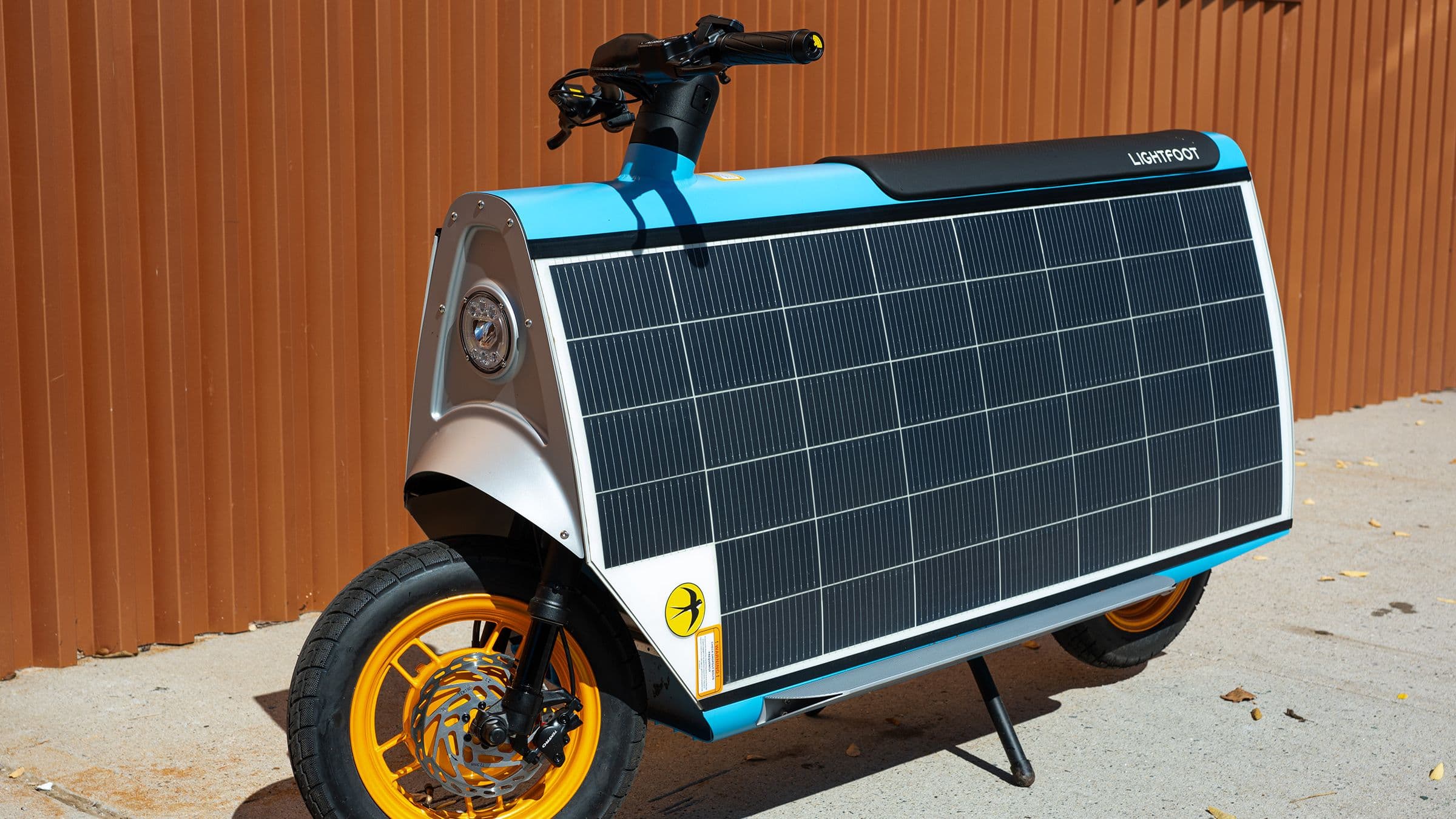
Otherlab has launched Lightfoot, a solar-powered electric scooter designed for short trips under three miles. Priced at $4,495, the scooter is now available in California and aims to simplify micromobility with its self-recharging design.
30 SEC SUMMARY
- Lightfoot, a solar-powered electric scooter developed by Otherlab, has launched for $4,495 in California.
- The scooter is designed for short trips under three miles, which make up 52% of US passenger trips.
- Otherlab claims the solar panels can add up to 18 miles of range per day under optimal conditions.
- The Lightfoot lacks advanced features like an app or turn signals but includes regenerative braking.
- Initial sales are focused on California, with plans to expand to southern US states and countries like Vietnam.
TABLE OF CONTENTS
- A Solar-Powered Scooter for Short Trips
- Design and Performance
- Market Strategy and Limitations
- What this means
- Key takeaways
- FAQ
- Sources
KEY HIGHLIGHTS
- Lightfoot, a solar-powered electric scooter developed by Otherlab, is now available for purchase in California at $4,495.
- The scooter is designed for short trips under three miles, which account for 52% of US passenger trips.
- Otherlab claims the solar panels can add up to 18 miles of range per day under optimal conditions.
- The Lightfoot lacks advanced features like an app or turn signals but includes regenerative braking.
- Initial sales target California, with plans to expand to southern US states and markets like Vietnam.
A Solar-Powered Scooter for Short Trips
Otherlab, a US-based research and development company, has launched Lightfoot, a solar-powered electric scooter designed for short trips. According to WIRED, the scooter has a top speed of 20 mph and is now available for purchase in California for $4,495. Reservations are open for $100.
The Lightfoot is positioned as a simple, self-recharging vehicle for distances under three miles, a segment that accounts for 52% of all US passenger trips. Otherlab, founded by Saul Griffith, aims to address the need for sustainable and low-maintenance micromobility solutions.
Design and Performance
The scooter’s design is intentionally minimalist, lacking features like an app, speed modes, or turn signals. According to WIRED, it relies on common off-the-shelf components to simplify repairs for local bike shops. It includes a regenerative braking system and has a claimed range of 36 miles on a single charge.
Otherlab states that the solar panels integrated into the Lightfoot can add up to 18 miles of range per day under optimal conditions. During testing, WIRED reported that the scooter’s battery meter increased by 10% after six hours of sunlight exposure.
Market Strategy and Limitations
Lightfoot’s release is initially focused on California, with plans to expand to southern US states like Florida, as well as markets abroad, including Vietnam. Otherlab’s strategy targets regions with ample sunlight and a need for affordable, low-maintenance transportation options.
The scooter is not designed for dense urban environments like New York City, where outdoor parking and consistent sunlight are limited. Instead, it aims to serve cities with sprawling layouts and outdoor-friendly infrastructure.
What this means
Lazyfounder analysis — our interpretation, not reported fact.
Lightfoot represents a niche but potentially transformative approach to micromobility. For founders and operators, its appeal lies in its simplicity and sustainability—two trends gaining traction in urban transportation. However, the scooter’s lack of advanced features and reliance on solar power may limit its adoption in dense, high-rise cities like New York, where outdoor parking and sunlight exposure are scarce.
The bigger story here is the bet on low-tech, high-impact design. Otherlab is betting that consumers will prioritize functionality and self-sufficiency over smart features. If successful, this could signal a shift in how micromobility products are designed, favoring durability and ease of repair over connectivity and customization. For now, though, Lightfoot’s success will hinge on whether its target markets—sunny, spread-out cities—find value in a vehicle that feels more like a utility than a gadget.
Key takeaways
- Lightfoot is a solar-powered electric scooter priced at $4,495, now available in California.
- The scooter is designed for short trips, targeting a market where 52% of US passenger trips are under three miles.
- Otherlab claims the solar panels can add up to 18 miles of range per day under optimal conditions.
- The Lightfoot lacks advanced features like an app or turn signals but includes regenerative braking.
- Initial sales are focused on California, with expansion planned for southern US states and countries like Vietnam.
FAQ
What is Lightfoot?
Lightfoot is a solar-powered electric scooter developed by Otherlab for short trips under three miles. It is designed to be simple, self-recharging, and low-maintenance.
How much does Lightfoot cost?
The Lightfoot scooter is priced at $4,495 and is currently available for purchase in California.
How far can Lightfoot travel on a single charge?
Lightfoot has a claimed range of 36 miles on a single charge. Its solar panels can add up to 18 miles of range per day under optimal conditions.
Where is Lightfoot available?
Lightfoot is initially available in California, with plans to expand to southern US states and international markets like Vietnam.
Does Lightfoot have advanced features like an app or turn signals?
No, Lightfoot is designed to be minimalist and does not include features like an app, speed modes, or turn signals.
Related on Lazyfounder
Sources
- WIRED · 2026-10-06
A First Ride With Lightfoot, a Solar-Powered Scooter
This story is an original summary drafted with AI by Lazyfounder from the reporting listed above and checked by automated validation. Facts are attributed to their original publishers; sections marked as analysis are Lazyfounder's. Where a source is in another language, facts were machine-translated and quotations are reported, not reproduced. Read the original coverage via the links, and see our AI policy and corrections policy.

About the author
Editor, Lazyfounder
Tarun Mottlia edits LazyFounders, covering Indian startups, funding rounds, AI and product launches. Every story on the site is AI-assisted and checked against its cited sources before publication.
More stories by Tarun MottliaGet the LazyFounder Brief
Startup, funding and AI news in a five-minute read. Join the early-access list.
