
OpenAI engineer spent $10M on AI tokens last month
Peter Steinberger, the creator of the open-source AI agent OpenClaw and an engineer at OpenAI, revealed at Cloudflare’s Connect conference that he spent roughly $10 million on AI tokens in a single month. The disclosure highlights the infrastructure challenges and costs associated with scaling AI agents, even for well-funded teams.

Editor, Lazyfounder
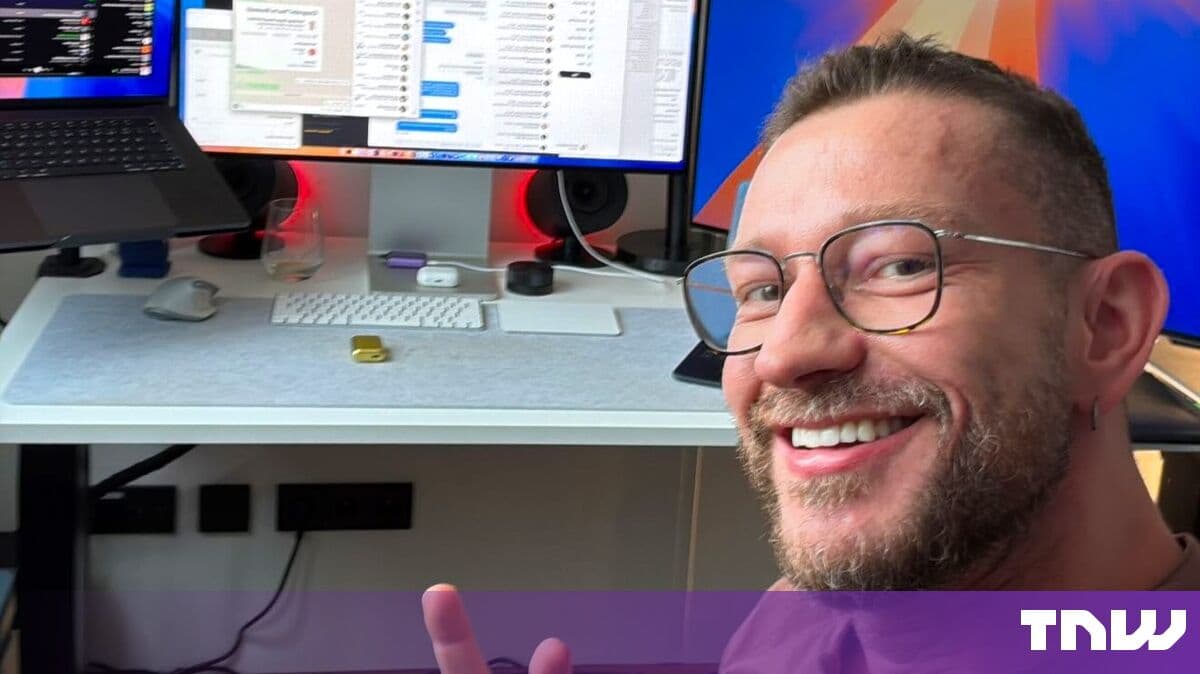
TABLE OF CONTENTS
A $10M token spend for AI agents
Peter Steinberger, creator of the open-source AI agent OpenClaw and an engineer at OpenAI, disclosed at Cloudflare’s Connect conference in San Francisco that he spent roughly $10 million on AI tokens last month. Steinberger’s work focuses on enabling AI agents to perform complex tasks autonomously, a use case that demands significant computational resources.
According to The Next Web, tokens are the unit AI companies use to bill for text processed or generated by models. Steinberger’s spending underscores the scale of resources required to run AI agents at production levels, even for well-funded teams.
Infrastructure and cost as adoption barriers
Steinberger identified infrastructure limitations as a primary obstacle to broader AI agent adoption. During the conference, he questioned why AI workflows still rely on local computing power instead of cloud-based solutions, asking, "Like why is this still using my computer? Shouldn’t this all be in the cloud?"
Dane Knecht, Cloudflare’s Chief Technology Officer, noted that Steinberger operates with an "almost unlimited" token budget—a rare position among AI developers. For context, Accenture reportedly caps its employees’ spending on Anthropic’s Claude at $29 per month, highlighting the disparity in resources available to different organizations.
Steinberger argued that the cost of running AI agents continuously remains a critical barrier. Few organizations or individuals can afford token expenditures at the scale required for uninterrupted operation, limiting widespread deployment.
OpenClaw’s open-source commitment
Steinberger joined OpenAI in February after the company acquired his startup, which developed OpenClaw. Despite the acquisition, he committed to maintaining OpenClaw as an open-source project, transferring it to a foundation to ensure its accessibility. This move aligns with broader industry trends, where companies like Meta have cited OpenClaw as a reference for their own AI agent development.
Meta has publicly stated that its Muse agent was intentionally built to resemble OpenClaw, reflecting the influence of Steinberger’s work on the AI ecosystem.
What this signals for AI engineering
Steinberger’s spending highlights a growing divide in the AI sector: the gap between well-funded teams at leading AI labs and the broader developer community. While companies like OpenAI and Anthropic pursue multi-billion-dollar funding rounds—OpenAI is reportedly seeking to finalize a $30 billion round ahead of Anthropic’s IPO—most developers and businesses face strict budget constraints for AI experimentation and deployment.
Earlier Lazyfounder reporting on 1Password’s launch of 1Password for Agents noted that major AI companies, including OpenAI, Anthropic, and Meta, are investing in platforms to secure AI-driven logins. Steinberger’s work on OpenClaw and his current role at OpenAI suggest the company is also prioritizing agent-based workflows, though cost and infrastructure remain hurdles for adoption.
What this means
Lazyfounder analysis — our interpretation, not reported fact.
Steinberger’s $10 million token spend is less about personal indulgence and more about the resource-intensive reality of building and scaling AI agents. For founders and operators, this is a signal of two things: first, the infrastructure required to run AI agents at scale is still catching up to demand, and second, token costs will remain a significant barrier to entry for most startups and businesses.
OpenAI’s backing of Steinberger’s work—alongside its reported $30 billion funding ambitions—suggests the company is betting big on agent-based AI. However, the disparity between OpenAI’s resources and those of smaller players raises questions about how quickly the broader market can adopt these technologies. For now, AI agents remain a high-cost, high-reward experiment for most, with infrastructure and token economics dictating who can participate.
Related on Lazyfounder
Sources
- The Next Web · 2026-10-23
OpenClaw creator puts last month’s token bill at $10M, The Register reports
This story is an original summary drafted with AI by Lazyfounder from the reporting listed above and checked by automated validation. Facts are attributed to their original publishers; sections marked as analysis are Lazyfounder's. Where a source is in another language, facts were machine-translated and quotations are reported, not reproduced. Read the original coverage via the links, and see our AI policy and corrections policy.

About the author
Editor, Lazyfounder
Tarun Mottlia edits LazyFounders, covering Indian startups, funding rounds, AI and product launches. Every story on the site is AI-assisted and checked against its cited sources before publication.
More stories by Tarun MottliaGet the LazyFounder Brief
Startup, funding and AI news in a five-minute read. Join the early-access list.
