
OpenAI upgrades ChatGPT with live dictation, GPT-6.2 Sol, and interactive workspaces
OpenAI has removed the 10-minute recording limit for ChatGPT’s Live Dictation feature and introduced real-time speech-to-text conversion. The company also rolled out GPT-6.2 Sol globally for paying users, improving complex task handling, web searches, and image understanding. A new workspace feature called Space allows Plus users to create and collaborate on interactive pages and presentations.

Editor, Lazyfounder
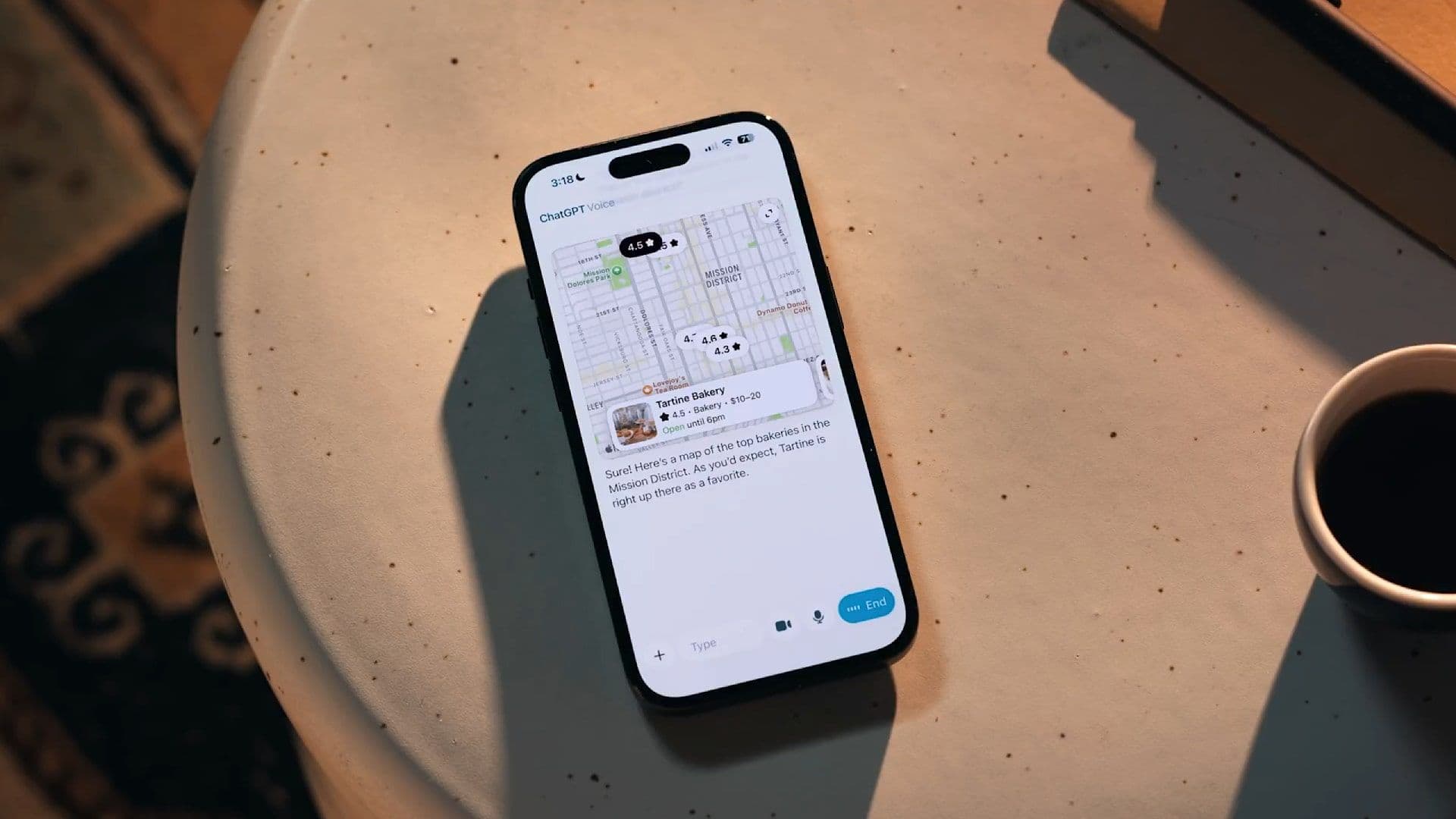
TABLE OF CONTENTS
Live Dictation now runs without time limits
OpenAI’s Live Dictation feature for ChatGPT now transcribes speech into text in real time, eliminating the previous 10-minute recording cap. The upgrade builds on an enhanced speech-to-text model released earlier this year, which reduced errors by 10% across the most widely used languages and improved accuracy for accents and noisy environments.
Users can activate the feature by tapping the microphone icon in the ChatGPT message box. Spoken words appear as text on-screen while the user talks, allowing for immediate review and editing before sending. Dictated audio is sent to OpenAI’s models for transcription and is retained only as long as the associated chat remains in the user’s history.
A TechRadar writer who tested the feature for a full day found it particularly useful for complex requests and extended brainstorming sessions. The ability to see and edit transcriptions in real time reduced anxiety about errors, though the writer noted that rambling or unclear speech could still produce disorganized prompts.
GPT-6.2 Sol improves accuracy and safety
OpenAI has launched GPT-6.2 Sol, a refined version of its model, for Plus, Pro, Business, and Enterprise users. According to internal tests, the model outperforms GPT-6 in understanding images (71.7% vs. 47.4%), following complex instructions (78.1% vs. 62.5%), and delivering expert-level reasoning.
GPT-6.2 Sol also shows a 10-percentage-point improvement in finding accurate answers on the web at the highest reasoning level, using an internal tool called BrowseComp. Safety policy adherence has risen from 77-80% in GPT-6 to 91-94% in GPT-6.2, with the biggest gains in youth safety categories such as emotional dependency, eating disorders, and dangerous activities.
These improvements apply only to ChatGPT’s chat mode; the Work and Codex models remain unchanged. Enterprise administrators can choose whether to enable GPT-6.2 Sol for their users.
Space introduces interactive workspaces
OpenAI has replaced the Library option in ChatGPT with Space, an interactive workspace for creating pages and presentations. The feature is available to Plus users aged 18 and over and supports collaboration among paying subscribers. Public sharing links are not yet available.
Space operates across three levels: the overall Space area, individual collections called spaces, and pages for content creation. Users can invite others to edit or comment on pages using the email address linked to their ChatGPT account. OpenAI plans to add Slides and Sheets functionality in future updates.
Pages and slides can update automatically using connected apps, such as reflecting decisions made in Slack. TechRadar likened the experience to a hybrid of Google Drive, Google Docs, and a lightweight website builder, all integrated within ChatGPT. The goal is to keep users working inside ChatGPT rather than exporting content to external tools.
Private Inference targets enterprise data privacy
OpenAI is piloting Private Inference with its first enterprise customers. The feature allows companies to run queries on OpenAI’s models without the company accessing the data. Queries are processed on isolated hardware, and security can be independently verified.
The system includes Private Safety Processing, which scans for abuse without storing customer data. Any flagged content is encrypted and stored in the customer’s own cloud, accessible only through a secured review system. Private Inference is currently available only to business customers, whose data OpenAI already excludes from training. Consumer ChatGPT conversations, however, are used for training by default unless users opt out.
How these updates compare to earlier challenges
The upgrades address some of the limitations highlighted in recent studies, such as ChatGPT’s tendency to hallucinate or forget instructions mid-conversation. While GPT-6.2 Sol’s improved accuracy and safety metrics suggest progress, OpenAI has not yet released third-party validation of these claims.
The new features also reflect OpenAI’s response to competitive pressure from Indian IT services firms and AI developers like Anthropic, which are increasingly targeting integration and data management challenges for enterprise clients. The Space workspace and Private Inference offerings aim to retain users within OpenAI’s ecosystem rather than losing them to external productivity tools or competitors.
What this means
Lazyfounder analysis — our interpretation, not reported fact.
OpenAI’s latest updates create a more seamless and secure environment for both individual and enterprise users. The removal of the 10-minute dictation cap and real-time transcription make voice interactions more practical, while GPT-6.2 Sol’s improvements in accuracy and safety could reduce the need for human oversight—an issue flagged in recent critiques of AI assistants. For businesses, Private Inference offers a way to leverage OpenAI’s models without compromising data privacy, a growing concern as AI adoption expands. The Space feature, meanwhile, positions ChatGPT as a direct competitor to Google Docs and other productivity tools, potentially altering workflows for teams already using AI assistants.
Related on Lazyfounder
Sources
- TechRadar · 2026-11-23
ChatGPT just upgraded its voice dictation, so I stopped typing to it for a day — and discovered whether talking to AI really is better than typing - The Decoder · 2026-11-23
OpenAI updates ChatGPT to handle complex everyday questions, web searches, and images more reliably - TechRadar · 2026-11-24
ChatGPT is giving Plus users a Google Docs-style workspace for interactive pages and presentations — and some pages can even update themselves - The Decoder · 2026-11-25
OpenAI wants companies to trust it with sensitive work by promising not to look at their data
This story is an original summary drafted with AI by Lazyfounder from the reporting listed above and checked by automated validation. Facts are attributed to their original publishers; sections marked as analysis are Lazyfounder's. Where a source is in another language, facts were machine-translated and quotations are reported, not reproduced. Read the original coverage via the links, and see our AI policy and corrections policy.

About the author
Editor, Lazyfounder
Tarun Mottlia edits LazyFounders, covering Indian startups, funding rounds, AI and product launches. Every story on the site is AI-assisted and checked against its cited sources before publication.
More stories by Tarun MottliaGet the LazyFounder Brief
Startup, funding and AI news in a five-minute read. Join the early-access list.