
OpenAI begins testing visual ads in ChatGPT for US users
OpenAI is set to begin testing visual advertisements within ChatGPT’s image generation feature for US users later this month. The ads will appear alongside generated images and won’t influence the chatbot’s responses. The move expands OpenAI’s ad strategy as it seeks to monetize its growing user base.

Editor, Lazyfounder
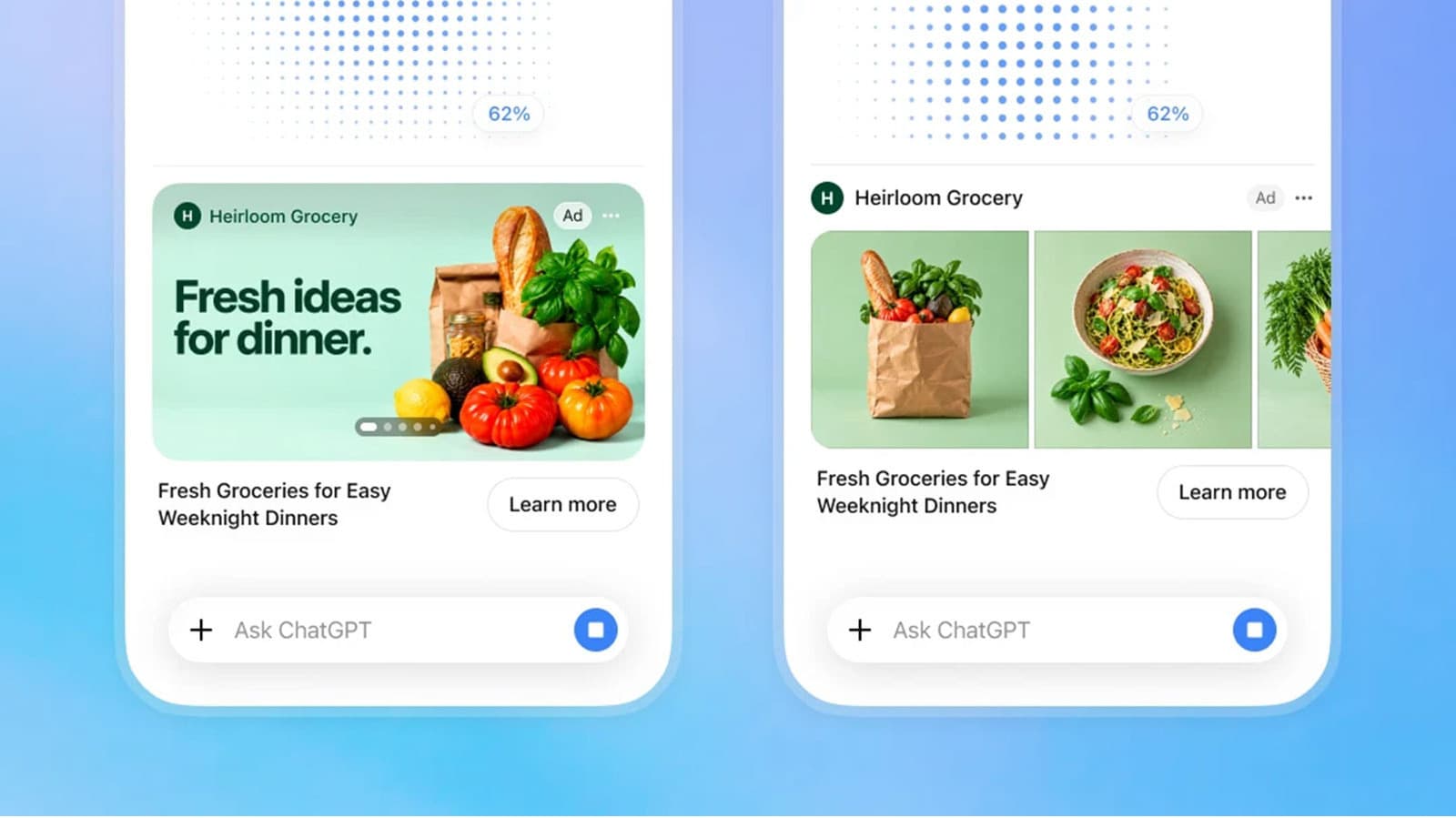
OpenAI is set to begin testing visual advertisements within ChatGPT’s image generation feature for US users later this month. The ads will appear alongside generated images and won’t influence the chatbot’s responses. The move expands OpenAI’s ad strategy as it seeks to monetize its growing user base.
30 SEC SUMMARY
- OpenAI is introducing visual ads in ChatGPT, appearing alongside image generation results for US users later this month.
- Ads will be labeled and won’t influence ChatGPT’s responses or appear for sensitive topics like personal health.
- ChatGPT Plus, Pro, and Enterprise users will remain ad-free.
- OpenAI is expanding ad measurement tools and partnerships to enhance targeting and brand suitability.
- The move aims to monetize ChatGPT’s free and low-cost tiers amid growing competition in AI chatbots.
TABLE OF CONTENTS
- OpenAI introduces visual ads in ChatGPT
- Expanding ad tools and partnerships
- Competition and user experience concerns
- What this means
- Key takeaways
- FAQ
- Sources
KEY HIGHLIGHTS
- OpenAI will test visual ads in ChatGPT for US users later this month, appearing alongside image generation results.
- Ads will be clearly labeled and won’t influence ChatGPT’s responses or appear for sensitive topics.
- ChatGPT Plus, Pro, and Enterprise users will not see ads in their conversations.
- OpenAI is expanding ad measurement tools and partnerships to improve targeting and brand suitability.
- The initiative aims to monetize ChatGPT’s free and low-cost tiers amid competition from platforms like Meta’s Muse.
OpenAI introduces visual ads in ChatGPT
OpenAI will begin testing a new visual ad format within ChatGPT later this month, starting with users in the US. According to TechCrunch and Engadget, the ads will appear during image generation via ChatGPT Images and will be clearly labeled as advertisements. The company stated that these ads will not influence ChatGPT’s responses or appear for sensitive topics such as personal health or mental wellbeing.
The rollout targets free and low-cost plan users, as ChatGPT Plus, Pro, and Enterprise subscribers will remain ad-free. OpenAI first introduced ads in ChatGPT earlier this year, expanding them to India in August. The move is part of a broader effort to monetize the platform’s 1.2 billion weekly users globally.
Expanding ad tools and partnerships
OpenAI is also expanding its ad measurement tools and partner ecosystem. According to TechCrunch, the company has integrated click attribution solutions from partners such as AppsFlyer, Triple Whale, Adjust, DV Rockerbox, Northbeam, Branch, Singular, Kochava, Airbridge, and Tenjin. Additionally, OpenAI is collaborating with Haus, Measured, and WorkMagic to enable geo-based ad experiments for advertisers.
To enhance brand suitability, OpenAI is developing evaluation pilots with DoubleVerify (DV) and Integral Ad Science (IAS). These efforts aim to improve ad targeting while maintaining user trust and safety.
Competition and user experience concerns
The introduction of visual ads positions OpenAI alongside competitors like Meta, whose AI tool Muse is gaining traction among chatbot users. TechCrunch noted that integrating ads into AI-driven experiences could disrupt user experience, though OpenAI’s approach seeks to minimize friction by excluding ads from sensitive conversations and paid tiers.
OpenAI’s ad strategy reflects its effort to diversify revenue streams while navigating regulatory scrutiny and growth challenges. The company has stated it may experiment with additional ad formats in the future.
What this means
Lazyfounder analysis — our interpretation, not reported fact.
OpenAI’s push into visual ads signals a strategic shift to monetize its massive user base, particularly free and low-cost tiers. For founders and operators, this highlights two key trends:
-
Ad-Supported AI Is Here to Stay – OpenAI is doubling down on ads as a revenue stream, mirroring traditional digital platforms. Startups building AI-driven products should consider how ad integrations could impact user experience and revenue models, especially if they rely on free tiers.
-
Balancing Monetization and Trust – OpenAI’s cautious approach—labeling ads, avoiding sensitive topics, and exempting paying users—shows it’s aware of user trust issues. For founders, this is a reminder that aggressive monetization can backfire if it disrupts core product value. The challenge will be scaling ads without alienating users, particularly as competition from platforms like Meta’s Muse intensifies.
Key takeaways
- OpenAI is rolling out visual ads in ChatGPT for US users later this month, appearing during image generation.
- Ads will be labeled and excluded from sensitive topics, with no impact on ChatGPT’s responses.
- Paid subscribers (Plus, Pro, and Enterprise) will not see ads in their chats.
- OpenAI is expanding ad measurement tools and partnerships with companies like DoubleVerify and Integral Ad Science.
- The move aims to monetize ChatGPT’s 1.2 billion weekly users while competing with rivals like Meta’s Muse.
FAQ
Who will see the new visual ads in ChatGPT?
The ads will initially appear for free and low-cost plan users in the US. ChatGPT Plus, Pro, and Enterprise subscribers will not see ads in their conversations.
Will ads influence ChatGPT’s responses?
No. OpenAI has stated that ads will not affect the chatbot’s responses or appear for sensitive topics like personal health or mental wellbeing.
What partners is OpenAI working with for ad measurement?
OpenAI has partnered with companies like AppsFlyer, Triple Whale, Adjust, DoubleVerify, and Integral Ad Science to improve ad targeting, measurement, and brand suitability.
How does this move compare to competitors like Meta?
Meta’s Muse is emerging as a competitor in the AI chatbot space. OpenAI’s ad expansion is a strategic play to monetize its user base while maintaining a balance between revenue and user experience.
Related on Lazyfounder
Sources
- Engadget · 2026-10-05
OpenAI Is Testing More Ads In ChatGPT - TechCrunch · 2026-10-05
OpenAI launches visual ads that appear alongside image generation results
This story is an original summary drafted with AI by Lazyfounder from the reporting listed above and checked by automated validation. Facts are attributed to their original publishers; sections marked as analysis are Lazyfounder's. Where a source is in another language, facts were machine-translated and quotations are reported, not reproduced. Read the original coverage via the links, and see our AI policy and corrections policy.

About the author
Editor, Lazyfounder
Tarun Mottlia edits LazyFounders, covering Indian startups, funding rounds, AI and product launches. Every story on the site is AI-assisted and checked against its cited sources before publication.
More stories by Tarun MottliaGet the LazyFounder Brief
Startup, funding and AI news in a five-minute read. Join the early-access list.
