
Nigeria’s AI development must address local problems, say experts
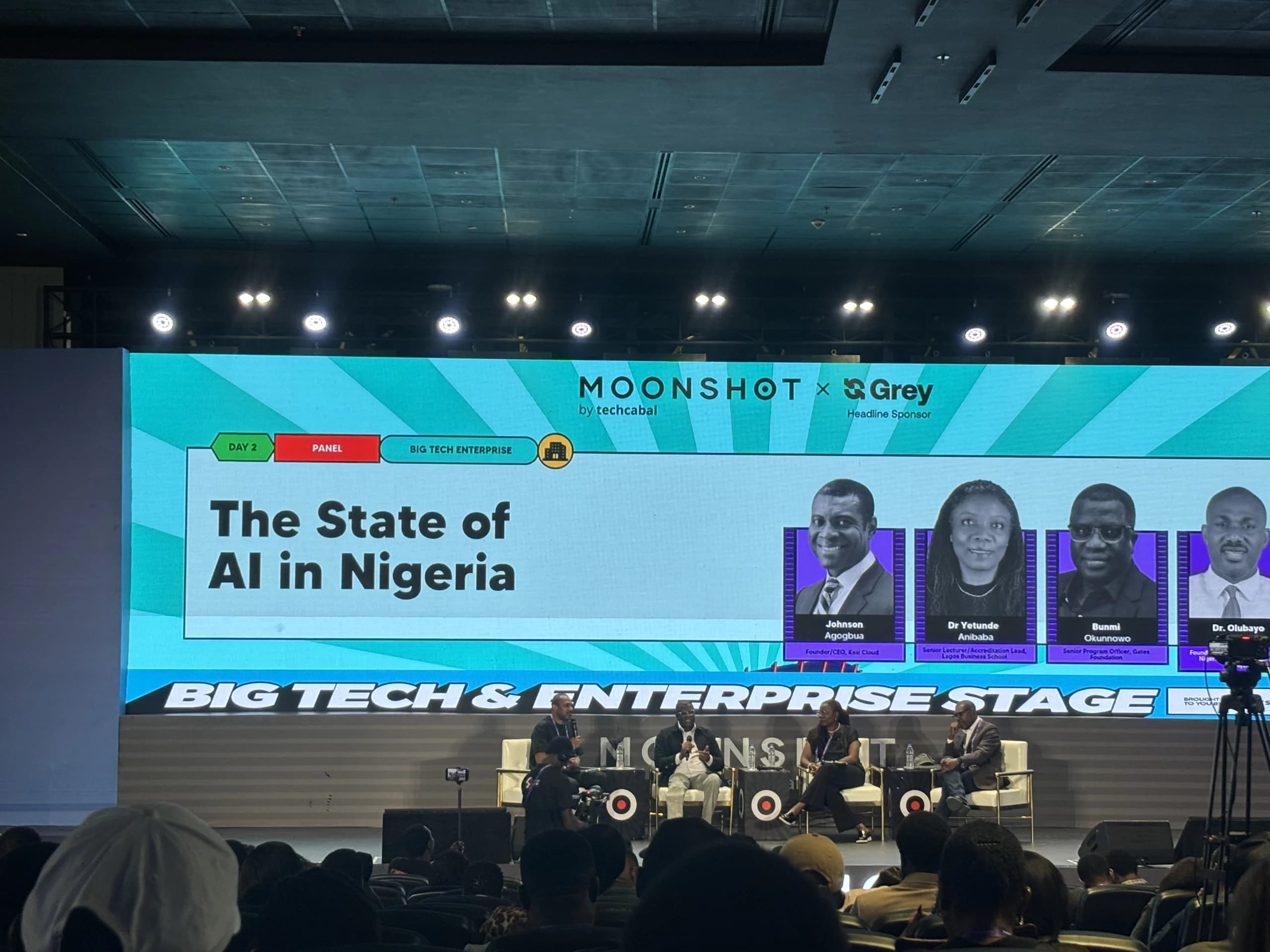
During a panel at Moonshot by TechCabal, experts highlighted that Nigeria’s AI progress will be measured by its ability to solve local challenges in healthcare, agriculture, and education. They stressed the need for local data, infrastructure, and policies to ensure AI tools are effective, affordable, and accessible.

Editor, Lazyfounder
AI progress tied to local impact
Panelists at the session "The State of AI in Nigeria" emphasized that Nigeria’s AI development must prioritize solving local problems. Olubunmi Okunowo, Senior Programme Officer at the Gates Foundation, noted that adopting advanced AI tools does not guarantee success if those tools fail to address the needs of Nigerians.
Johnson Agogbua, Founder and CEO of Kasi Cloud, added that technical skills alone are insufficient. Developers must collaborate with domain experts who understand the problems firsthand to create meaningful solutions.
Critical roles of data and infrastructure
The discussion underscored that local data, skills, and infrastructure are essential for building and deploying AI tools effectively. Dr Yetunde Anibaba, Senior Lecturer and Accreditation Lead at Lagos Business School, warned that AI tools ignoring local languages and working conditions risk excluding the very people they aim to serve.
Affordability and access were identified as major barriers to AI adoption. Without addressing these factors, even well-designed tools may fail to reach their intended users.
Sector focus and policy needs
Healthcare, agriculture, and education were highlighted as key sectors where AI could drive productivity. Dr Olubayo Adekambi, Founder and CEO of Data Scientists Network, pointed to the Nigeria AI Scaling Hub—supported by the Gates Foundation—as an initiative helping AI products scale in these sectors.
However, clearer policies are needed to accelerate adoption, particularly in healthcare. Panelists agreed that regulatory frameworks must evolve to support AI innovation while ensuring accessibility.
What this means
Lazyfounder analysis — our interpretation, not reported fact.
This discussion matters for founders and operators in Nigeria and similar markets because it reframes AI success beyond technical benchmarks. For AI startups, the message is clear: local relevance is non-negotiable. Solutions must be designed with end-users—whether farmers, healthcare workers, or students—in mind from day one.
Affordability and access aren’t afterthoughts; they are core challenges that could determine whether a product scales or stalls. The emphasis on policy also signals that regulatory clarity may soon become a competitive advantage. Startups that engage with regulators early could avoid costly pivots later, especially in heavily regulated sectors like healthcare.
Finally, the focus on local data and infrastructure is a call to action for ecosystem players. Founders who invest in building or partnering for local datasets and infrastructure—rather than relying on generic models—will likely see higher adoption and impact.
Related on Lazyfounder
Sources
- TechCabal · 2026-10-31
Nigeria’s AI ambitions depend on building for local realities
This story is an original summary drafted with AI by Lazyfounder from the reporting listed above and checked by automated validation. Facts are attributed to their original publishers; sections marked as analysis are Lazyfounder's. Where a source is in another language, facts were machine-translated and quotations are reported, not reproduced. Read the original coverage via the links, and see our AI policy and corrections policy.

About the author
Editor, Lazyfounder
Tarun Mottlia edits LazyFounders, covering Indian startups, funding rounds, AI and product launches. Every story on the site is AI-assisted and checked against its cited sources before publication.
More stories by Tarun MottliaGet the LazyFounder Brief
Startup, funding and AI news in a five-minute read. Join the early-access list.
