
DeepSeek releases open-source AI coding agent Super-Agent
DeepSeek, a Chinese AI lab, has open-sourced Super-Agent, an experimental AI coding agent designed to monitor developers’ group chats and proactively suggest solutions to coding problems. Released under an MIT licence on GitHub, the agent integrates with GitHub repositories and ByteDance’s workplace chat app, Feishu, but is positioned as a research prototype rather than an official product.

Editor, Lazyfounder
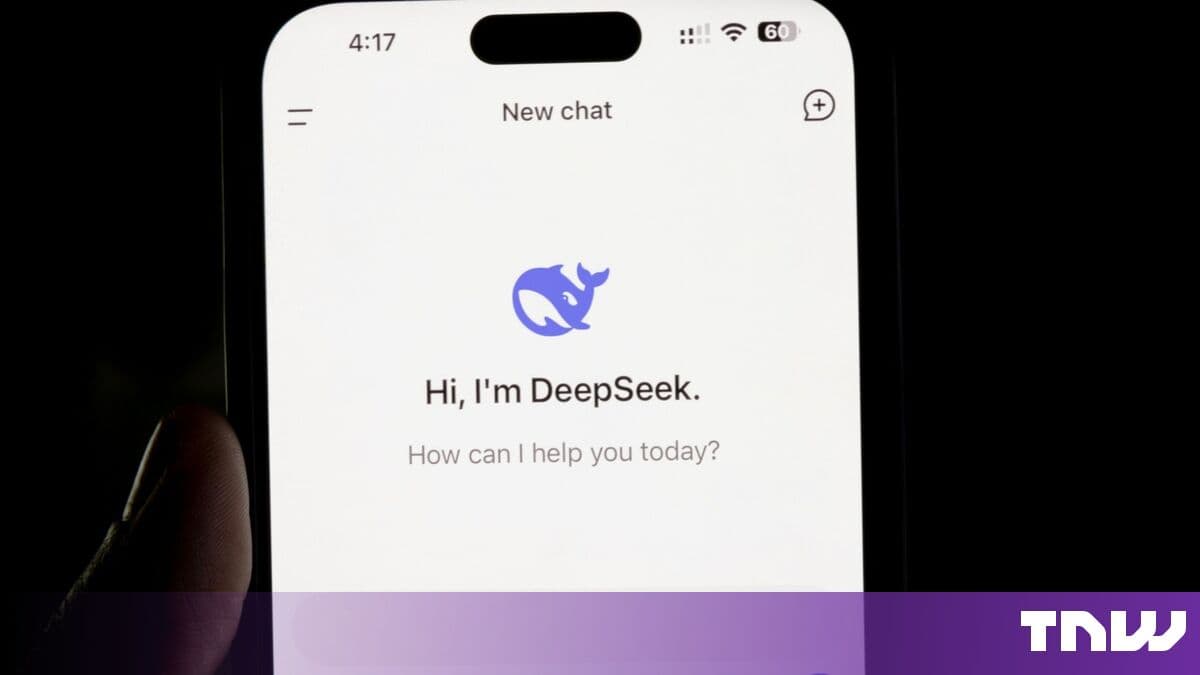
TABLE OF CONTENTS
What Super-Agent does
DeepSeek has released Super-Agent under an MIT licence on GitHub, positioning it as an experimental AI coding agent. The agent is designed to monitor developers’ group chats—specifically ByteDance’s workplace app, Feishu—and suggest solutions to coding problems without requiring explicit prompts. It operates within a single GitHub repository and handles approved tasks independently, aiming to reduce the need for human coordination of multiple AI agents.
Experimental status and risks
DeepSeek describes Super-Agent as a "research prototype," not an official product. The public code differs from its internal version, and the GitHub repository’s README cautions that some described features are not yet implemented. The agent also carries risks: if it misinterprets or misprioritizes tasks, it could waste an entire team’s attention.
Competition and collaboration challenges
Super-Agent is part of DeepSeek’s strategy to compete with US-developed coding tools, including Anthropic’s Claude Code and GitHub’s Copilot. Earlier this year, DeepSeek released a preview of its own agent app, which handles coding, documentation, and spreadsheets. However, challenges in multi-agent collaboration persist—GitHub’s recent demonstration of a Copilot feature running tasks across multiple repositories highlights this. A January study, CooperBench, found that coding agents performed worse in team settings, with success rates dropping by 30% compared to individual tasks.
Regulatory and funding context
DeepSeek faces regulatory hurdles in the US, where civilian federal agencies were instructed last month to remove its software. Despite this, the company has raised approximately $15bn ahead of a planned listing, reflecting its long-term ambitions. The open-source release of Super-Agent follows reports that DeepSeek and other Chinese AI labs have used outputs from advanced models like OpenAI’s GPT-6 Astra for training, a practice that has sparked debates over intellectual property and competitive fairness.
Connection to earlier reporting
This release aligns with DeepSeek’s broader efforts to narrow the gap with US AI labs, as previously reported by LazyFounder. Earlier coverage highlighted that DeepSeek and Moonshot AI used outputs from OpenAI’s GPT-6 Astra to train their latest models, underscoring their strategy to leverage available resources amid geopolitical constraints. The shift toward AI-driven development tools also mirrors Anthropic’s decision to eliminate coding interviews, arguing that AI now outperforms humans in such tasks.
What this means
Lazyfounder analysis — our interpretation, not reported fact.
Super-Agent’s release signals two key takeaways for founders and operators. First, the experimental nature of the tool reflects the unresolved challenges in multi-agent collaboration—a critical hurdle for teams relying on AI to streamline development workflows. The 30% drop in performance observed in team settings, as highlighted by the CooperBench study, suggests that integrating such agents may still require significant oversight and refinement.
Second, DeepSeek’s decision to open-source Super-Agent despite US restrictions underscores its strategic focus on markets where access to cutting-edge AI tools is limited. For startups operating in regions with similar constraints, this move could pave the way for more accessible, locally adaptable AI solutions. However, the regulatory risks and competitive dynamics remain critical factors to monitor.
Related on Lazyfounder
Sources
- The Next Web · 2026-11-01
DeepSeek open-sources Super-Agent, a coding agent that reads team chats
This story is an original summary drafted with AI by Lazyfounder from the reporting listed above and checked by automated validation. Facts are attributed to their original publishers; sections marked as analysis are Lazyfounder's. Where a source is in another language, facts were machine-translated and quotations are reported, not reproduced. Read the original coverage via the links, and see our AI policy and corrections policy.

About the author
Editor, Lazyfounder
Tarun Mottlia edits LazyFounders, covering Indian startups, funding rounds, AI and product launches. Every story on the site is AI-assisted and checked against its cited sources before publication.
More stories by Tarun MottliaGet the LazyFounder Brief
Startup, funding and AI news in a five-minute read. Join the early-access list.
