
NetApp launches Novus to tackle AI data infrastructure bottlenecks, plans PEAK:AIO acquisition
NetApp Inc. unveiled Novus, a new storage architecture designed to eliminate metadata bottlenecks in AI data infrastructure, and announced plans to acquire PEAK:AIO Ltd. to enhance its parallel file system capabilities. The moves aim to improve scalability and performance for enterprise AI applications.

Editor, Lazyfounder
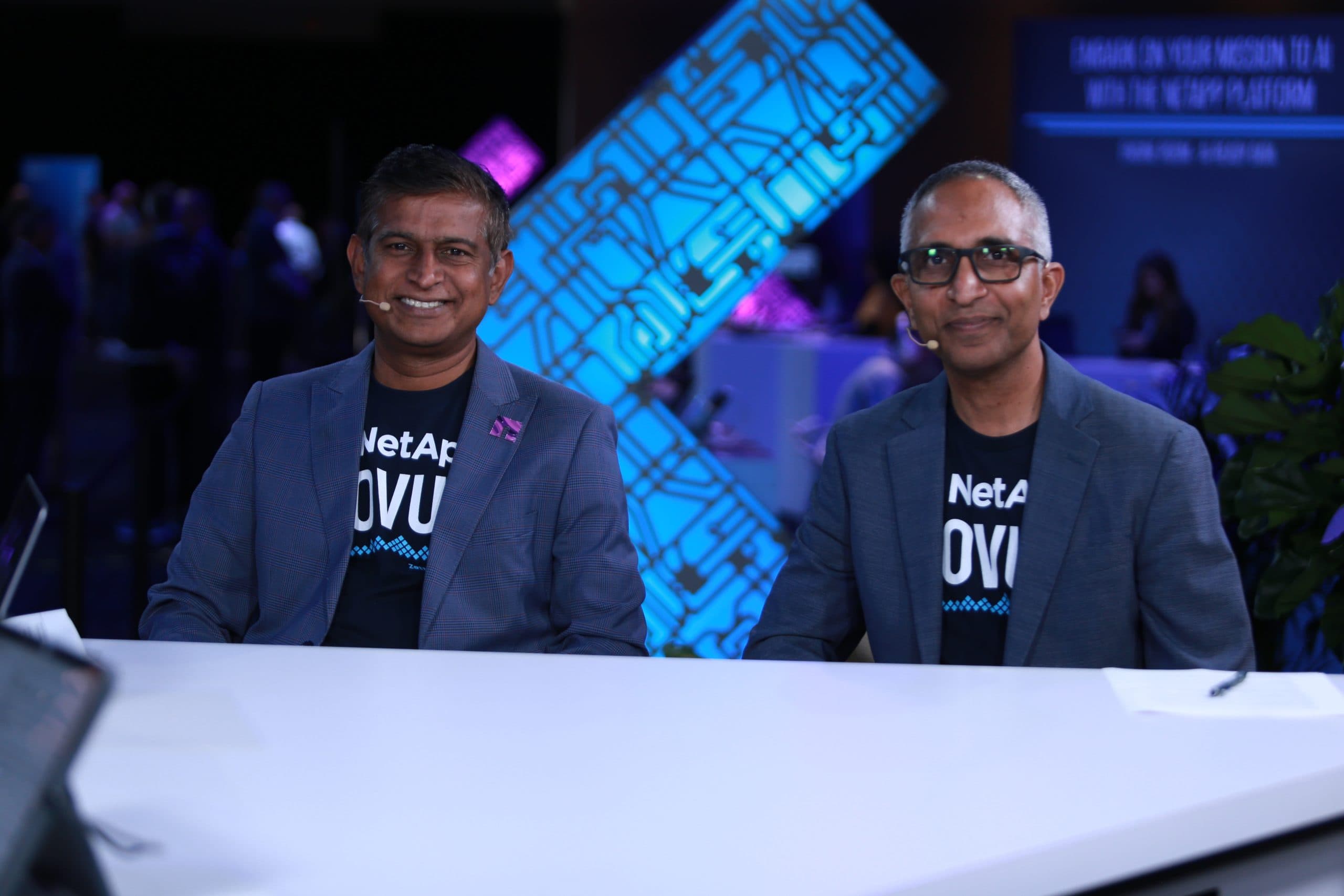
NetApp Inc. unveiled Novus, a new storage architecture designed to eliminate metadata bottlenecks in AI data infrastructure, and announced plans to acquire PEAK:AIO Ltd. to enhance its parallel file system capabilities. The moves aim to improve scalability and performance for enterprise AI applications.
30 SEC SUMMARY
- NetApp Inc. launched Novus, a storage architecture designed to eliminate metadata bottlenecks in AI data infrastructure.
- Novus delivers over 100TB/s of aggregate throughput, targeting enterprise AI scalability.
- NetApp announced plans to acquire PEAK:AIO Ltd. to enhance parallel file system technology using the pNFS protocol.
- Data Director separates metadata management from stored data, enabling independent scaling.
- NetApp’s AI Data Engine aims to reduce months-long data preparation time for AI workloads.
TABLE OF CONTENTS
- Novus targets metadata bottlenecks in AI data infrastructure
- AI Data Engine aims to shorten data preparation timelines
- Acquisition of PEAK:AIO to bolster parallel file system technology
- Background: NetApp’s recent collaborations and innovations
- What this means
- Key takeaways
- FAQ
- Sources
KEY HIGHLIGHTS
- NetApp introduced Novus, a storage architecture optimized for AI data infrastructure, exceeding 100TB/s throughput.
- The company announced the acquisition of PEAK:AIO Ltd. to integrate parallel file system technology built on the pNFS protocol.
- Data Director provides a unified view of files across multiple ONTAP storage clusters, simplifying access and management.
- NetApp’s AI Data Engine is designed to streamline data preparation, reducing it from six to nine months to a shorter timeframe.
- The new architecture emphasizes open standards for extensibility and interoperability.
Novus targets metadata bottlenecks in AI data infrastructure
NetApp Inc. introduced Novus, a storage architecture engineered to address metadata bottlenecks in AI data infrastructure. According to SiliconANGLE, the system exceeds 100TB/s of aggregate throughput, positioning it as a solution for enterprises scaling AI workloads.
The architecture includes Data Director, which manages metadata separately from stored data. This separation allows each component to scale independently, a feature NetApp highlights as critical for handling large-scale AI datasets. Data Director also provides applications with a unified view of files across multiple ONTAP storage clusters, eliminating the need to access each cluster individually.
AI Data Engine aims to shorten data preparation timelines
NetApp’s AI Data Engine is designed to streamline the data preparation process for AI workloads. SiliconANGLE reports that the tool discovers, classifies, and vectorizes enterprise data, potentially reducing preparation time from six to nine months to a shorter duration.
Syam Nair, Chief Product Officer at NetApp, emphasized the importance of data readiness and protection in AI workloads. He noted that without these, organizations risk compromised results, even if they achieve faster outcomes.
Acquisition of PEAK:AIO to bolster parallel file system technology
NetApp announced plans to acquire PEAK:AIO Ltd., a move aimed at integrating parallel file system technology built on the pNFS protocol. SiliconANGLE states that this acquisition could enhance NetApp’s ability to slot into existing systems without requiring a rip-and-replace approach.
The pNFS protocol, which any Linux kernel released after 2018 includes, is expected to improve interoperability and reduce deployment complexity. NetApp’s focus on open standards aligns with its strategy to extend existing customer infrastructure rather than replace it.
Background: NetApp’s recent collaborations and innovations
NetApp recently partnered with Oracle to launch a fully managed storage service integrating ONTAP data management software into Oracle Cloud Infrastructure (OCI). The collaboration aims to simplify infrastructure modernization and AI workloads by offering a seamless, co-engineered solution.
The company has also been involved in industry collaborations, such as IBM’s partnership with CoreWeave to develop controls for AI agent workloads. These efforts reflect a broader trend of technology providers addressing the infrastructure challenges of AI-driven enterprises.
What this means
Lazyfounder analysis — our interpretation, not reported fact.
NetApp’s launch of Novus and its planned acquisition of PEAK:AIO signal a strategic push to address the growing demands of AI-driven enterprises. Metadata bottlenecks have long been a pain point for organizations scaling AI workloads, and Novus’s ability to exceed 100TB/s throughput while separating metadata management could offer a meaningful advantage.
For founders and operators, this move underscores the importance of specialized infrastructure in AI adoption. The emphasis on open standards and interoperability suggests NetApp is prioritizing flexibility, which could make its solutions more appealing to enterprises hesitant to overhaul existing systems. The AI Data Engine’s promise to cut data preparation time is particularly noteworthy—if delivered, it could accelerate AI deployment timelines and reduce costs.
However, the success of these initiatives will depend on execution. The acquisition of PEAK:AIO, while promising, will need to be integrated smoothly to avoid disruption. For now, NetApp’s approach reflects a clear understanding of the challenges enterprises face in scaling AI, but the real test will be how well these solutions perform in real-world environments.
Key takeaways
- Novus addresses metadata bottlenecks, a critical challenge in scaling AI workloads.
- Separating metadata from stored data allows independent scaling, improving flexibility for enterprises.
- The acquisition of PEAK:AIO underscores NetApp’s focus on enhancing its storage solutions for AI-driven environments.
- Open standards are a cornerstone of NetApp’s strategy, aiming to integrate seamlessly with existing systems.
- AI Data Engine could significantly reduce the time and effort required for data preparation in AI projects.
FAQ
What is Novus, and how does it address AI data infrastructure challenges?
Novus is a storage architecture launched by NetApp to eliminate metadata bottlenecks in AI data infrastructure. It exceeds 100TB/s of aggregate throughput and separates metadata management from stored data, allowing independent scaling for enterprise AI workloads.
How does the acquisition of PEAK:AIO fit into NetApp’s strategy?
The acquisition of PEAK:AIO is intended to enhance NetApp’s parallel file system technology using the pNFS protocol. This move aims to improve interoperability and reduce deployment complexity, allowing NetApp to integrate with existing systems without requiring a full overhaul.
What is the AI Data Engine, and how does it reduce data preparation time?
NetApp’s AI Data Engine is a tool designed to discover, classify, and vectorize enterprise data. It aims to cut data preparation time from six to nine months to a shorter duration, making AI workloads more efficient.
Related on Lazyfounder
Sources
- SiliconANGLE · 2026-10-05
NetApp’s Novus tackles metadata bottlenecks in AI data infrastructure
This story is an original summary drafted with AI by Lazyfounder from the reporting listed above and checked by automated validation. Facts are attributed to their original publishers; sections marked as analysis are Lazyfounder's. Where a source is in another language, facts were machine-translated and quotations are reported, not reproduced. Read the original coverage via the links, and see our AI policy and corrections policy.

About the author
Editor, Lazyfounder
Tarun Mottlia edits LazyFounders, covering Indian startups, funding rounds, AI and product launches. Every story on the site is AI-assisted and checked against its cited sources before publication.
More stories by Tarun MottliaGet the LazyFounder Brief
Startup, funding and AI news in a five-minute read. Join the early-access list.
