
NBCC’s World Trade Centre Project in Delhi Gets Provisional 4-Star GRIHA Rating
NBCC’s World Trade Centre project at Nauroji Nagar in New Delhi has been awarded a provisional 4-star GRIHA rating, recognizing its commitment to sustainable building practices. The rating highlights the project’s focus on energy efficiency and environmental responsibility, setting a standard for commercial developments in India.

Editor, Lazyfounder
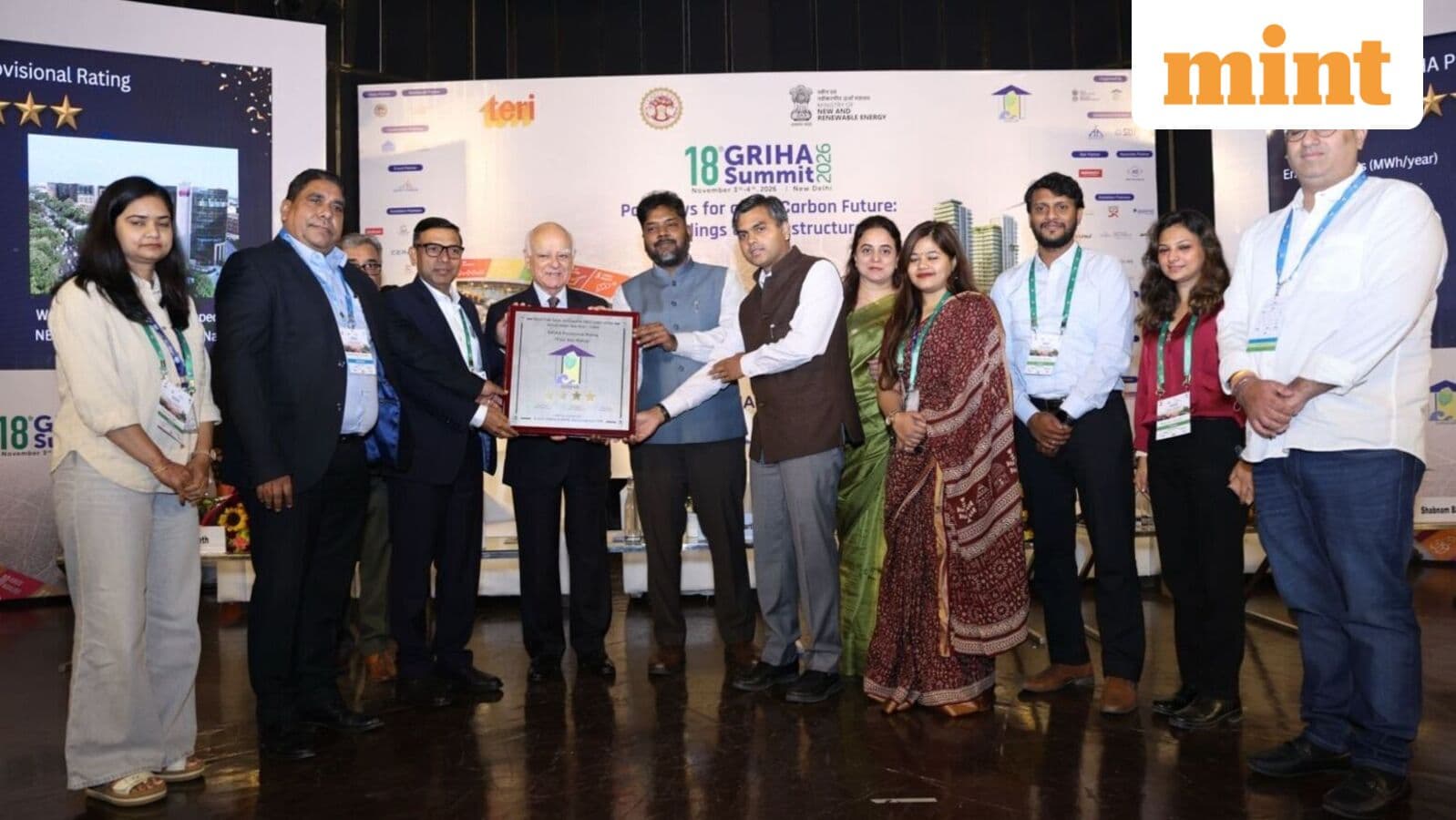
NBCC’s WTC Project Earns Provisional 4-Star GRIHA Rating
National Buildings Construction Corporation Limited (NBCC) has secured a provisional 4-star GRIHA rating for its World Trade Centre (WTC) project at Nauroji Nagar in New Delhi. The rating recognizes the project’s adherence to sustainable building practices, including energy efficiency and reduced environmental impact, according to Mint (Technology).
The GRIHA (Green Rating for Integrated Habitat Assessment) system evaluates buildings across multiple sustainability criteria, such as energy consumption, waste generation, and renewable energy adoption. The provisional rating was awarded based on the project’s performance during the design and pre-construction phases.
What GRIHA Certification Means for Builders
GRIHA is India’s national green building rating system, developed by The Energy and Resources Institute (TERI) and adopted by the Indian government in 2007. It aligns with the country’s climate commitments under the United Nations Framework Convention on Climate Change (UNFCCC), serving as a tool for carbon mitigation.
The rating system assesses buildings at three stages: pre-construction, construction, and operation. Projects that meet GRIHA’s standards can achieve significant energy savings and reductions in carbon emissions. Mint (Technology) reports that GRIHA-rated buildings collectively save over 42,284 GWatt of energy annually and offset more than 12 tonnes of carbon dioxide emissions.
To date, GRIHA has registered over 5,287 projects, covering 36.5 million square metres of built-up area. This scale underscores its growing adoption in India’s construction sector.
Why This Matters for Developers and Operators
The provisional 4-star rating for NBCC’s WTC project signals a benchmark for sustainable commercial construction in India. Developers pursuing GRIHA certification can differentiate their projects in a market where environmental regulations and tenant expectations are increasingly favoring green buildings.
For operators, GRIHA-certified buildings may offer long-term cost savings through energy efficiency and lower waste management expenses. The rating also provides a framework for compliance with India’s climate commitments, which could become a requirement for future public and private sector projects.
What this means
Lazyfounder analysis — our interpretation, not reported fact.
For founders and operators in India’s construction and real estate sectors, the GRIHA rating is more than a badge—it’s a signal of where the market is headed. Regulatory pressures and tenant preferences are increasingly tilting toward sustainable buildings, and certifications like GRIHA provide a clear framework for meeting these demands. NBCC’s provisional 4-star rating for its WTC project demonstrates that large-scale commercial developments can achieve high sustainability standards without sacrificing feasibility.
For startups in green construction tech or materials, this trend opens opportunities to supply GRIHA-compliant solutions. For operators, investing in GRIHA-certified projects could translate into lower long-term costs and stronger alignment with India’s climate goals, which may soon become a non-negotiable for government contracts or institutional tenants.
Related on Lazyfounder
Sources
- Mint (Technology) · 2026-11-04
NBCC’s WTC project at Delhi’s Nauroji Nagar receives GRIHA provisional 4-star rating: Here’s all you need to know
This story is an original summary drafted with AI by Lazyfounder from the reporting listed above and checked by automated validation. Facts are attributed to their original publishers; sections marked as analysis are Lazyfounder's. Where a source is in another language, facts were machine-translated and quotations are reported, not reproduced. Read the original coverage via the links, and see our AI policy and corrections policy.

About the author
Editor, Lazyfounder
Tarun Mottlia edits LazyFounders, covering Indian startups, funding rounds, AI and product launches. Every story on the site is AI-assisted and checked against its cited sources before publication.
More stories by Tarun MottliaGet the LazyFounder Brief
Startup, funding and AI news in a five-minute read. Join the early-access list.
