
NASA safety panel flags 22-refueling-launch estimate for SpaceX Starship on Artemis 4
NASA’s Aerospace Safety Advisory Panel (ASAP) has raised concerns about the feasibility of SpaceX’s Starship Human Landing System (HLS) for the Artemis 4 mission, estimating it may require around 22 refueling launches. Elon Musk countered the claim, asserting the number would be far lower. The debate underscores broader questions about the safety and practicality of orbital refueling for lunar missions.

Editor, Lazyfounder
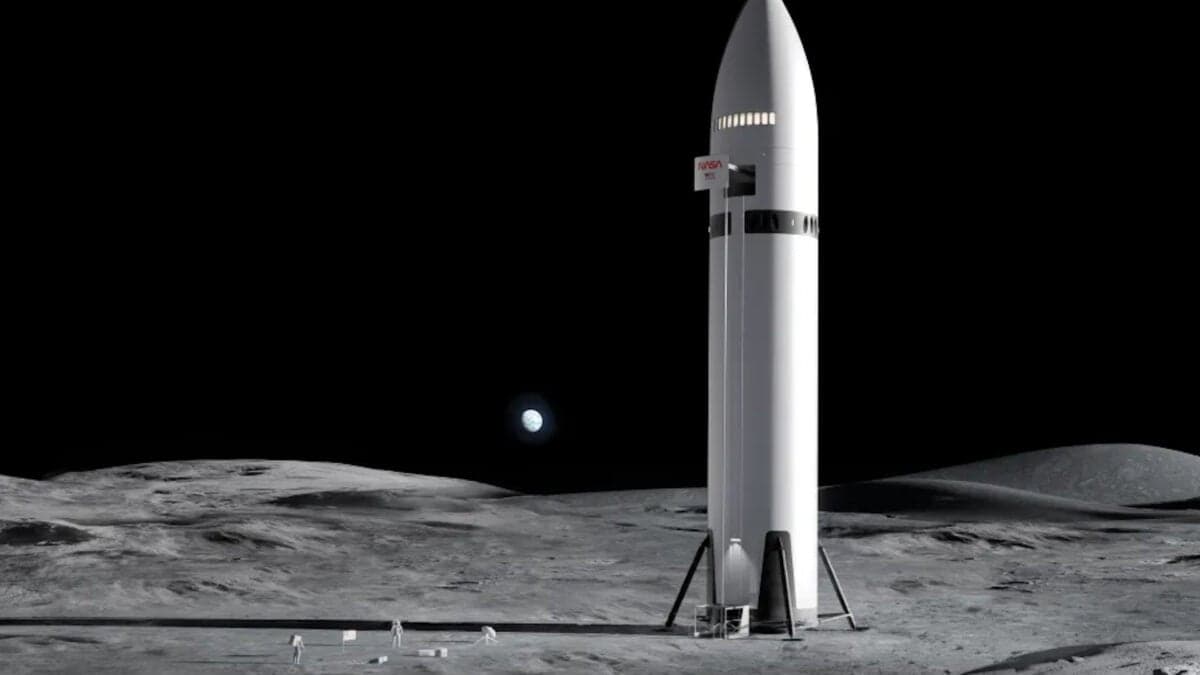
Refueling estimates spark safety concerns
NASA’s Aerospace Safety Advisory Panel (ASAP) member Charlie Precourt stated during a recent meeting that SpaceX’s Starship Human Landing System (HLS) could require approximately 22 launches for refueling ahead of the Artemis 4 moon landing mission. Precourt, a former NASA astronaut, emphasized the complexity and risk associated with this approach, particularly given the untested nature of orbital refueling for cryogenic propellant.
The panel plans to formally recommend that NASA re-examine its Artemis 4 plans to address potential safety gaps. NASA’s prior internal estimates for tanker flights ranged from 10 to 20, aligning more closely with Precourt’s figure than with SpaceX’s projections.
SpaceX’s Starship HLS relies on an orbital refueling depot to store cryogenic propellant in low-Earth orbit. However, maintaining such a depot introduces challenges, as cryogenic fuel is prone to evaporation and loss in space.
SpaceX disputes NASA’s assessment
Elon Musk publicly challenged Precourt’s estimate, stating on X (formerly Twitter) that the number of refueling launches required would be between 6 and 8. Musk did not provide technical details to support this claim, but SpaceX has previously defended its Starship architecture as scalable and efficient.
The discrepancy between NASA’s safety panel and SpaceX highlights a broader tension in the Artemis program. While NASA has invested heavily in SpaceX’s Starship as its chosen lunar lander, the mission’s timeline—currently targeting early 2028—remains contingent on resolving technical and logistical hurdles.
Former NASA Administrator Michael Griffin weighed in on the debate, telling Ars Technica that the Artemis program’s reliance on Starship HLS is "exceedingly risky." He criticized NASA’s decision to entrust the mission to a single contractor, warning that delays or failures could jeopardize the entire program.
Implications for NASA’s lunar strategy
The ASAP’s recommendation to revisit Artemis 4 planning reflects growing unease within NASA about the mission’s feasibility. Critical components, including spacesuits and lunar landers, remain unresolved, adding to the uncertainty.
NASA’s Artemis program was designed to foster competition among aerospace contractors, but Blue Origin’s delayed lander development has left SpaceX as the sole provider for the near term. This dependence increases pressure on SpaceX to deliver its Starship HLS on schedule, despite the technical challenges.
The debate over refueling launches also underscores the risks of cryogenic propellant storage in space. According to Space Policy Online, NASA has explored orbital refueling depot concepts for years, but none have been tested at the scale required for Artemis 4.
What this means
Lazyfounder analysis — our interpretation, not reported fact.
For founders and operators in the aerospace sector, this debate is a reminder of the technical and regulatory hurdles that can derail even well-funded programs. NASA’s safety panel is signaling that reliance on unproven technologies—like orbital refueling—carries significant risk, and the agency may demand more conservative planning or backup options. SpaceX’s aggressive timeline and cost estimates are facing scrutiny, which could lead to delays or additional requirements for contractors bidding on future NASA missions.
For startups in space infrastructure, the Artemis 4 challenges highlight opportunities: cryogenic fuel management, in-space propulsion, and redundancy systems are areas where innovation could address gaps NASA is now confronting. The tension between NASA and SpaceX also serves as a case study in how public-private partnerships handle risk—expect closer oversight if safety concerns persist.
Related on Lazyfounder
Sources
- Gizmodo · 2026-10-26
NASA Safety Panel Says a Starship Moon Landing Needs 22 Launches. Musk Has a Very Different Number
This story is an original summary drafted with AI by Lazyfounder from the reporting listed above and checked by automated validation. Facts are attributed to their original publishers; sections marked as analysis are Lazyfounder's. Where a source is in another language, facts were machine-translated and quotations are reported, not reproduced. Read the original coverage via the links, and see our AI policy and corrections policy.

About the author
Editor, Lazyfounder
Tarun Mottlia edits LazyFounders, covering Indian startups, funding rounds, AI and product launches. Every story on the site is AI-assisted and checked against its cited sources before publication.
More stories by Tarun MottliaGet the LazyFounder Brief
Startup, funding and AI news in a five-minute read. Join the early-access list.
