

MurariJyoti Welfare Foundation grows from community conversations in Bihar
MurariJyoti Welfare Foundation (MJWF), a nonprofit in Bihar, began with informal discussions about menstrual health and grew by addressing the needs its community identified. Founder Tejaswini prioritized listening and research over pre-set solutions, leading to health camps, education on government schemes, and plans for women’s employment and education.

Editor, Lazyfounder
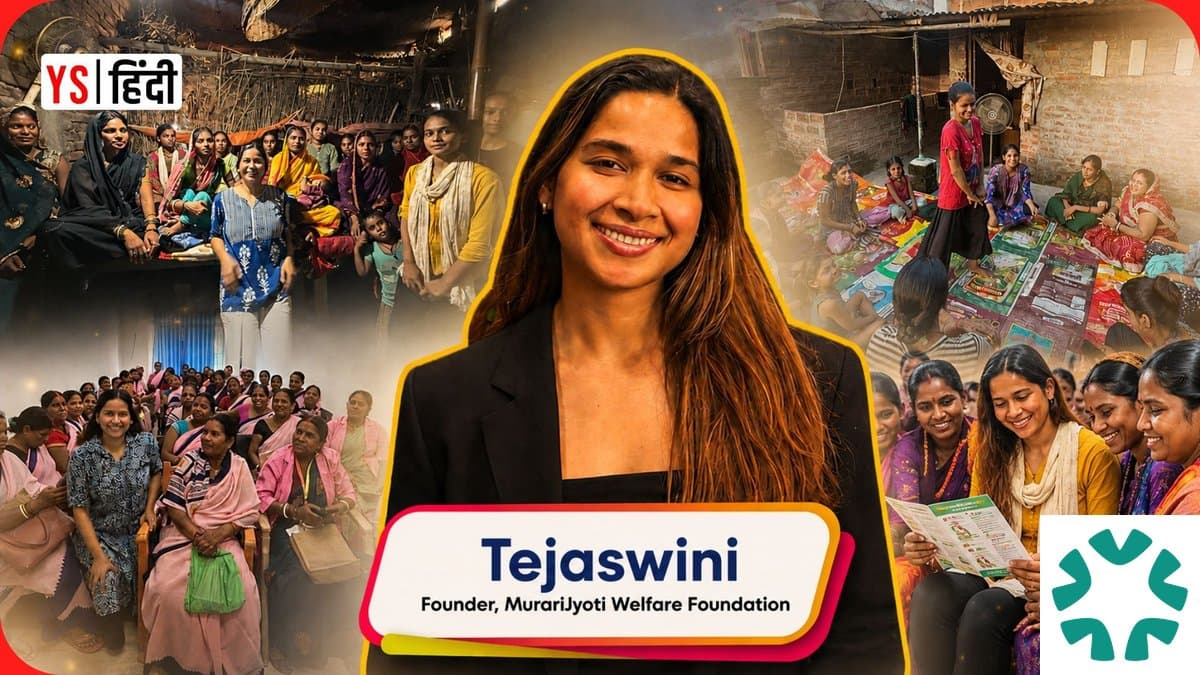
TABLE OF CONTENTS
KEY HIGHLIGHTS
- MJWF started with conversations about menstrual health in a small Bihar community and now reaches 3,500 people.
- The foundation has distributed over 500 menstrual cups and works with around 1,500 women.
- It organizes free health camps for non-communicable diseases (NCDs) and educates communities about government healthcare benefits.
- MJWF’s expansion was driven by community input, not a fixed model or funding.
- Trust-building took months of repeated engagement in rural communities.
How the foundation started
MurariJyoti Welfare Foundation (MJWF) emerged from informal discussions about menstrual health in a small community in Bihar. Tejaswini, the founder, began by speaking with women and frontline health workers (ASHAs) to understand their challenges. These conversations revealed broader health needs, leading to the foundation’s formation.
According to YourStory, the initiative was not launched with a large project or external funding. It started as a single conversation and grew organically as more issues were identified.
Community-driven approach to health
MJWF does not follow a fixed model. Instead, it prioritizes listening to the community to identify problems before designing solutions. This approach has expanded its work beyond menstrual health to include non-communicable diseases (NCDs) like diabetes, hypertension, and cervical cancer.
The foundation has distributed over 500 menstrual cups and reached approximately 3,500 people, with active work involving around 1,500 women. It also organizes free health camps to screen for NCDs and educates communities about government healthcare schemes and free medications available in public hospitals.
Tejaswini notes that the foundation’s growth was not planned. It was driven by the community’s expressed needs, which highlighted gaps in awareness and access to existing services.
Overcoming trust barriers
Building trust was a major challenge in rural communities. Initially, people questioned why outsiders were addressing sensitive topics like women’s health. The foundation’s team addressed this by engaging repeatedly with the community over months, avoiding rushed interventions.
Over time, this persistence led to recognition and trust. Communities began approaching the foundation with their needs, shifting from passive acceptance to active participation.
Expanding beyond health
While MJWF began with health interventions, it is now exploring opportunities in education, employment, and entrepreneurship for women. However, Tejaswini insists that even these initiatives will not follow a predefined model. The foundation will continue to rely on community input to shape its programs.
This approach sets MJWF apart from other social organizations. It avoids imposing external solutions and instead focuses on creating what the community genuinely requires.
Partners and milestones
MJWF collaborates with institutions like the University of Essex, UK-based health innovation company 10zyme, Bhagalpur Medical College, and the Bihpur Primary Health Center. In July 2026, it received the Goonj Grassroots Award, recognizing its community-driven work.
Tejaswini returned to India in March 2026 to work full-time with MJWF, after initially funding the foundation’s operations through her earnings in London.
Redefining success for social impact
For Tejaswini, success is not measured by the number of people reached but by the community’s ability to identify its own needs and make independent decisions. She envisions the foundation’s work becoming unnecessary if communities achieve self-sufficiency in addressing their health and development challenges.
What this means
Lazyfounder analysis — our interpretation, not reported fact.
MJWF’s model underscores the importance of community-led design for founders and operators in social impact or rural development. Its success in building trust and identifying unmet needs—without relying on a predefined roadmap—challenges the assumption that large funding or structured projects are always necessary to create change. For startups in health, education, or related sectors, this highlights the value of patience, local insights, and adaptability over rigid planning.
Key takeaways
- Community-led solutions can emerge from informal conversations, not just large-scale projects or funding.
- Trust-building in rural or sensitive sectors requires time and repeated engagement.
- Gaps in awareness and access to existing services (e.g., government healthcare) can be as critical as creating new solutions.
- Expansion should be guided by community needs, not a fixed model or external expectations.
Sources
- yourstory.com
कैसे बिहार में महिलाओं का जीवन संवार रहा है तेजस्विनी का MurariJyoti Welfare Foundation
This story is an original summary drafted with AI by Lazyfounder from the reporting listed above and checked by automated validation. Facts are attributed to their original publishers; sections marked as analysis are Lazyfounder's. Where a source is in another language, facts were machine-translated and quotations are reported, not reproduced. Read the original coverage via the links, and see our AI policy and corrections policy.

About the author
Editor, Lazyfounder
Tarun Mottlia edits LazyFounders, covering Indian startups, funding rounds, AI and product launches. Every story on the site is AI-assisted and checked against its cited sources before publication.
More stories by Tarun MottliaGet the LazyFounder Brief
Startup, funding and AI news in a five-minute read. Join the early-access list.
