
Krafton-backed Ludo Robotics releases Ludi 0.2 AI for human-robot interaction
Ludo Robotics Inc., a subsidiary of South Korean video game publisher Krafton Inc., has launched Ludi 0.2, a robotics artificial intelligence system designed to understand and interact with humans in real-world environments. The update expands capabilities in social intelligence, memory, reasoning, tool coordination, gesture interpretation, and physical movement.

Editor, Lazyfounder
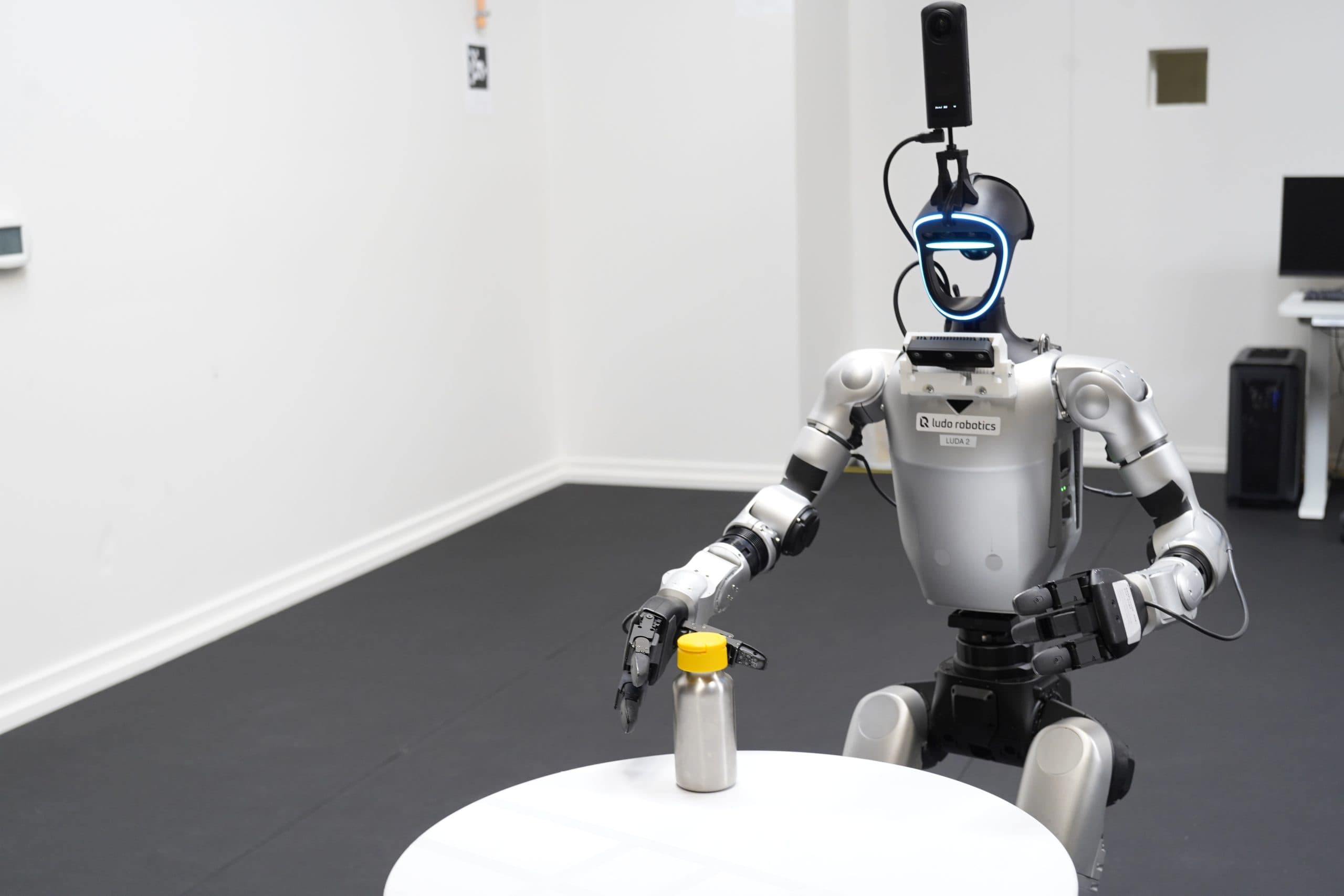
TABLE OF CONTENTS
What Ludi 0.2 delivers
Ludo Robotics Inc., a subsidiary of Krafton Inc., has released Ludi 0.2, an artificial intelligence system designed to enable robots to understand and interact with humans in physical spaces. The update improves the system’s ability to interpret gestures, coordinate tools, and move in real-world environments, building on the foundational capabilities introduced in Ludi 0.1 in August 2026.
Capabilities and applications
Ludi 0.2 advances key features for human-robot interaction, including social intelligence, memory, reasoning, and physical movement. According to SiliconANGLE, the system interprets human gestures and speech in real time, enabling robots to respond to commands and navigate dynamic environments like retail spaces, kitchens, or living rooms.
The company aims to integrate perception, dialogue, and physical action into a single "brain," allowing robots to observe, listen, and act autonomously. This aligns with the broader industry push toward "physical AI," where intelligent robots perform tasks in everyday settings.
Origins and leadership
Ludo Robotics spun out of Krafton, a South Korean video game publisher best known for PUBG: Battlegrounds. Krafton’s expertise in simulation, interaction, and real-time systems underpins Ludo’s development. CH Kim, CEO of Krafton and Ludo Robotics, and Kangwook Lee, Krafton’s Chief AI Officer and Ludo’s Chief Technology Officer, lead the subsidiary.
The company is headquartered in Palo Alto with a research and development lab in Seoul.
Partnerships and technology
Ludo Robotics collaborates with Nvidia Corp. to develop proprietary foundation models and co-playable characters. This partnership leverages Krafton’s roots in gaming to extend AI capabilities into robotics, aiming to create systems that can reason and act in real-world scenarios.
How this differs from enterprise AI agents
Earlier reporting from LazyFounder highlighted enterprise efforts to secure autonomous agents, such as Red Hat’s integration of Nvidia’s OpenShell to sandbox AI agents using Kubernetes-native APIs. Similarly, Fortanix extended Confidential AI to Kubernetes workloads, addressing security risks during AI inference.
While these developments focus on securing AI agents in enterprise environments, Ludi 0.2 targets physical AI—intelligent robots that interact with humans in everyday spaces. This distinction underscores the divergence between digital AI agents and real-world robotic systems.
What this means
Lazyfounder analysis — our interpretation, not reported fact.
Ludi 0.2 represents a step toward bridging the gap between digital AI and physical robotics, a challenge that has implications for both consumer and enterprise markets. For startups and operators in robotics or AI-driven automation, this launch signals growing competition in physical AI—a space where gaming expertise, like Krafton’s, could accelerate innovation. The focus on human-robot interaction also suggests potential applications in service industries, retail, and domestic assistance, where real-time reasoning and adaptability are critical.
For founders, Ludo 0.2 is a benchmark: it demonstrates how simulation-driven development (a strength of gaming companies) can be repurposed for robotics. The collaboration with Nvidia also highlights the importance of hardware-software integration in advancing physical AI, a consideration for any team working on AI-powered robotics or autonomous systems.
Related on Lazyfounder
Sources
- SiliconANGLE · 2026-10-30
Krafton-backed Ludo Robotics releases robot intelligence model designed around human intent
This story is an original summary drafted with AI by Lazyfounder from the reporting listed above and checked by automated validation. Facts are attributed to their original publishers; sections marked as analysis are Lazyfounder's. Where a source is in another language, facts were machine-translated and quotations are reported, not reproduced. Read the original coverage via the links, and see our AI policy and corrections policy.

About the author
Editor, Lazyfounder
Tarun Mottlia edits LazyFounders, covering Indian startups, funding rounds, AI and product launches. Every story on the site is AI-assisted and checked against its cited sources before publication.
More stories by Tarun MottliaGet the LazyFounder Brief
Startup, funding and AI news in a five-minute read. Join the early-access list.
