
Kansas City developer proposes 20-story vertical data center
A Kansas City developer has proposed a 20-story vertical data center in the heart of downtown, aiming to replace suburban sprawl with urban density. The $183 million project would occupy just 0.23 acres but pack 24 MW of IT capacity, challenging traditional data center design and economics.

Editor, Lazyfounder
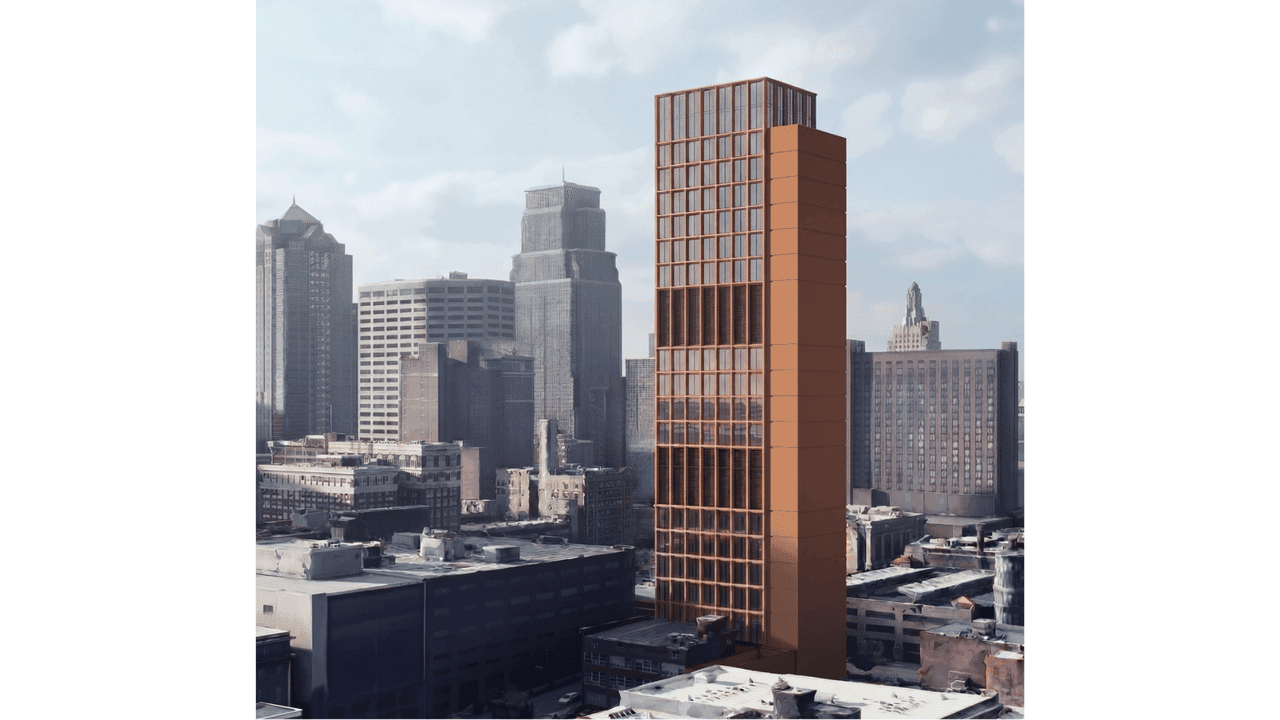
A Kansas City developer has proposed a 20-story vertical data center in the heart of downtown, aiming to replace suburban sprawl with urban density. The $183 million project would occupy just 0.23 acres but pack 24 MW of IT capacity, challenging traditional data center design and economics.
30 SEC SUMMARY
- Revitalization Unlimited has proposed a 20-story vertical data center in downtown Kansas City, occupying just 0.23 acres.
- The $183 million project aims to provide 24 MW of IT capacity, with only two floors dedicated to servers.
- 18 floors would house power and cooling infrastructure, reflecting the complexity of vertical data center design.
- The facility would rely on Bloom fuel cells for power, targeting a PUE of 1.25 but involving natural gas costs.
- The project highlights a shift toward urban density in data center development, challenging suburban sprawl norms.
TABLE OF CONTENTS
- A vertical data center for urban density
- Design and capacity
- Challenges and trade-offs
- Next steps
- What this means
- Key takeaways
- FAQ
- Sources
KEY HIGHLIGHTS
- Revitalization Unlimited has proposed a 20-story vertical data center in downtown Kansas City, occupying just 0.23 acres.
- The $183 million project would provide 24 MW of IT capacity, with only two floors dedicated to servers.
- 18 floors would house power and cooling infrastructure, reflecting the complexity of vertical design.
- The facility aims for a PUE of 1.25 using Bloom fuel cells but would still rely on natural gas.
- The project, designed by Skidmore, Owings & Merrill, remains subject to approval until October 2026.
A vertical data center for urban density
Revitalization Unlimited, a Kansas City-based developer, has proposed a 20-story vertical data center in downtown Kansas City. According to TechRadar, the project aims to replace the sprawling suburban data center model with a high-density urban alternative, occupying just 0.23 acres of land. For context, research from Cushman & Wakefield shows the average data center land transaction covers 224 acres, often pushing projects to suburban or rural areas.
Design and capacity
The proposed facility would provide 24 MW of IT capacity but dedicate only two of its 20 floors to servers. The remaining 18 floors would house power and cooling infrastructure, a necessity given the vertical design’s constraints. The project is estimated to cost $183 million, or $1,300 per square foot—significantly higher than the construction costs of typical suburban data centers.
Power generation would rely on 30 MW of Bloom fuel cells, with a target power usage effectiveness (PUE) of 1.25. However, the facility would still incur natural gas operating expenses, meaning onsite generation wouldn’t eliminate fuel consumption or environmental considerations. Cooling would involve evaporative equipment, which could complicate claims of a closed-loop, water-free system.
Challenges and trade-offs
Vertical construction introduces logistical hurdles, including equipment weight, elevator capacity, and crane access. These challenges could increase construction costs and complicate ongoing maintenance. According to TechRadar, such constraints are less pronounced in traditional, single-story suburban data centers.
The developer argues that certain workloads—such as financial trading, telecommunications, and AI inference services—could benefit from the facility’s urban proximity. Shorter physical distances between computing resources and end-users may reduce latency for services requiring rapid responses. However, large-scale AI training operations, which demand substantial land and electricity, are unlikely to adopt this model.
Next steps
The project, designed by Skidmore, Owings & Merrill (SOM), remains subject to approval. A related development ordinance is pending until October 13, 2026, leaving its fate uncertain.
What this means
Lazyfounder analysis — our interpretation, not reported fact.
This proposal challenges the traditional model of sprawling, suburban data centers by packing significant capacity into a tiny urban footprint. For founders and operators, it signals a potential shift in how data infrastructure might adapt to urbanization, regulatory pressures, and demand for low-latency services.
However, the economics are unproven. At $1,300 per square foot, the cost far exceeds typical suburban builds, and the reliance on fuel cells and natural gas introduces operational and environmental trade-offs. The design also complicates maintenance and cooling, which could offset the advantages of urban proximity.
If approved, this project could serve as a test case for whether vertical data centers can balance density, efficiency, and cost in high-demand urban markets. But for now, it remains an ambitious experiment rather than a template.
Key takeaways
- The proposed 20-story vertical data center in Kansas City would occupy only 0.23 acres, a fraction of the average 224-acre suburban data center site.
- Only two of the 20 floors would house servers, with the rest dedicated to power and cooling infrastructure.
- The $183 million project targets 24 MW of IT capacity but comes at a premium cost of $1,300 per square foot.
- The facility plans to use Bloom fuel cells for power, aiming for a PUE of 1.25, though natural gas would still be part of its operating expenses.
- Vertical construction introduces challenges like equipment weight, crane access, and maintenance logistics, which could drive up costs.
- The project is designed by Skidmore, Owings & Merrill (SOM) and remains subject to approval until October 2026.
FAQ
Why is Revitalization Unlimited proposing a vertical data center?
The developer aims to replace the sprawling suburban data center model with a high-density urban alternative. This approach could reduce latency for certain workloads, such as financial trading and AI inference, by placing computing resources closer to users and networks.
What are the main challenges of a vertical data center?
Vertical construction introduces logistical hurdles, including equipment weight, elevator capacity, and crane access. These challenges can drive up construction and maintenance costs, and the design requires significant space for power and cooling infrastructure.
How does this project compare to traditional data centers in cost?
The proposed vertical data center would cost $1,300 per square foot, far exceeding the construction costs of typical suburban data centers. The total development cost is estimated at $183 million.
What is the project’s timeline?
The project remains subject to approval, with a related development ordinance pending until October 13, 2026.
Related on Lazyfounder
Sources
- TechRadar · 2026-10-07
'This data center belongs downtown': Developer proposes 20-story vertical data center in Kansas City to trade suburban sprawl for urban density
This story is an original summary drafted with AI by Lazyfounder from the reporting listed above and checked by automated validation. Facts are attributed to their original publishers; sections marked as analysis are Lazyfounder's. Where a source is in another language, facts were machine-translated and quotations are reported, not reproduced. Read the original coverage via the links, and see our AI policy and corrections policy.

About the author
Editor, Lazyfounder
Tarun Mottlia edits LazyFounders, covering Indian startups, funding rounds, AI and product launches. Every story on the site is AI-assisted and checked against its cited sources before publication.
More stories by Tarun MottliaGet the LazyFounder Brief
Startup, funding and AI news in a five-minute read. Join the early-access list.
