
IBM’s cryogenic system cools quantum computers below 15 millikelvin
IBM has developed a modular cryogenic system capable of cooling quantum computing hardware to temperatures below 15 millikelvin—over 180 times colder than deep space. This breakthrough is critical for stabilizing qubits, the building blocks of quantum computers, and improving calculation accuracy. The technology also raises questions about the future of encryption and alternative cooling methods in quantum computing.

Editor, Lazyfounder
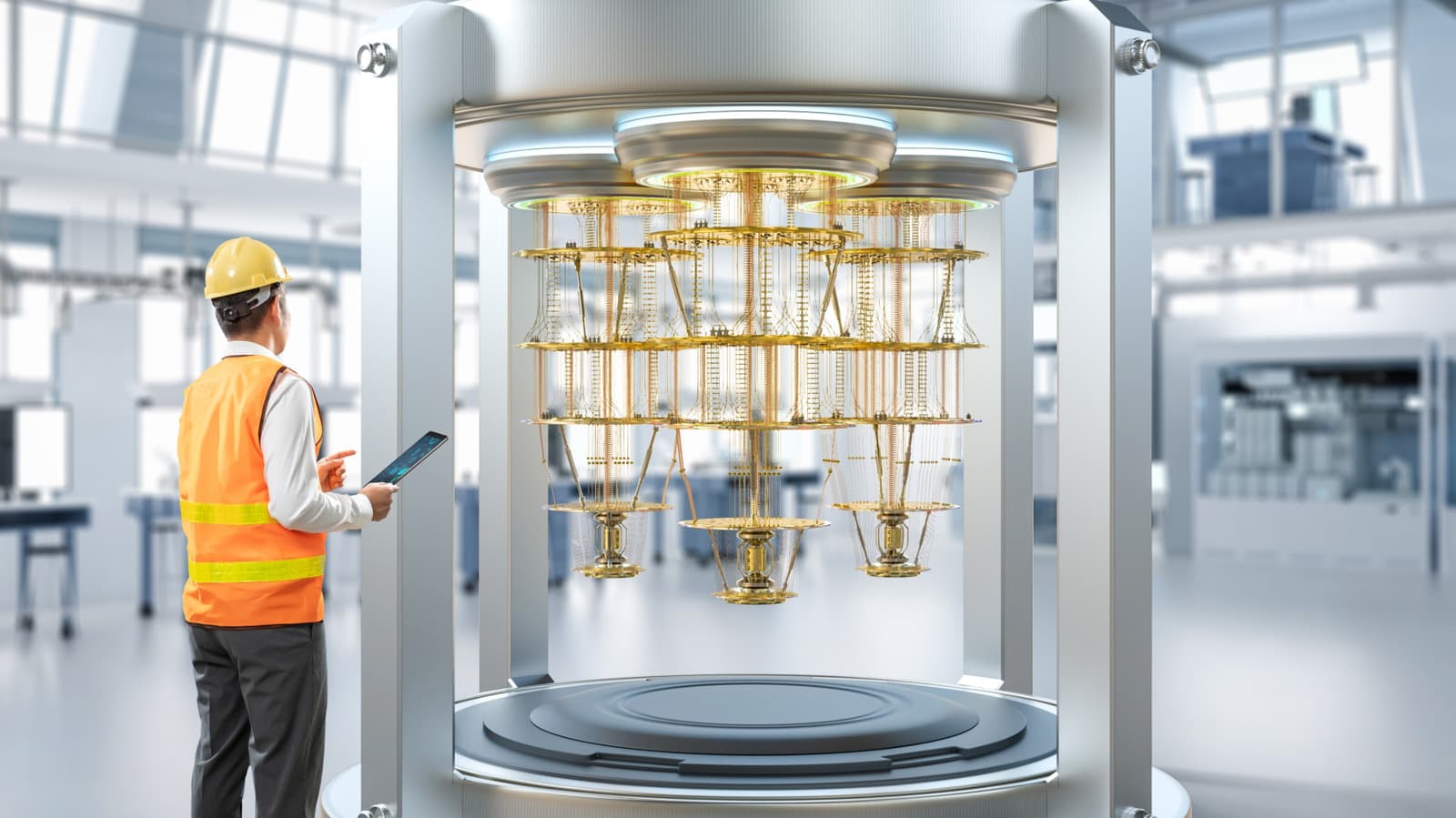
TABLE OF CONTENTS
Why quantum computers need extreme cold
Quantum computers rely on qubits, which are highly sensitive to heat. Unlike classical bits that exist in one of two states (on or off), qubits can hold multiple values simultaneously. However, heat—a form of energy—disrupts their delicate state, leading to calculation errors. To mitigate this, IBM’s system cools quantum hardware below 15 millikelvin, a temperature colder than deep space’s 2.7 Kelvin, ensuring qubit stability.
How IBM’s cryogenic system works
IBM’s modular cryogenic system uses a dilution refrigerator to achieve the necessary cooling. The challenge lies in managing heat conducted by wires that control the qubits, as these wires connect room-temperature components to the ultra-cold quantum hardware. The system’s modularity may offer scalability advantages, though specific details about its design remain limited.
Alternatives to cryogenic cooling
Not all quantum computers rely on cryogenic cooling. Neutral-atom machines, like those built by QuEra, use lasers to cool individual atoms to microkelvin temperatures in a vacuum chamber. While this method avoids some challenges of dilution refrigerators, it introduces complexities in maintaining stable atomic traps and laser precision.
Implications for encryption and cybersecurity
Quantum computers pose a threat to current encryption methods, particularly public-key systems that secure logins, financial transactions, and cryptocurrencies like Bitcoin. In 2025, Google Quantum AI estimated that breaking an RSA-2048 encryption key would require fewer than 1 million noisy qubits, a significant reduction from the 20 million qubits estimated in 2019. However, the US National Institute of Standards and Technology (NIST) finalized post-quantum encryption standards in August 2024, making them available for immediate adoption.
IBM’s quantum advancements in context
This development follows IBM’s broader push to advance quantum computing. Earlier reporting by Lazyfounder highlighted a partnership between IBM and Zapata Quantum, a Boston-based quantum software company, to bridge the gap between hardware and software. While IBM focuses on hardware innovations like cryogenic systems, collaborations like this aim to make quantum computing practical for industries such as drug discovery and cybersecurity.
What this means
Lazyfounder analysis — our interpretation, not reported fact.
IBM’s cryogenic system is a step toward scalable, error-resistant quantum computing. For founders and operators in sectors like cybersecurity, finance, or pharmaceuticals, this signals two things: first, the pace of quantum hardware development is accelerating, and second, the encryption standards underpinning digital security are already evolving in response. While large-scale, fault-tolerant quantum computers may still be years away, the shift toward post-quantum encryption is happening now. Companies relying on long-term data security—such as those handling financial records or sensitive research—should already be evaluating NIST’s post-quantum standards, not as a future precaution but as an immediate operational requirement.
Related on Lazyfounder
Sources
- Engadget · 2026-10-25
Quantum Computers Can Get Colder Than Deep Space — Here's How They Stay Running
This story is an original summary drafted with AI by Lazyfounder from the reporting listed above and checked by automated validation. Facts are attributed to their original publishers; sections marked as analysis are Lazyfounder's. Where a source is in another language, facts were machine-translated and quotations are reported, not reproduced. Read the original coverage via the links, and see our AI policy and corrections policy.

About the author
Editor, Lazyfounder
Tarun Mottlia edits LazyFounders, covering Indian startups, funding rounds, AI and product launches. Every story on the site is AI-assisted and checked against its cited sources before publication.
More stories by Tarun MottliaGet the LazyFounder Brief
Startup, funding and AI news in a five-minute read. Join the early-access list.
