
GooglebookOS and Laptops Launch on October 5: What Founders Need to Know
Google is set to launch its Googlebook laptops and GooglebookOS, a new operating system blending Android and ChromeOS, on October 5. The devices aim to bridge the gap between mobile and desktop experiences but may face compatibility challenges at launch. Prices for models from Dell, Lenovo, HP, and Acer have been adjusted, with some now cheaper than originally announced. Meanwhile, Google’s tools for parental controls and digital payments continue to evolve.

Editor, Lazyfounder
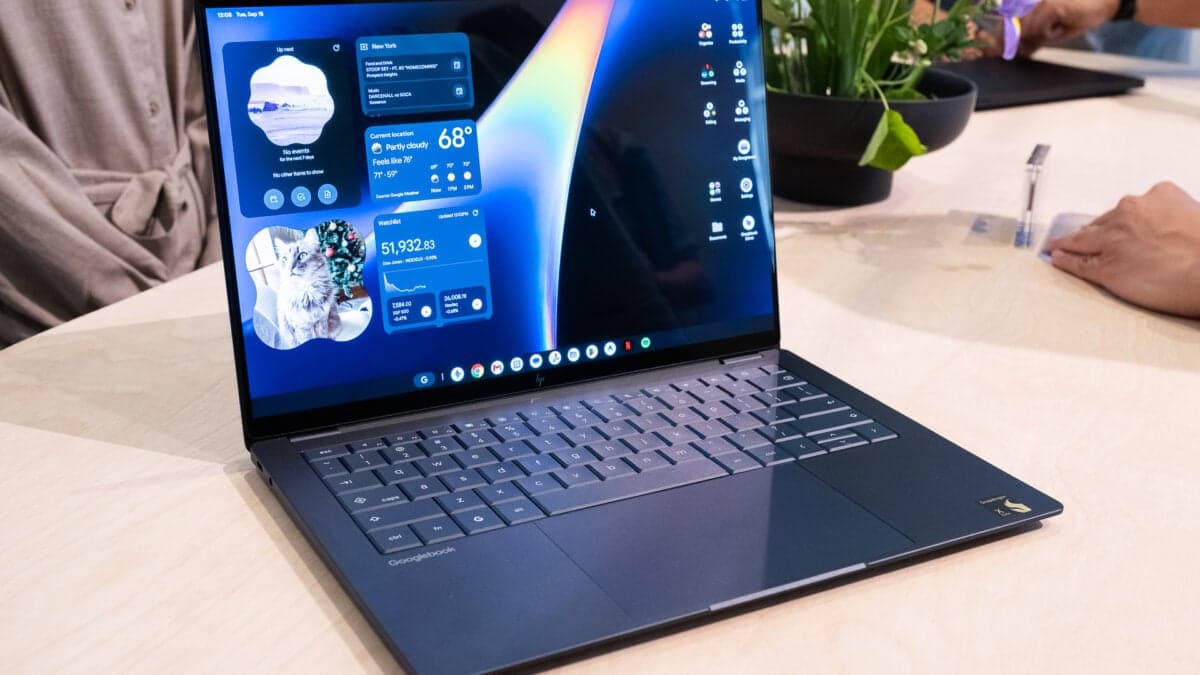
Google is set to launch its Googlebook laptops and GooglebookOS, a new operating system blending Android and ChromeOS, on October 5. The devices aim to bridge the gap between mobile and desktop experiences but may face compatibility challenges at launch. Prices for models from Dell, Lenovo, HP, and Acer have been adjusted, with some now cheaper than originally announced. Meanwhile, Google’s tools for parental controls and digital payments continue to evolve.
30 SEC SUMMARY
- Googlebook laptops and GooglebookOS will launch on October 5, blending Android and ChromeOS features.
- GooglebookOS faces potential compatibility and performance issues at launch due to its Android-based kernel.
- Prices for Googlebook laptops from Dell, Lenovo, HP, and Acer have been adjusted, with some models now cheaper than initially announced.
- Google Family Link offers robust parental controls for Android devices, including app restrictions, location tracking, and content filtering.
- Google Wallet and Google Pay have evolved, with Wallet now storing digital credentials and Pay functioning as a payment feature within it.
TABLE OF CONTENTS
- GooglebookOS and Laptops: A New Hybrid
- Hardware and Pricing Updates
- Chromebook Upgrades and Alternatives
- Parental Controls with Google Family Link
- Google Wallet and Google Pay: What’s Changed
- Background: Google’s Ecosystem Expands
- What this means
- Key takeaways
- FAQ
- Sources
KEY HIGHLIGHTS
- Googlebook laptops and GooglebookOS will launch on October 5, featuring a new Android-based kernel.
- GooglebookOS includes a Linux terminal for developers and aims to support Steam via collaborations like Proton.
- Prices for Googlebook laptops from Dell, Lenovo, HP, and Acer have been reduced, with the Dell XPS Googlebook now priced at $999.
- Google Family Link allows parents to manage app access, track location, and filter content on Android devices.
- Google Wallet now stores digital cards, boarding passes, and other credentials, while Google Pay focuses on payment processing.
GooglebookOS and Laptops: A New Hybrid
Google announced details about its upcoming Googlebook laptops and GooglebookOS, a new operating system that blends Android and ChromeOS. According to Gizmodo, GooglebookOS is more Android than ChromeOS, as Google switched from the specialized Linux kernel used for Chromebooks to the Android kernel for this new system.
The launcher in GooglebookOS is entirely new but was largely borrowed from ChromeOS and rewritten. It is designed to complement an Android phone, featuring app casting and wireless file sharing. However, GooglebookOS may face compatibility and performance challenges at launch, including bugs and missing features, similar to the issues seen during the initial ARM on PC launch in 2024.
GooglebookOS will receive annual releases alongside quarterly updates, reflecting its Android-based foundation. The system also includes a Linux terminal running as a virtual machine, primarily targeting developers. Google is exploring collaborations to enable Steam on Googlebooks via Proton, though this feature may not be available at launch.
Hardware and Pricing Updates
Googlebook laptops will be powered by either Intel Core Ultra Series 3 or Snapdragon X Elite processors. Qualcomm did not use the Snapdragon X2 platform due to the timing of its partnership with Google, according to Gizmodo.
Devices from Dell, Lenovo, HP, Asus, and Acer will launch on October 4. Prices have been adjusted shortly before the release, with some models now cheaper than originally announced. For example, the Dell XPS Googlebook, initially listed at $1,200, is now priced at $999. Similarly, the Lenovo Googlebook 15, originally $1,300, is now available for $1,099 through Best Buy and $1,050 on Lenovo’s and Google’s websites. The HP Googlebook 14 saw a $100 price drop, while the Acer Googlebook 14 is temporarily priced at $899.
Searching for "Googlebooks" may redirect users to Google Books, the company’s digital library service, complicating discoverability for potential buyers.
Chromebook Upgrades and Alternatives
Some Chromebook models may be eligible for an upgrade to GooglebookOS, though details about compatibility and the upgrade process remain unclear. According to Gizmodo, this could offer a cost-effective alternative to purchasing new hardware, especially given the ongoing RAM shortage affecting laptop prices.
Parental Controls with Google Family Link
For parents managing their children’s digital safety, Google Family Link offers a comprehensive set of tools. According to TechRadar, the app works across Android, ChromeOS, and iOS devices, though the child’s device must run Android. Features include app blocking, daily time limits, contact approval, and location tracking. Parents can also create "Family Places" to receive notifications when their child arrives at or leaves specific locations, such as school or a park.
Google Family Link provides sensitive content warnings in Google Messages, blurring nude photos and discouraging their transmission. While website filtering is available, it can be cumbersome due to subdomains on platforms like Microsoft. Children can request access to blocked sites, which parents can approve in real-time. Paul Hatton, a parent and author featured in TechRadar, praised the app’s flexibility, noting that it allows restrictions to be adjusted as children grow older.
Hatton admitted, "I’m not a helicopter parent, honest!" but acknowledged the pressure to provide a smartphone for safety reasons. He considered "dumb phones" and child-friendly devices like the Sayph and HMD Fuse but ultimately opted for Google Family Link to balance safety and functionality.
Google Wallet and Google Pay: What’s Changed
Google Wallet and Google Pay have undergone significant changes in recent years. Originally launched as a peer-to-peer payment system in 2011, Google Wallet evolved into Android Pay in 2015 and Google Pay in 2018 before reverting to the Google Wallet name in 2022. According to Engadget, the original Google Pay app has been replaced by Google Wallet, which now stores digital cards, vouchers, boarding passes, and other credentials.
Google Pay has transitioned into a payment processing feature within Google Wallet. It appears as an option during online transactions, similar to PayPal, and enables NFC-based contactless payments on Android devices. Users can access Google Wallet via its website for online purchases across devices. Samsung phones support both Google Wallet and Samsung Wallet for NFC payments, offering users flexibility.
Background: Google’s Ecosystem Expands
Google’s efforts to integrate its services across devices reflect a broader trend in the tech industry. The company has been expanding its ecosystem to create seamless experiences between mobile and desktop platforms, similar to Apple’s macOS and iOS integration. This strategy aims to enhance user retention and provide a unified experience across hardware and software.
The shift toward AI-driven features in operating systems is also notable. Competitors like Microsoft and Apple have introduced AI-powered tools in their latest OS updates, positioning GooglebookOS as part of this evolving landscape.
What this means
Lazyfounder analysis — our interpretation, not reported fact.
GooglebookOS represents a bold but risky move for Google, blending Android and ChromeOS to create a unified experience between mobile and desktop. For founders and operators, this launch is a case study in platform convergence—and the potential pitfalls of merging two distinct ecosystems. Compatibility issues, missing features, and performance bugs could dampen early adoption, especially if users expect a seamless transition from Chromebooks or Android devices.
The price adjustments for Googlebook laptops suggest last-minute positioning to compete with established players like Windows and macOS. If Google can address the early challenges, the lower prices might attract price-sensitive buyers, particularly in education and enterprise markets. However, the confusion around branding (e.g., "Googlebooks" vs. "Google Books") could hinder discoverability, a reminder that even tech giants must prioritize clear messaging.
Google Family Link’s robust features highlight an often-overlooked opportunity for founders: tools that simplify digital parenting. While child-specific phones exist, Google’s approach—retrofitting existing Android devices with parental controls—is more scalable and cost-effective. This could inspire startups to explore similar adaptations for other niche markets.
Finally, the evolution of Google Wallet and Google Pay underscores the importance of streamlining financial tools. For founders in fintech, Google’s shift from a standalone app to an integrated payment feature within Wallet offers a lesson in consolidation. Users want fewer apps, not more, and companies that simplify workflows (e.g., storing credentials and processing payments in one place) stand to gain traction.
Key takeaways
- GooglebookOS is a new operating system combining elements of Android and ChromeOS, designed to bridge the gap between mobile and desktop experiences.
- The launch of Googlebook laptops may be impacted by compatibility and performance challenges, including missing features and bugs.
- Pricing for Googlebook laptops has been revised shortly before launch, with some models now available at lower prices than originally announced.
- Google Family Link provides a comprehensive suite of parental controls for Android devices, making it a flexible alternative to child-specific phones.
- Google Wallet has replaced Google Pay as the primary app for storing digital credentials, while Google Pay now functions as a payment feature within Wallet.
FAQ
What is GooglebookOS, and how is it different from ChromeOS?
GooglebookOS is a new operating system based more on Android than ChromeOS. It uses the Android kernel instead of the specialized Linux kernel used for Chromebooks, aiming to bridge the gap between Android phones and desktops. It includes a rewritten launcher and features like app casting and wireless file sharing.
Will GooglebookOS have compatibility issues at launch?
According to reports, GooglebookOS may face compatibility and performance challenges at launch, including bugs and missing features. This is partly due to the shift to an Android-based kernel, which could affect peripheral support and app compatibility.
How much do Googlebook laptops cost, and when will they be available?
Googlebook laptops from Dell, Lenovo, HP, and Acer will launch on October 4, with prices ranging from $899 to $1,099. Some models, like the Dell XPS Googlebook, saw price reductions shortly before launch, dropping from $1,200 to $999.
Can I upgrade my Chromebook to GooglebookOS?
Some Chromebook models may be eligible for an upgrade to GooglebookOS, though details about compatibility and the upgrade process remain unclear. This could offer a cost-effective alternative to buying new hardware.
What features does Google Family Link offer for parental controls?
Google Family Link provides app blocking, daily time limits, contact approval, location tracking, and content filtering. It works across Android, ChromeOS, and iOS devices, though the child’s device must run Android. Parents can also set "Family Places" for location-based notifications.
How has Google Wallet changed, and what is its relationship with Google Pay?
Google Wallet has replaced the standalone Google Pay app and now stores digital cards, vouchers, boarding passes, and other credentials. Google Pay has transitioned into a payment processing feature within Google Wallet, enabling NFC-based contactless payments and appearing as an option during online transactions.
Related on Lazyfounder
Sources
- Gizmodo · 2026-09-28
You Have Every Reason to Distrust Googlebooks—And to Be Optimistic, Too - Gizmodo · 2026-09-28
There’s Something Strange About Googlebook Prices - TechRadar · 2026-10-03
I wanted to lock down 99% of my child's phone, and with Google Family Link, that was easier than I expected - Engadget · 2026-10-03
What's The Difference Between Google Pay And Google Wallet?
This story is an original summary drafted with AI by Lazyfounder from the reporting listed above and checked by automated validation. Facts are attributed to their original publishers; sections marked as analysis are Lazyfounder's. Where a source is in another language, facts were machine-translated and quotations are reported, not reproduced. Read the original coverage via the links, and see our AI policy and corrections policy.

About the author
Editor, Lazyfounder
Tarun Mottlia edits LazyFounders, covering Indian startups, funding rounds, AI and product launches. Every story on the site is AI-assisted and checked against its cited sources before publication.
More stories by Tarun MottliaGet the LazyFounder Brief
Startup, funding and AI news in a five-minute read. Join the early-access list.
