
Garmin COO: OLED growth won’t kill MIP displays yet
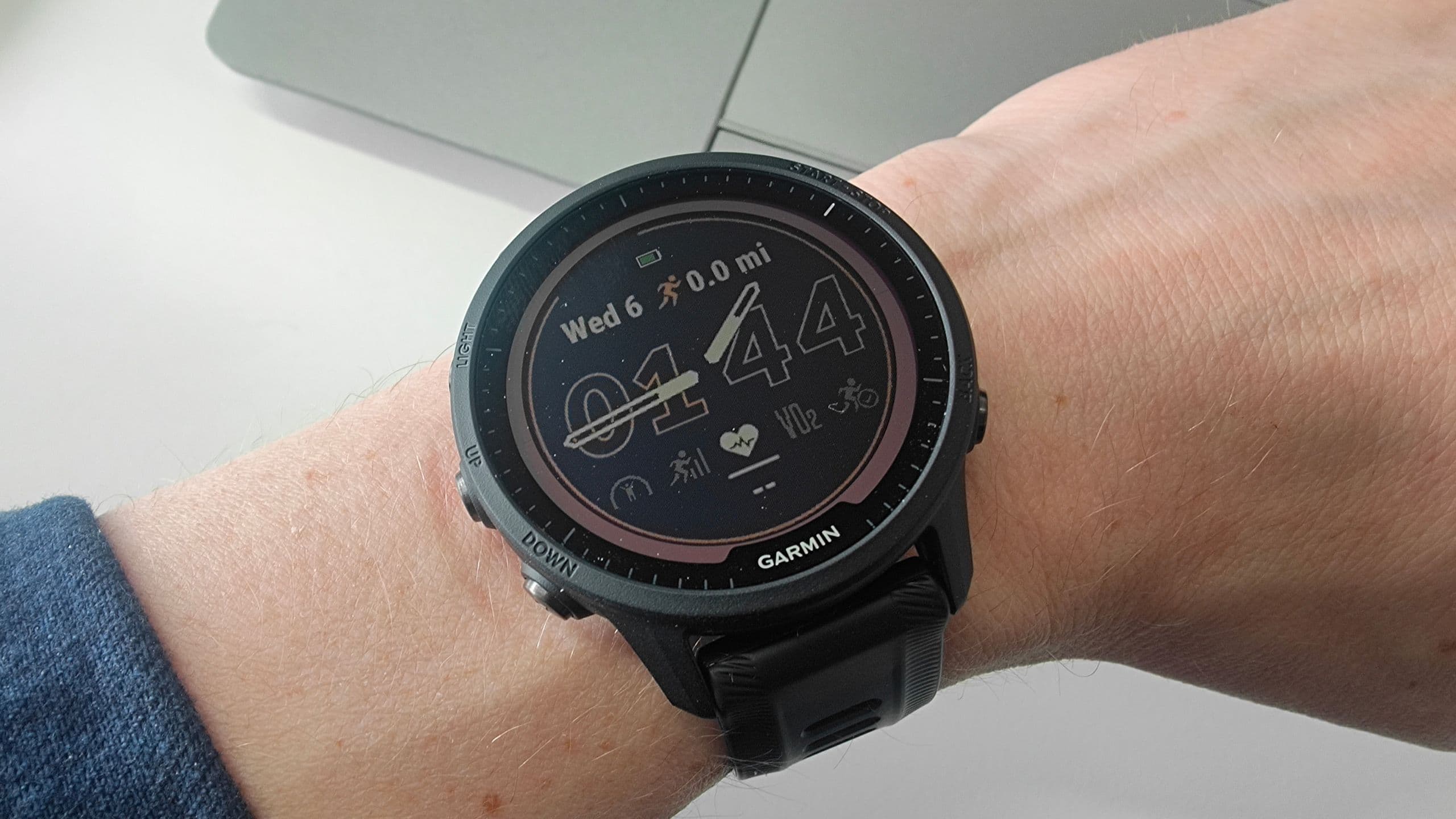
Garmin’s chief operating officer, Brad Trenkle, has outlined the company’s approach to display technology, confirming that OLED adoption has expanded across its smartwatch lineup but MIP (memory-in-pixel) screens remain critical for battery efficiency. The two technologies will coexist as Garmin refines its hardware trade-offs.

Editor, Lazyfounder
30 SEC SUMMARY
- Garmin COO Brad Trenkle discussed the company’s OLED and MIP display strategies for smartwatches.
- OLED adoption expanded across Garmin’s lineup starting with the 2019 Venu and accelerating in 2023.
- MIP displays persist due to their battery efficiency, particularly for outdoor and multi-day use cases.
- Solar charging integrates with MIP displays but can affect OLED quality depending on the technology.
KEY HIGHLIGHTS
- Garmin introduced its first OLED smartwatch, the Venu, in 2019.
- OLED adoption accelerated in 2023 with the Forerunner 965.
- MIP displays persist due to superior battery life for multi-day and outdoor activities.
- OLED screens require higher brightness outdoors, increasing power consumption.
- Garmin uses two solar technologies: amorphous silicon (can degrade OLED) and crystalline silicon (no display overlay).
OLED expansion and its limits
Garmin’s move into OLED displays began in 2019 with the Venu and gained momentum in 2023 with the launch of the Forerunner 965. According to Brad Trenkle, Garmin’s COO, OLED technology has since spread across multiple product tiers, including premium models like the Fenix 9 Pro and Epix Gen 2.
Despite this expansion, Trenkle noted that OLED’s power demands remain a challenge, particularly outdoors. Brightness levels must ramp up significantly, with the Fenix 9 Pro capable of reaching 3,000 nits, which increases battery drain. The always-on display mode further reduces runtime, limiting OLED’s appeal for multi-day activities.
Why MIP displays still matter
MIP (memory-in-pixel) displays, once standard across Garmin’s lineup, continue to play a critical role. Their low power consumption makes them ideal for outdoor and endurance use, where battery life outweighs the benefits of OLED’s visual fidelity. Trenkle confirmed that MIP screens will remain in Garmin’s portfolio for at least the near future, particularly in solar-enabled models like the Instinct 3 Solar.
The integration of solar charging has reinforced MIP’s relevance. Garmin employs two solar technologies: amorphous silicon and crystalline silicon. While amorphous silicon can degrade OLED display quality—limiting its use with OLED—crystalline silicon does not overlay the screen, avoiding this issue entirely.
How this connects to Garmin’s broader hardware strategy
This display strategy aligns with Garmin’s recent push into durable, high-performance hardware. Earlier reporting by LazyFounder highlighted the company’s nano-molded titanium cases for the Fenix 9 Pro and Marq Generation 3, which address durability and comfort without compromising signal transmission. The display choices reflect a similar balancing act: premium features versus practical constraints.
Garmin’s cautious approach to OLED also mirrors its response to supply chain pressures. Last year, the company signaled potential price increases due to rising RAM costs, demonstrating how hardware decisions—like display technology—are influenced by external factors beyond engineering trade-offs.
What this means
Lazyfounder analysis — our interpretation, not reported fact.
Garmin’s dual-display strategy shows how hardware trade-offs play out in wearables. Founders in this space should note that OLED’s visual appeal comes at the cost of battery life, while MIP’s efficiency remains critical for niche segments like ultra-marathoners or backcountry adventurers. The closing—but not closed—gap between the two technologies suggests that product teams must still optimize software and power management to differentiate. For now, Garmin is hedging its bets rather than betting everything on one display type.
Key takeaways
- OLED smartwatches now span Garmin’s consumer and premium lines, but battery life outdoors is still a constraint.
- MIP displays remain essential for long-duration use cases, even as OLED improves.
- Solar charging adds complexity: amorphous silicon can degrade OLED quality, while crystalline silicon avoids overlaying the screen.
- The battery life gap between OLED and MIP is narrowing but not eliminated, keeping both technologies relevant.
Related on Lazyfounder
Sources
- TechRadar · 2026-11-04
'Battery life on our OLED products continue to increase': Garmin's COO on when it might kill the beloved MIP watch display for good
This story is an original summary drafted with AI by Lazyfounder from the reporting listed above and checked by automated validation. Facts are attributed to their original publishers; sections marked as analysis are Lazyfounder's. Where a source is in another language, facts were machine-translated and quotations are reported, not reproduced. Read the original coverage via the links, and see our AI policy and corrections policy.

About the author
Editor, Lazyfounder
Tarun Mottlia edits LazyFounders, covering Indian startups, funding rounds, AI and product launches. Every story on the site is AI-assisted and checked against its cited sources before publication.
More stories by Tarun MottliaGet the LazyFounder Brief
Startup, funding and AI news in a five-minute read. Join the early-access list.
