

Flipkart to launch food delivery in Bengaluru with lower restaurant commissions
Walmart-owned Flipkart is set to launch a full food delivery service in Bengaluru by the end of August, challenging Swiggy and Zomato with a lower commission structure and capped marketing costs for restaurants. The move comes amid growing discontent among restaurant partners over high fees on existing platforms.

Editor, Lazyfounder
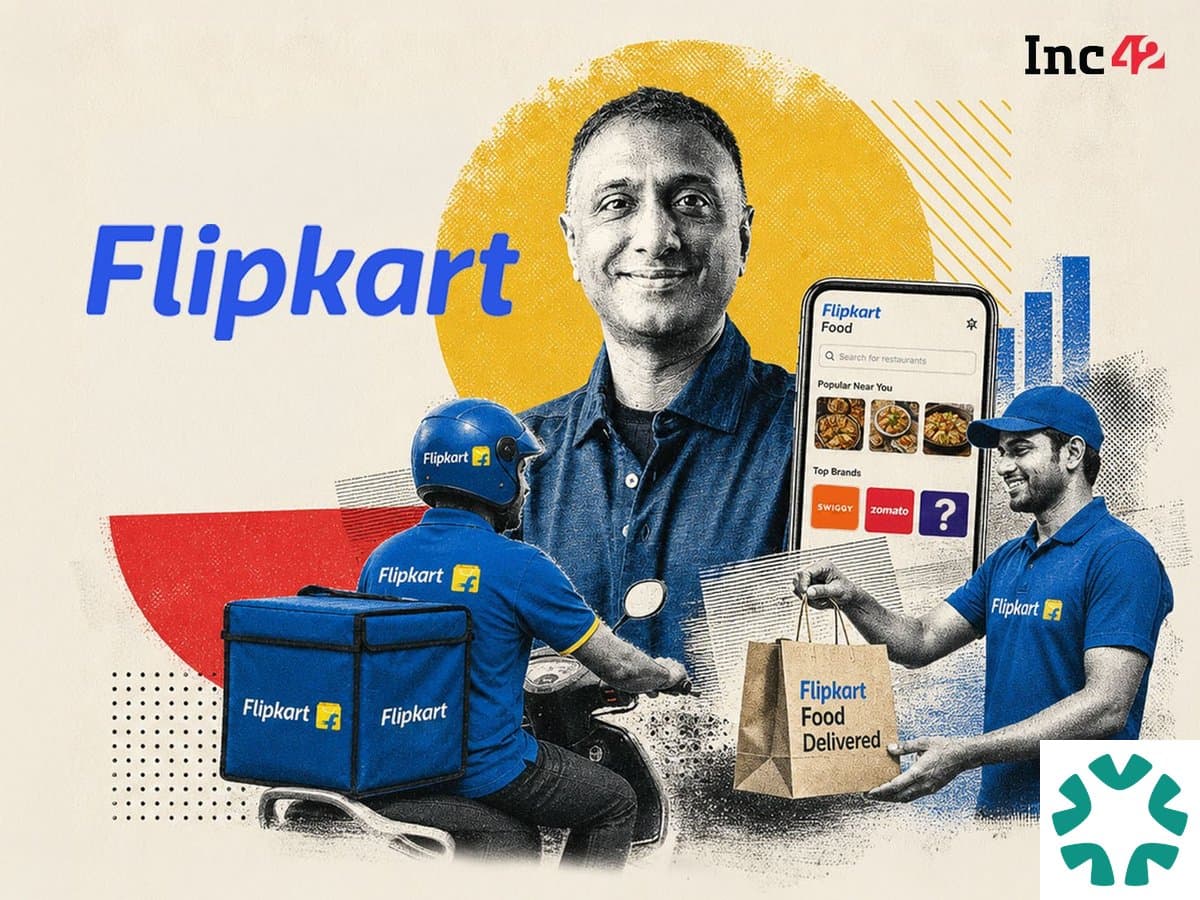
TABLE OF CONTENTS
Flipkart’s food delivery launch plans
Walmart-owned Flipkart is preparing to launch a full food delivery service in Bengaluru by the end of August, with plans to expand to other cities later this year, according to Inc42. The service will initially operate under Flipkart Minutes, the company’s quick commerce arm, to streamline order fulfillment and customer acquisition.
App strategy and restaurant commissions
Flipkart is developing a standalone food delivery app, though its initial rollout will leverage the existing Flipkart Minutes platform. The company has not disclosed its commission structure, but sources tell Inc42 that it is considering a base commission of 12-13% for restaurant partners. This is significantly lower than the 15-40% range charged by Swiggy and Zomato, which can rise further when additional fees like advertising and platform charges are included.
The lower commission aligns with demands from restaurant industry bodies, such as the National Restaurant Association of India (NRAI), which have criticized the high costs imposed by existing platforms. NRAI president Sagar Daryani told Inc42 that restaurants face effective take rates of up to 30-40% per order due to stacked fees, making it unsustainable for many.
Restaurant industry tensions with Swiggy and Zomato
Flipkart’s entry comes amid a public dispute between restaurants and the Swiggy-Zomato duopoly. Industry bodies, including the Bengaluru Hotels Association and NRAI, have accused the platforms of practices like automatic opt-ins to advertising campaigns, uncapped marketing spend, and lack of vernacular-language support for dispute resolution.
While Swiggy and Zomato have engaged in discussions with restaurant bodies over the past month, the core commission structure remains unchanged. Flipkart’s lower commission offer could pressure the incumbents, especially if it gains traction with restaurant partners.
Leverage points for Flipkart
Flipkart’s pitch to restaurants focuses on cost predictability. Sources told Inc42 that the company plans to cap marketing and advertisement spends, addressing a key demand from restaurant bodies. This could reduce the ‘pay-to-be-seen’ dynamic that has dominated food delivery discovery.
The company also plans to integrate food delivery with its SuperCoins loyalty program, which spans Flipkart’s marketplace, Myntra, and Cleartrip. This could enable discounts and cashback funded through loyalty mechanisms rather than pure cash burn.
Logistics will rely on Flipkart’s existing infrastructure, including its quick commerce fleet under Minutes and Ekart, its in-house logistics arm. Flipkart is also tapping into the government-backed Open Network for Digital Commerce (ONDC) for restaurant onboarding, prioritizing branded restaurant chains over small eateries.
Market dynamics and competition
Flipkart’s approach differs from competitors like Rapido, which operates a zero-commission model for small-ticket meals. Instead, Flipkart is targeting a higher-order-value segment, directly competing with Swiggy and Zomato where they have faced no serious challengers.
Previous attempts by horizontal platforms like Amazon, Ola, and Paytm to enter food delivery failed due to entrenched consumer behavior favoring vertical players. However, Flipkart’s scale—500 million registered users and 40 million active SuperCoins users—could give it an edge.
Karan Taurani, senior vice president at Elara Capital, told Inc42 that discounting remains the primary lever to disrupt Swiggy and Zomato, as consumer ordering behavior is deeply entrenched with these platforms. Flipkart’s ability to differentiate through faster deliveries, lower prices, or strategic restaurant tie-ups will be critical.
What this means
Lazyfounder analysis — our interpretation, not reported fact.
Flipkart’s entry into food delivery is a calculated move to exploit gaps in the current duopoly. By addressing restaurant pain points—high commissions, unpredictable costs, and forced advertising—it could carve out a niche, especially if it delivers on its promise of lower fees and capped spending. For founders and operators, this signals two things: first, the food delivery market is not closed to disruption, even against entrenched players; second, scaling a food delivery business requires more than discounts—it demands cost predictability and ecosystem leverage. Flipkart’s use of its loyalty program and logistics infrastructure shows how existing assets can be repurposed, rather than building from scratch. However, the failure of Amazon, Ola, and Paytm in this space underscores the challenges of horizontal expansion. Operators should watch whether Flipkart’s lower commissions translate into sustained restaurant adoption and consumer behavior shifts.
Sources
- inc42.com · 2026-08-21
Why Is Flipkart Joining India’s Food Delivery Renaissance?
This story is an original summary drafted with AI by Lazyfounder from the reporting listed above and checked by automated validation. Facts are attributed to their original publishers; sections marked as analysis are Lazyfounder's. Where a source is in another language, facts were machine-translated and quotations are reported, not reproduced. Read the original coverage via the links, and see our AI policy and corrections policy.

About the author
Editor, Lazyfounder
Tarun Mottlia edits LazyFounders, covering Indian startups, funding rounds, AI and product launches. Every story on the site is AI-assisted and checked against its cited sources before publication.
More stories by Tarun MottliaGet the LazyFounder Brief
Startup, funding and AI news in a five-minute read. Join the early-access list.
