
EU commits $119M for Greenland undersea cable to bypass US territory
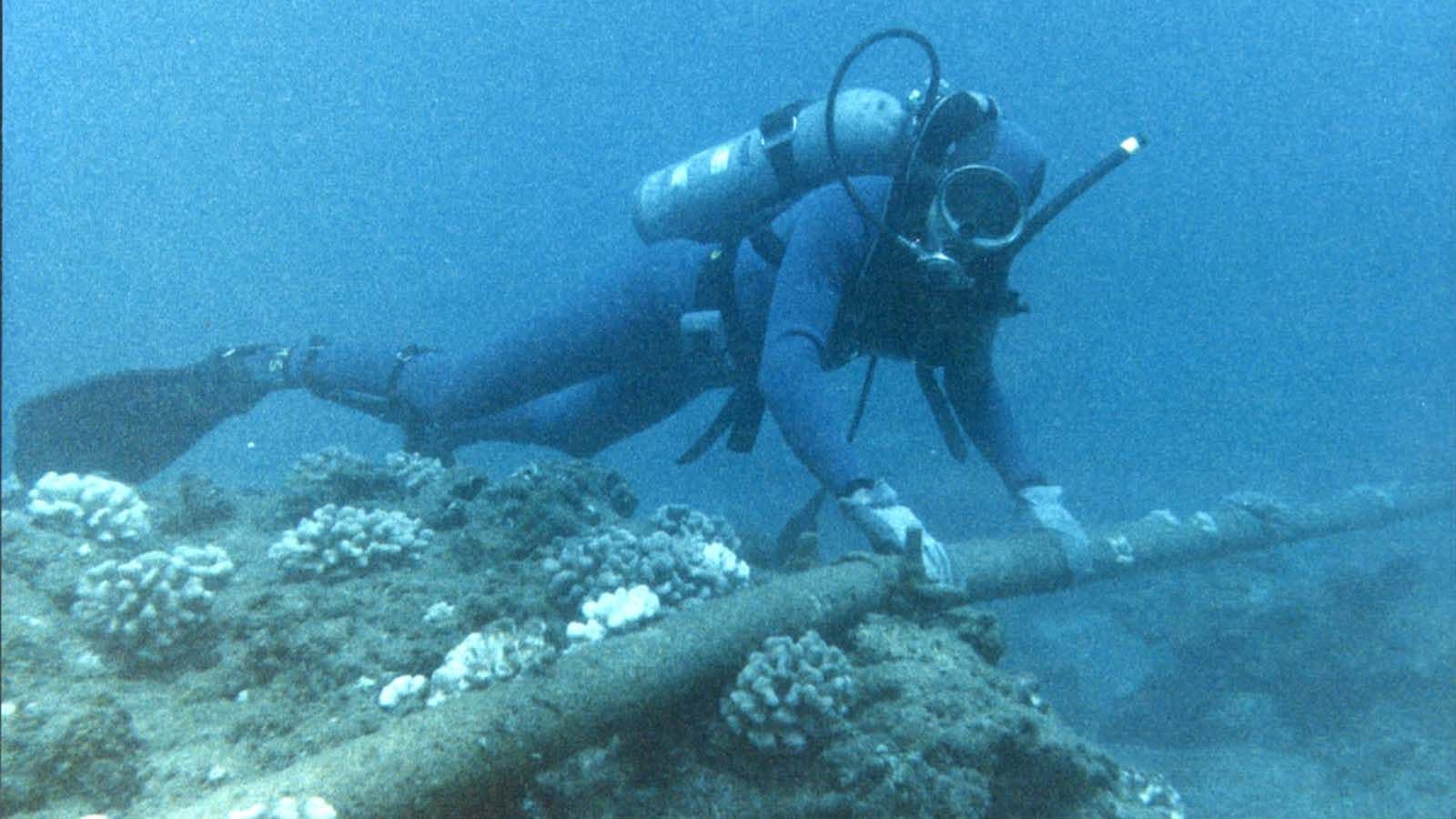
The European Union has announced a $119 million plan to build an undersea cable connecting Greenland to Europe, avoiding U.S. territory. The project, part of the proposed Pan-Arctic Cable, could extend to Canada, Japan, and South Korea, offering an alternative to existing data routes through the Red Sea and Russia.

Editor, Lazyfounder
30 SEC SUMMARY
- EU commits $119 million to build an undersea cable connecting Greenland to Europe, with potential extensions to Canada, Japan, and South Korea.
- The project aims to bypass U.S. territory and reduce reliance on existing data routes through the Red Sea and Russia.
- Security concerns and geopolitical tensions drive the shift toward alternative subsea infrastructure.
- An Arctic Cable Hub is proposed to monitor and protect undersea cables in northern waters.
TABLE OF CONTENTS
KEY HIGHLIGHTS
- EU allocates $119 million for an undersea cable connecting Greenland to Europe, with potential extensions to Canada, Japan, and South Korea.
- Proposed Pan-Arctic Cable avoids U.S. territory and Russia-adjacent routes, reducing geopolitical risks.
- More than 90% of Europe-to-Asia data traffic currently relies on submarine cables crossing the Red Sea.
- EU proposes an Arctic Cable Hub to monitor and protect undersea infrastructure in northern waters.
EU’s Pan-Arctic Cable to bypass U.S. territory
The European Union has announced plans to fund an undersea cable linking Greenland directly to Europe, with the potential to extend the route to Canada, Japan, and South Korea. The project, called the Pan-Arctic Cable, aims to bypass U.S. territory entirely—a shift driven by security concerns and a desire for alternative data corridors.
Why the EU is investing in Arctic routes
The EU has committed $119 million to support Greenland’s secure communications infrastructure and the proposed cable. The funding aligns with a broader EU strategy to reduce dependence on existing undersea routes, particularly those crossing politically sensitive regions like the Red Sea and Russia’s Arctic coastline.
Over 90% of Europe-to-Asia data traffic currently travels through submarine cables in the Red Sea, a chokepoint that has raised concerns about sabotage and geopolitical interference. Incidents like prolonged anchor dragging in the Baltic Sea and NATO’s recent encounters with Russian submarines near Norway have amplified these risks.
New safeguards for undersea infrastructure
To address these vulnerabilities, the EU has proposed an Arctic Cable Hub, a monitoring system designed to oversee protection and repair support for undersea infrastructure. The strategy also recommends embedding monitoring technology within cables to detect unusual activity, such as tampering or interference, in real time.
Previous attempts to establish Arctic cables, such as the Arctic Connect project along Russia’s coastline, were abandoned in 2021 due to geopolitical tensions. The Pan-Arctic Cable avoids this route entirely, opting for a path through Greenland’s waters instead.
Security as a priority in infrastructure planning
Elisabeth Braw, a Senior Fellow at the Atlantic Council, told TechRadar Pro: "But the fact that it’s being considered is very much on trend and a sign of our times." The comment reflects a broader shift in global infrastructure planning, where security and geopolitical risk are now central to technical decisions.
What this means
Lazyfounder analysis — our interpretation, not reported fact.
This move signals a strategic decoupling in global data infrastructure, where geopolitical risks now rival technical and economic factors in routing decisions. For founders and operators, the EU’s $119 million commitment is a funding signal for Arctic-adjacent telecom projects, but it also raises the bar for security and redundancy in their own networks. If the Pan-Arctic Cable materializes, it will create a faster, alternative path to Asia—critical for latency-sensitive applications like financial trading, cloud gaming, and real-time AI inference. Operators with European or Asian data flows may need to revisit their redundancy plans, as reliance on a single undersea corridor (e.g., the Red Sea) could become a liability.
Key takeaways
- The EU’s $119 million funding sets a precedent for state-backed investment in geopolitically secure subsea cables.
- Founders in fintech, cloud services, or AI may see lower latency to Asia if the route extends to Japan and South Korea.
- Security risks—real or perceived—are now a first-order concern in cable planning, not just an afterthought.
- Operators should assess whether their infrastructure relies too heavily on vulnerable chokepoints like the Red Sea or Bab al-Mandeb Strait.
Related on Lazyfounder
Sources
- TechRadar · 2026-11-03
EU reveals plans for undersea cable straight to Greenland — and could bypass the US entirely to connect up the world
This story is an original summary drafted with AI by Lazyfounder from the reporting listed above and checked by automated validation. Facts are attributed to their original publishers; sections marked as analysis are Lazyfounder's. Where a source is in another language, facts were machine-translated and quotations are reported, not reproduced. Read the original coverage via the links, and see our AI policy and corrections policy.

About the author
Editor, Lazyfounder
Tarun Mottlia edits LazyFounders, covering Indian startups, funding rounds, AI and product launches. Every story on the site is AI-assisted and checked against its cited sources before publication.
More stories by Tarun MottliaGet the LazyFounder Brief
Startup, funding and AI news in a five-minute read. Join the early-access list.
