
Cowbell Cyber rolls out AI liability insurance for small businesses
Small businesses using AI agents now face a new safety net. Cowbell Cyber’s Cowbell AI Liability Insurance, launching January 1, 2027, covers losses from unauthorized payments, lawsuits, and regulatory fines. The policy is sold through wholesale brokers and targets firms that lack the risk management resources of larger companies.

Editor, Lazyfounder
30 SEC SUMMARY
- Cowbell Cyber has rolled out a standalone insurance policy for U.S. small and midsized businesses using AI agents. It covers financial losses, lawsuits, and regulatory fines starting January 1, 2027.
- The policy addresses risks like unauthorized payments, third-party claims, and AI-driven errors—all without requiring human oversight.
- Underwriting focuses on three AI-specific factors: observability, autonomy, and governance.
- Cowbell already insures larger firms for AI incidents; this new policy extends coverage to smaller businesses.
- The company has secured $200 million in funding, including a $60 million Series C from Zurich Insurance Group.
TABLE OF CONTENTS
- New policy shields small businesses from AI-driven losses
- What the policy covers—from double payments to hacked AI
- Lawsuits and fines: How the policy handles third-party risks
- Underwriting zeroes in on observability, autonomy, and governance
- Standalone policy extends coverage to smaller firms
- $200 million in funding fuels expansion
- Why small businesses need AI liability coverage now
- What this means
- Key takeaways
- Sources
New policy shields small businesses from AI-driven losses
Cowbell Cyber has unveiled a standalone insurance policy for U.S. small and midsized businesses that rely on AI agents. The policy, called Cowbell AI Liability Insurance, steps in when AI agents act without human approval—whether that means paying a supplier twice, racking up unauthorized charges, or triggering lawsuits. It will be available through wholesale brokers starting January 1, 2027.
What the policy covers—from double payments to hacked AI
The policy covers four key scenarios. First, unauthorized payments—like an accounts-payable agent misreading approvals and sending a duplicate payment. Second, unrecovered funds if the money cannot be clawed back. Third, usage charges from unchecked AI loops, such as an agent running up cloud costs in a continuous cycle. Fourth, LLMjacking, where attackers use stolen credentials to run AI workloads at the business’s expense.
Beyond direct financial losses, the policy also covers the costs of investigating incidents or taking an AI agent offline.
Lawsuits and fines: How the policy handles third-party risks
If a customer sues over an AI mistake—such as a chatbot’s discriminatory output or physical harm caused by an AI decision—the policy handles legal defense, damages, or settlements. It also covers regulatory fines in jurisdictions where insurance can step in.
Simon Hughes, Cowbell’s Chief Commercial Officer, told SiliconANGLE the policy was designed to address both immediate financial losses and the broader liability risks AI agents create.
Underwriting zeroes in on observability, autonomy, and governance
Cowbell’s underwriting process focuses on three AI-specific risk factors: observability, autonomy, and governance. Observability measures how closely a business monitors its AI tools. Autonomy assesses how much independent action the agents can take. Governance evaluates the policies and controls in place to manage those agents.
The company’s Risk Advisor tool translates these factors into clear risk signals for policyholders. Businesses can link AI tools like Gemini, Claude, and ChatGPT through Cowbell Connectors to check their own AI risk scores.
Standalone policy extends coverage to smaller firms
Cowbell already offers AI incident coverage through its Prime One policy, but that product is limited to companies with $250 million to $1 billion in annual revenue. Cowbell AI Liability Insurance removes that barrier, making coverage accessible to smaller businesses.
Hughes said the move reflects a hard truth: AI agents are now deployed in smaller companies, but most lack the risk management infrastructure of large enterprises.
$200 million in funding fuels expansion
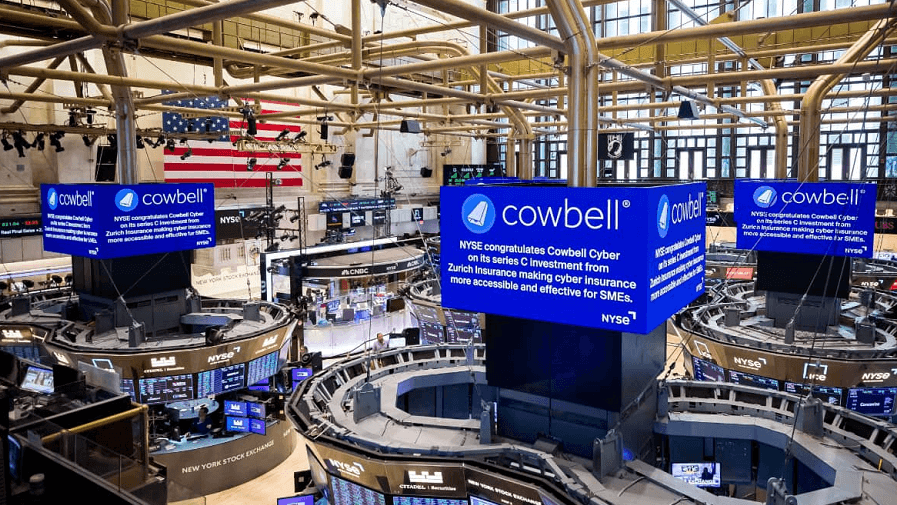
Cowbell has raised over $200 million in venture capital, including a $60 million Series C round led by Zurich Insurance Group in July 2024. The funding underscores investor confidence in Cowbell’s approach—combining insurance with tools that help businesses understand and mitigate AI risks.
Why small businesses need AI liability coverage now
The policy arrives as small businesses adopt AI agents at a rapid pace, often without fully grasping the risks. Earlier reporting by SiliconANGLE shows that most companies have yet to see financial returns from AI investments, and benefits remain concentrated among large tech firms.
Cowbell’s policy aims to protect smaller players from costly mistakes as they experiment with AI-driven automation.
What this means
Lazyfounder analysis — our interpretation, not reported fact.
Small businesses testing AI tools no longer face uninsured risks—this policy could lower the cost of early adoption and push insurers to standardize protections for AI-specific threats.
Key takeaways
- AI liability insurance is now accessible to U.S. businesses below the $250 million revenue mark, closing a coverage gap for smaller firms.
- The policy covers direct financial losses, third-party lawsuits, and regulatory fines tied to AI actions without human approval.
- Underwriting evaluates observability, autonomy, and governance—three factors unique to AI risks.
- The launch signals that AI risks are distinct and demand specialized insurance solutions.
Related on Lazyfounder
Sources
- SiliconANGLE · 2026-11-10
Cowbell unveils AI liability insurance for small businesses that deploy AI agents
This story is an original summary drafted with AI by Lazyfounder from the reporting listed above and checked by automated validation. Facts are attributed to their original publishers; sections marked as analysis are Lazyfounder's. Where a source is in another language, facts were machine-translated and quotations are reported, not reproduced. Read the original coverage via the links, and see our AI policy and corrections policy.

About the author
Editor, Lazyfounder
Tarun Mottlia edits LazyFounders, covering Indian startups, funding rounds, AI and product launches. Every story on the site is AI-assisted and checked against its cited sources before publication.
More stories by Tarun MottliaGet the LazyFounder Brief
Startup, funding and AI news in a five-minute read. Join the early-access list.
