
Cognition AI and CoreWeave unveil advances in AI agent infrastructure
Cognition AI Inc. and CoreWeave Inc. unveiled new advancements in AI agent infrastructure at the Fully Connected event, focusing on continuous learning and distributed training. CoreWeave introduced CoreWeave Forge, a platform designed to streamline AI agent development, while Cognition’s Devin AI agent now assists across the entire software development lifecycle.

Editor, Lazyfounder
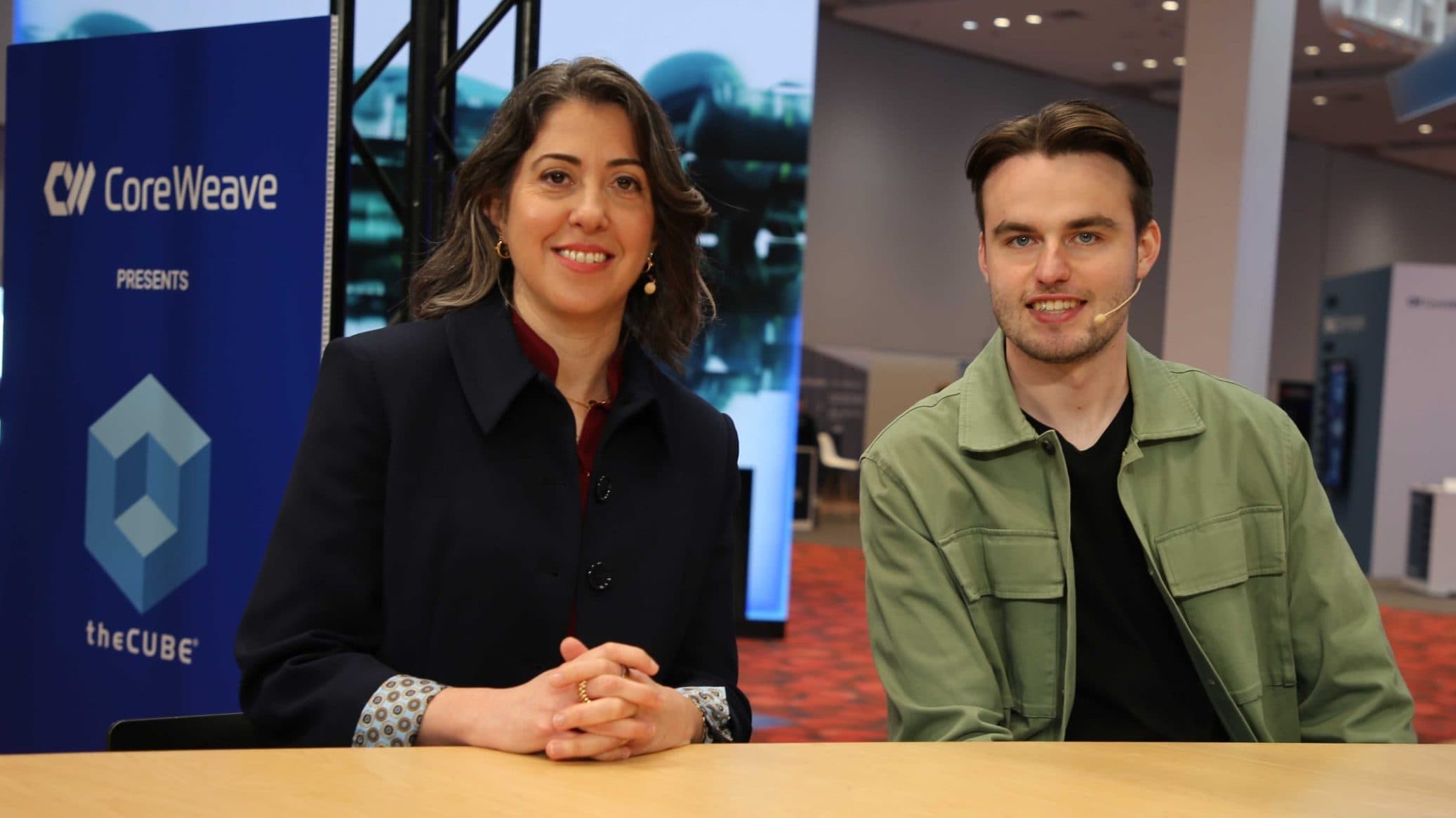
Cognition AI Inc. and CoreWeave Inc. unveiled new advancements in AI agent infrastructure at the Fully Connected event, focusing on continuous learning and distributed training. CoreWeave introduced CoreWeave Forge, a platform designed to streamline AI agent development, while Cognition’s Devin AI agent now assists across the entire software development lifecycle.
30 SEC SUMMARY
- Cognition AI Inc. and CoreWeave Inc. unveiled advancements in AI agent infrastructure at the Fully Connected event, focusing on continuous learning and distributed training.
- Devin, Cognition’s AI agent, assists across the entire software development lifecycle, from coding to production issue resolution.
- CoreWeave launched CoreWeave Forge, a platform connecting inference, observation, and model improvement for AI agents.
- The platform includes features like Agent Lens for tracing agent activity and RL Rollouts for hot-loading model updates.
- 99.99% reliability is critical for AI training infrastructure, especially across distributed GPU clusters.
TABLE OF CONTENTS
- Advancements in AI agent infrastructure
- CoreWeave Forge: A new platform for AI agent development
- Hardware and performance optimizations
- Context: The evolution of AI infrastructure
- What this means
- Key takeaways
- FAQ
- Sources
KEY HIGHLIGHTS
- Cognition AI’s Devin assists in the entire software development lifecycle, from coding to production issue resolution.
- CoreWeave launched CoreWeave Forge, a platform connecting inference, observation, and model improvement for AI agents.
- CoreWeave Forge includes Agent Lens for tracing agent activity and RL Rollouts for hot-loading model updates without redeployment.
- Cognition relies on 99.99% reliable distributed GPU training across multiple countries and continents.
- Early access to Nvidia’s Vera Rubin platform helps optimize price-performance for AI training workloads.
Advancements in AI agent infrastructure
At the Fully Connected event, Cognition AI Inc. and CoreWeave Inc. outlined advancements in AI agent infrastructure, emphasizing continuous learning loops and distributed training. According to SiliconANGLE, these developments aim to support AI systems that improve over time, rather than remaining static.
Cognition’s AI agent, Devin, is designed to assist throughout the entire software development lifecycle. This includes planning, writing and reviewing code, and responding to production issues autonomously. The infrastructure supporting Devin requires continual learning at scale, which has led Cognition to distribute training across data centers in multiple countries and continents.
Maintaining high uptime across thousands of GPUs is critical for Cognition’s operations. The company reportedly achieves 99.99% reliability, a key metric for AI training infrastructure, particularly for reinforcement learning workloads where training and inference are closely intertwined.
CoreWeave Forge: A new platform for AI agent development
CoreWeave Inc. introduced CoreWeave Forge, a platform designed to connect key stages of AI agent development: inference, observation, data curation, model improvement, and evaluation. The platform aims to streamline the development and deployment of AI agents by integrating these processes into a unified system.
Two notable features of CoreWeave Forge are Agent Lens and RL Rollouts. Agent Lens traces agent activity, providing visibility into how AI agents operate in real-world scenarios. RL Rollouts, meanwhile, enables hot-loading of updated model checkpoints into live deployments without requiring system redeployment, reducing downtime and accelerating iteration.
CoreWeave Forge also supports model distillation and reinforcement learning, allowing developers to refine AI models based on real-world feedback. This aligns with Cognition’s goal of using Devin’s real-world experience to improve subsequent versions of the agent, making it more capable across long-running software projects.
Hardware and performance optimizations
Cognition is leveraging early access to Nvidia’s Vera Rubin platform to study system dynamics and adapt model architectures for better price-performance. This collaboration highlights the growing importance of hardware optimizations in AI training, where efficiency gains can translate into significant cost savings.
The reliance on distributed training across global data centers underscores the need for robust infrastructure. Achieving 99.99% reliability is not just a technical milestone but a business necessity, as downtime can disrupt the continuous learning loops that define next-generation AI systems.
Context: The evolution of AI infrastructure
The push for continuous learning in AI agents reflects broader trends in AI infrastructure, where static models are being replaced by dynamic systems that improve over time. This shift mirrors developments like NetApp and Nvidia’s Novus architecture, which rethinks storage for AI workloads to address inefficiencies in GPU utilization and concurrency demands.
As AI workloads become more complex, infrastructure providers are increasingly focusing on scalability and reliability. For example, NetApp Novus targets chief data officers by emphasizing data sovereignty and cyber resilience, priorities that align with the needs of companies like Cognition operating distributed AI training environments.
What this means
Lazyfounder analysis — our interpretation, not reported fact.
This announcement signals a shift from static AI models to dynamic, learning-oriented systems. For founders and operators, the emphasis on continuous improvement and reliability in AI infrastructure means higher upfront investment but potentially lower long-term costs. The ability to hot-load updates without redeploying systems could also accelerate iteration cycles, making AI-driven development more agile. However, the complexity of managing distributed training and inference workloads may create a steeper learning curve for teams without deep expertise in AI infrastructure.
Key takeaways
- AI agent infrastructure is moving toward continuous learning loops, requiring high uptime and reliability.
- Devin, an AI agent from Cognition, supports the entire software development lifecycle, including autonomous issue resolution.
- CoreWeave Forge aims to streamline AI agent development by connecting inference, observation, and model improvement.
- Features like RL Rollouts allow live updates to models without system redeployment, reducing downtime.
- Nvidia’s Vera Rubin platform is being used to optimize model price-performance for AI training.
FAQ
What is CoreWeave Forge?
CoreWeave Forge is a platform launched by CoreWeave Inc. that connects key stages of AI agent development, including inference, observation, data curation, model improvement, and evaluation. It includes features like Agent Lens for tracing agent activity and RL Rollouts for hot-loading model updates without redeployment.
How does Devin assist in software development?
Devin, an AI agent developed by Cognition AI Inc., assists throughout the entire software development lifecycle. This includes planning, writing and reviewing code, and autonomously responding to production issues.
Why is 99.99% reliability important for AI training?
For AI systems like Cognition’s Devin, which rely on continuous learning loops, high reliability ensures uninterrupted training and inference. Downtime can disrupt the learning process, making reliability a critical metric for distributed GPU training infrastructure.
What is the Vera Rubin platform?
The Vera Rubin platform is an upcoming offering from Nvidia Corp. Cognition is using early access to this platform to study system dynamics and optimize model architectures for better price-performance in AI training workloads.
Related on Lazyfounder
Sources
- SiliconANGLE · 2026-10-01
Always-on AI agents turn infrastructure into a continuous learning loop
This story is an original summary drafted with AI by Lazyfounder from the reporting listed above and checked by automated validation. Facts are attributed to their original publishers; sections marked as analysis are Lazyfounder's. Where a source is in another language, facts were machine-translated and quotations are reported, not reproduced. Read the original coverage via the links, and see our AI policy and corrections policy.

About the author
Editor, Lazyfounder
Tarun Mottlia edits LazyFounders, covering Indian startups, funding rounds, AI and product launches. Every story on the site is AI-assisted and checked against its cited sources before publication.
More stories by Tarun MottliaGet the LazyFounder Brief
Startup, funding and AI news in a five-minute read. Join the early-access list.