
CODE380 launches pocket-sized D·Vision SDR drone detector to intercept Russian drone feeds
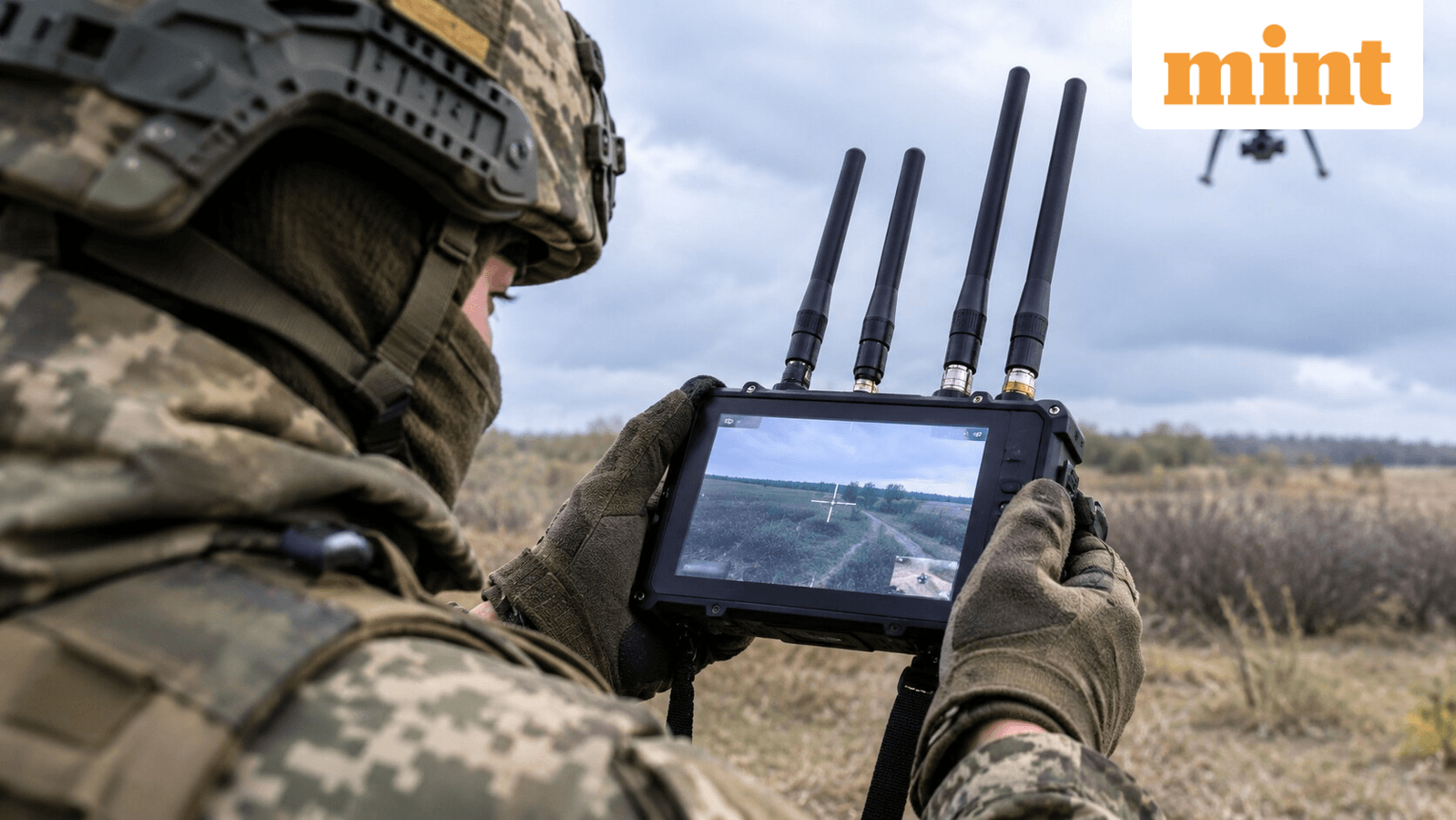
Ukrainian defense startup CODE380 has released the D·Vision SDR, a 280-gram software-defined radio device capable of intercepting live video feeds from Russian Molniya UAVs. The tool enables Ukrainian military units to monitor incoming threats passively across a broad frequency range without emitting signals that could reveal their locations.

Editor, Lazyfounder
What the D·Vision SDR does
The D·Vision SDR is a pocket-sized drone detector weighing 280 grams. It intercepts unencrypted video feeds from Russian Molniya UAVs and other drones by scanning frequencies from 500 MHz to 8.7 GHz, according to Defense News and Militarnyi. The device operates passively, avoiding detection while outputting live video feeds to operators.
The system can transmit analogue video signals up to 10 kilometers within the 540 MHz to 6 GHz range, though its range drops to 3.5–5 kilometers at higher frequencies. Its software-defined design allows updates to adapt to new drone specifications, reducing blind spots in detection.
How it compares to competitors
At 280 grams, the D·Vision SDR is lighter than competing Ukrainian drone detectors like Babai’s Vydun 7.5, Contra-drone’s SENSE-4, and BlueBird Tech’s Chuyka 3.0. Its passive operation and broad frequency coverage offer advantages in mobility and discretion, but its reliance on unencrypted analogue signals limits its effectiveness against newer, digitally encrypted drones.
CODE380’s device targets a known vulnerability: Russian Molniya drones transmit video feeds in the 4.1–4.5 GHz range, which the D·Vision SDR covers. However, Serhii Beskrestnov, a radio specialist advising Ukraine’s president, has noted that Russia’s shift toward digital video transmission could render analogue detectors obsolete.
Future Russian drones may also use AI-driven systems with Nvidia chips, capable of operating without emitting detectable radio signals. This could further reduce the utility of passive detectors like the D·Vision SDR.
Earlier reporting on CODE380’s drone detection
In August, LazyFounder reported on CODE380’s initial unveiling of the D·Vision SDR alongside Ptashka Drones’ fiber-optic FPV drones. The earlier story highlighted the device’s ability to intercept Russian drone signals for live video feeds, though it did not detail its weight, frequency range, or comparative advantages over other Ukrainian detectors. The new details underscore CODE380’s focus on portability and software adaptability as key differentiators.
What this means
Lazyfounder analysis — our interpretation, not reported fact.
For founders and operators in the defense tech space, the D·Vision SDR demonstrates how software-defined radio can address urgent battlefield needs—mobility, real-time intelligence, and passive operation—while exposing the risks of rapid obsolescence. The device’s lightweight design and broad frequency coverage offer a template for startups targeting asymmetric warfare, but its limitations against encrypted or AI-driven drones highlight the need for continuous iteration. Companies in adjacent markets, such as electronic warfare or surveillance, may see opportunities to develop complementary tools or upgrades that address these gaps.
Related on Lazyfounder
Sources
- Mint (Technology) · 2026-11-03
Ukraine's 280-g drone detector intercepts real-time video feeds from Russian Molniya UAVs
This story is an original summary drafted with AI by Lazyfounder from the reporting listed above and checked by automated validation. Facts are attributed to their original publishers; sections marked as analysis are Lazyfounder's. Where a source is in another language, facts were machine-translated and quotations are reported, not reproduced. Read the original coverage via the links, and see our AI policy and corrections policy.

About the author
Editor, Lazyfounder
Tarun Mottlia edits LazyFounders, covering Indian startups, funding rounds, AI and product launches. Every story on the site is AI-assisted and checked against its cited sources before publication.
More stories by Tarun MottliaGet the LazyFounder Brief
Startup, funding and AI news in a five-minute read. Join the early-access list.
