
Breville’s Eye Q toaster impresses in design but falters in consistency
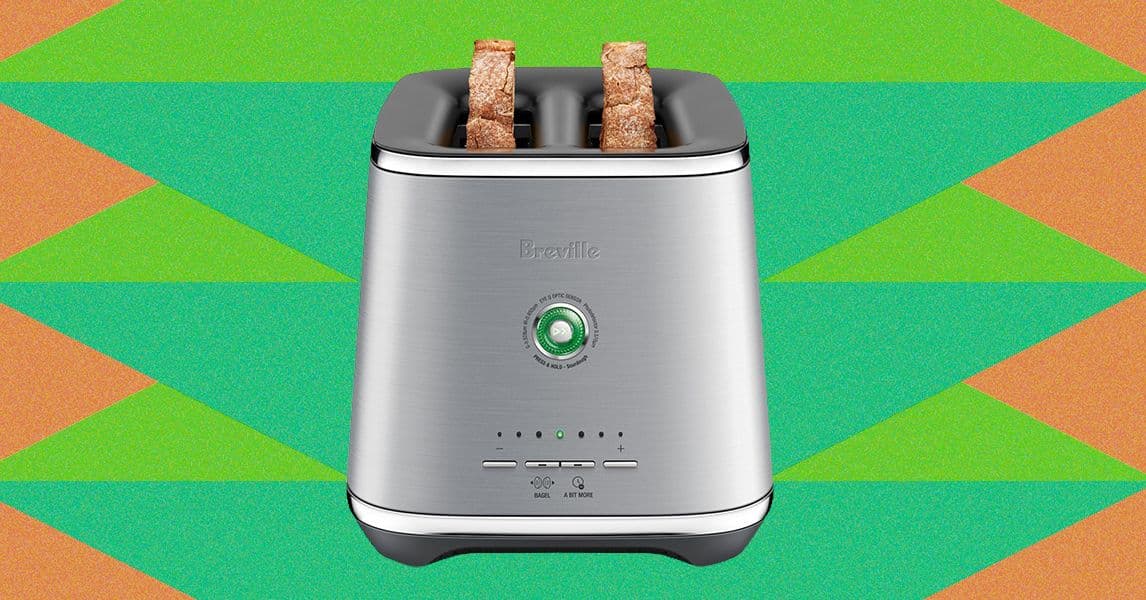
Breville has launched the Eye Q toaster, a new appliance featuring optical sensors designed to measure toast doneness. While the design and technology aim to elevate the toasting experience, reviews highlight mixed results in performance and consistency.

Editor, Lazyfounder
30 SEC SUMMARY
- Breville launched the Eye Q toaster, a new kitchen appliance using optical sensors to measure toast doneness.
- The toaster features a sleek "dark noir" brushed steel design and ceramic-coated top for durability.
- Reviews highlight intuitive controls but mixed results on toasting evenness and quality.
- Testing revealed inconsistencies, including uneven browning and over-toasting on lighter settings.
- The product aims to innovate toasting technology but falls short of outperforming traditional toasters.
TABLE OF CONTENTS
KEY HIGHLIGHTS
- Breville released the Eye Q toaster, featuring optical sensors to measure toast doneness.
- The appliance has a "dark noir" brushed steel design and a ceramic-coated top for durability.
- Reviews indicate intuitive controls but uneven toasting results, with some settings producing inconsistent browning.
- Testing revealed flaws, including over-toasting lighter settings and uneven browning over time.
- The toaster performed adequately but did not outperform traditional toasters in key areas.
Breville launches Eye Q toaster with optical sensors
Breville has introduced the Eye Q toaster, a kitchen appliance that uses optical sensors to measure toast doneness. According to WIRED, this technology aims to improve precision in toasting, a feature that sets it apart from traditional toasters.
Design and build quality
The Eye Q toaster sports a "dark noir" brushed steel design, which reviewers note gives it a premium look. The top of the toaster is ceramic-coated, described as cleaner and more durable than traditional stainless steel tops. The controls are reported to be intuitive, making the appliance easy to use.
Mixed reviews on toasting performance
Despite its advanced features, the Eye Q toaster has received mixed feedback on its performance. WIRED’s testing revealed inconsistencies in toasting, with the top of the toast often browning more than the bottom. Settings two and three produced nearly identical results, while setting six was lighter than setting four, raising questions about the reliability of the optical sensors.
Store-bought bagels and other bread types showed uneven browning, with edges often toastier than the center. One unit tested developed a habit of over-toasting lighter shades, an issue that appeared to worsen over time.
Comparison to traditional toasters
While the Eye Q toaster performed adequately, reviewers found it did not surpass traditional toasters in delivering superior toast. The inconsistencies in browning and settings raised concerns about whether the optical sensor technology translates to a better user experience.
What this means
Lazyfounder analysis — our interpretation, not reported fact.
For founders and operators in consumer electronics, Breville’s Eye Q toaster is a reminder that innovation alone isn’t enough—execution matters just as much. The optical sensor tech is a novel approach to a decades-old product, but if it doesn’t deliver consistently better results than what’s already on the market, consumers won’t see the value. This launch also highlights the risk of over-engineering: adding sensors and premium materials doesn’t guarantee a superior experience, especially if the core functionality (even toasting) is compromised. For startups in hardware, this is a case study in balancing innovation with reliability.
Key takeaways
- Optical sensor technology in toasters is an emerging trend, but reliability and consistency are critical for consumer adoption.
- Premium design and materials can enhance perceived value, but they must align with functional performance to justify the investment.
- Inconsistent results, even in a feature-rich product, can overshadow innovation and hurt brand trust.
- Hardware startups should prioritize rigorous testing across multiple use cases to identify and address flaws before launch.
FAQ
What makes the Breville Eye Q toaster different from traditional toasters?
The Eye Q toaster uses optical sensors to measure toast doneness, a feature not found in most traditional toasters. This technology is intended to improve precision and consistency.
How does the Eye Q toaster perform in real-world testing?
Testing revealed inconsistencies, including uneven browning, settings that produced similar results, and a tendency for one unit to over-toast lighter shades. Reviews suggest it does not outperform traditional toasters in key areas.
Is the Eye Q toaster’s design durable?
The toaster has a ceramic-coated top, which is described as cleaner and more durable than traditional stainless steel tops. The "dark noir" brushed steel design also gives it a premium appearance.
Related on Lazyfounder
Sources
This story is an original summary drafted with AI by Lazyfounder from the reporting listed above and checked by automated validation. Facts are attributed to their original publishers; sections marked as analysis are Lazyfounder's. Where a source is in another language, facts were machine-translated and quotations are reported, not reproduced. Read the original coverage via the links, and see our AI policy and corrections policy.

About the author
Editor, Lazyfounder
Tarun Mottlia edits LazyFounders, covering Indian startups, funding rounds, AI and product launches. Every story on the site is AI-assisted and checked against its cited sources before publication.
More stories by Tarun MottliaGet the LazyFounder Brief
Startup, funding and AI news in a five-minute read. Join the early-access list.
