

ISRO to transfer launch vehicle manufacturing to private companies and PSUs
The Indian Space Research Organisation (ISRO) reportedly plans to exit the manufacturing of launch vehicles and routine satellites, transferring mature rocket technologies to private companies and public-sector undertakings (PSUs). This move is part of a broader government push to privatise India’s space sector and expand private participation.

Editor, Lazyfounder
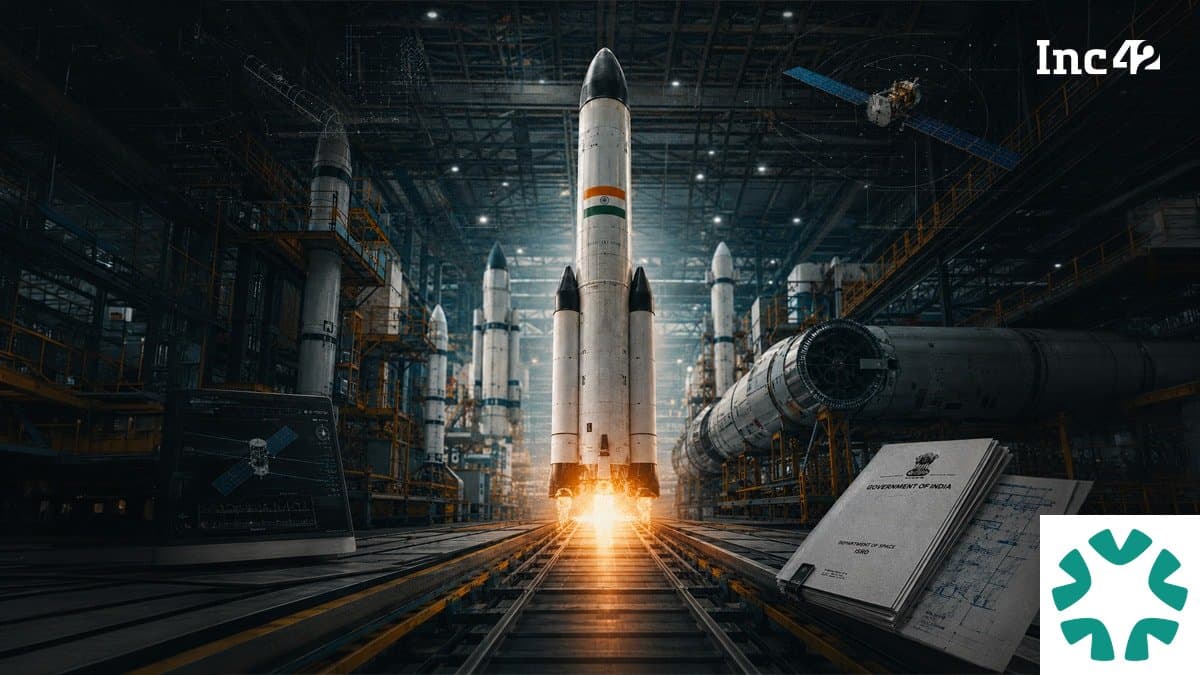
TABLE OF CONTENTS
KEY HIGHLIGHTS
- ISRO plans to exit manufacturing of launch vehicles and routine satellites, transferring mature rocket technologies to private companies and public-sector undertakings (PSUs).
- Technologies for smaller launch vehicles like SSLV have already been transferred to HAL, with larger vehicles such as PSLV and LVM3 potentially next.
- The shift aims to expand private sector participation in India’s space economy, allowing ISRO to focus on research, development, and advanced missions.
ISRO’s Plan to Exit Manufacturing
According to Inc42, the Indian Space Research Organisation (ISRO) is planning to gradually exit the manufacturing of launch vehicles and routine satellites. The organisation intends to transfer mature rocket technologies to private companies and public-sector undertakings (PSUs). This move aligns with the Indian government’s broader push to promote privatisation in the space industry.
Technologies Slated for Transfer
The transfer of technologies has already begun, with the Small Satellite Launch Vehicle (SSLV) technology handed over to Hindustan Aeronautics Limited (HAL). According to the report, larger launch vehicles such as the Polar Satellite Launch Vehicle (PSLV) and Launch Vehicle Mark-3 (LVM3) could be next in line for transfer to private players.
Implications for India’s Space Economy
The shift is expected to significantly expand the role of private players in India’s space economy. By offloading manufacturing responsibilities, ISRO aims to focus more on research and development (R&D) and advanced space missions. This could create opportunities for startups and established companies to participate in commercial launch manufacturing, satellite production, and related services.
Government’s Role in Privatisation
The move reflects the central government’s ongoing efforts to open the space sector to private participation. IN-SPACe chairman Pawan Goenka stated at the Business Today summit that mature space technologies would be handed over to private companies and PSUs, further accelerating the privatisation drive.
What this means
Lazyfounder analysis — our interpretation, not reported fact.
This shift is a significant signal for founders and operators in India’s space sector. By transferring mature technologies to private companies and PSUs, ISRO is creating a pathway for startups and established players to enter the commercial launch and satellite manufacturing space. This could lead to increased competition, innovation, and scalability in the sector, while also freeing up ISRO to focus on cutting-edge research and advanced missions. For founders, this may open doors to new business models, partnerships, or even government-backed collaborations. However, it also means navigating a more crowded and dynamic market, where the ability to leverage transferred technologies effectively will be critical.
Key takeaways
- Founders in the space sector may see new opportunities as ISRO transfers mature technologies to private players, enabling them to participate in commercial launch manufacturing.
- This move signals a broader government push to privatise space activities, which could lower entry barriers for startups and encourage innovation in launch vehicles and satellite production.
- Public-sector undertakings and private companies could become key players in scaling India’s space economy, creating potential partnerships or competition for existing players.
Sources
- inc42.com · 2026-08-22
ISRO Mulls Exiting Manufacturing Amid India’s Push To Promote Privatisation In The Space Industry
This story is an original summary drafted with AI by Lazyfounder from the reporting listed above and checked by automated validation. Facts are attributed to their original publishers; sections marked as analysis are Lazyfounder's. Where a source is in another language, facts were machine-translated and quotations are reported, not reproduced. Read the original coverage via the links, and see our AI policy and corrections policy.

About the author
Editor, Lazyfounder
Tarun Mottlia edits LazyFounders, covering Indian startups, funding rounds, AI and product launches. Every story on the site is AI-assisted and checked against its cited sources before publication.
More stories by Tarun MottliaGet the LazyFounder Brief
Startup, funding and AI news in a five-minute read. Join the early-access list.
