
Trump and Xi Agree to Rename AI "Super Intelligence" as Policy Talks Stall
President Donald Trump hosted Chinese leader Xi Jinping and tech executives like Elon Musk and Sam Altman for a state dinner this week, but the event focused more on renaming artificial intelligence than advancing policy. The White House announced plans to replace "AI" with "Super Intelligence" in official documents, while also preparing to launch a new federal website, America.gov, next Tuesday. Despite the fanfare, no major breakthroughs emerged from the Trump-Xi meeting, according to reports.

Editor, LazyFounders
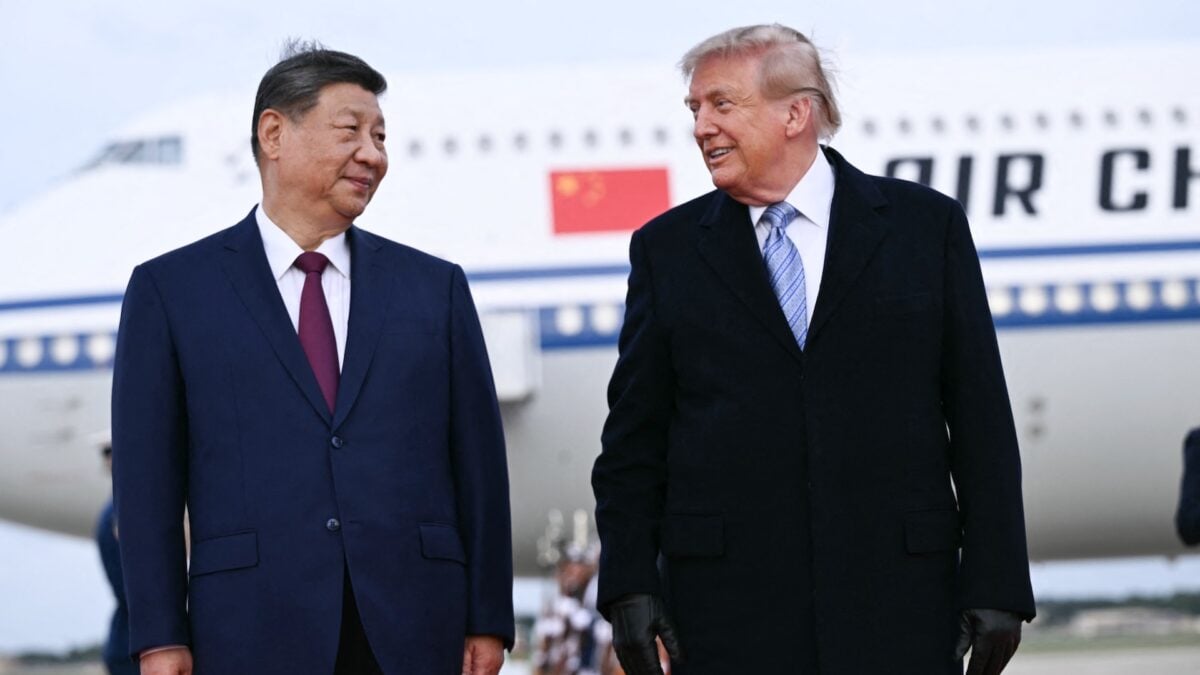

President Donald Trump hosted Chinese leader Xi Jinping and tech executives like Elon Musk and Sam Altman for a state dinner this week, but the event focused more on renaming artificial intelligence than advancing policy. The White House announced plans to replace "AI" with "Super Intelligence" in official documents, while also preparing to launch a new federal website, America.gov, next Tuesday. Despite the fanfare, no major breakthroughs emerged from the Trump-Xi meeting, according to reports.
30 SEC SUMMARY
- President Donald Trump hosted Chinese leader Xi Jinping and tech leaders like Elon Musk and Sam Altman for a state dinner focused on renaming AI to "Super Intelligence (SI)."
- Trump emphasized that the only guardrail AI needs is a "STRONG AND SMART (High IQ!) PRESIDENT," shifting focus from policy discussions to terminology.
- A White House event next week will launch America.gov, a new federal website consolidating government information.
- Trump and Xi agreed to replace "artificial intelligence" with "Super Intelligence" in official documents, per a White House fact sheet.
- No major policy breakthroughs were reported from the Trump-Xi meeting, according to the Associated Press.
TABLE OF CONTENTS
- A State Dinner Focused on Semantics Over Policy
- America.gov and the Push for Federal Consolidation
- U.S. and China Agree on Terminology, Not Policy
- AI Czar Rumors Denied Amid Internal Shuffles
- Background: Diplomatic and Industry Context
- What this means
- Key takeaways
- FAQ
- Sources
KEY HIGHLIGHTS
- President Donald Trump hosted Chinese leader Xi Jinping and tech executives like Elon Musk and Sam Altman at a state dinner, focusing on renaming artificial intelligence to "Super Intelligence (SI)."
- The White House announced that Trump and Xi agreed to replace "artificial intelligence" with "Super Intelligence" in official documents, per a fact sheet detailing diplomatic achievements.
- Trump will launch America.gov, a new federal website, during a White House event next Tuesday, aimed at consolidating government information.
- Despite discussions, the Associated Press reported no major policy breakthroughs from the Trump-Xi meeting.
- Trump denied rumors that Treasury Secretary Scott Bessent would be appointed as AI czar, though Bessent had announced a U.S.-China mechanism for reporting AI-related incidents.
A State Dinner Focused on Semantics Over Policy
President Donald Trump hosted Chinese leader Xi Jinping and prominent tech figures, including Elon Musk and Sam Altman, at a state dinner on Thursday. According to Gizmodo, the event centered on rebranding artificial intelligence as "Super Intelligence (SI)" rather than addressing AI safety policies or governance frameworks.
During the dinner, Trump asserted that the sole guardrail AI requires is a "STRONG AND SMART (High IQ!) PRESIDENT," a comment reportedly met with mixed reactions from attendees. The focus on terminology extended beyond the event, with advisors like Sebastian Gorka later correcting media outlets for using the term "AI race" instead of "Super Intelligence." Newsmax anchor Ed Henry acknowledged the directive, thanking Gorka for the reminder to adhere to the administration’s preferred language.
America.gov and the Push for Federal Consolidation
The White House announced plans to launch America.gov next Tuesday during an event billed as celebrating a "golden age" for AI. According to Gizmodo, the website aims to consolidate federal government information currently scattered across multiple agency sites. Attendees at the launch will include Secretary of State Marco Rubio, Airbnb co-founder Joe Gebbia, Nvidia CEO Jensen Huang, and Elon Musk.
The initiative reflects Trump’s broader efforts to streamline government communication, though critics argue it risks oversimplifying complex information. The timing of the launch coincides with heightened scrutiny of federal transparency, particularly in technology and defense sectors.
U.S. and China Agree on Terminology, Not Policy
A White House fact sheet released after the dinner revealed that Trump and Xi had agreed to replace the term "artificial intelligence" with "Super Intelligence" in official documents. The sheet framed the decision as part of a broader effort to ensure technology serves "the well-being of people under human control," as Xi Jinping reportedly emphasized during the meeting.
The fact sheet also outlined plans for a U.S.-China communications channel to address safety-related "Super Intelligence" incidents. Representatives from both countries are scheduled to meet in November to discuss risks and benefits associated with the technology. However, the Associated Press reported that the Trump-Xi meeting produced no major breakthroughs, citing unnamed analysts who suggested the expanded communication could help prevent disputes from escalating.
AI Czar Rumors Denied Amid Internal Shuffles
Trump denied rumors that Treasury Secretary Scott Bessent would be appointed as AI czar, despite Bessent’s recent announcement of a U.S.-China "notification mechanism" for AI incidents. According to Gizmodo, Bessent, a former hedge fund manager, had been floated as a candidate for the role, which remains unfilled after David Sacks, the previous AI czar, left government due to term limits for special employees.
The lack of clarity around leadership for AI governance has raised concerns among industry observers, particularly as global competitors like China advance their own regulatory frameworks. Trump’s focus on rebranding AI has further diverted attention from substantive policy discussions, leaving startups and operators in a state of regulatory limbo.
Background: Diplomatic and Industry Context
The Trump-Xi dinner follows earlier high-level discussions between the U.S. and China on AI governance, including a White House meeting that underscored diverging approaches to regulation and cooperation. While the U.S. has emphasized market-driven innovation, China has pursued centralized control over AI development, creating tensions in bilateral negotiations.
The tech industry has increasingly faced scrutiny over security risks, as highlighted by recent incidents like cargo thefts targeting AI-related shipments. Meanwhile, leaders like Palo Alto Networks CEO Nikesh Arora have dismissed calls to slow AI development, arguing that competitive pressures make such proposals impractical.
What this means
LazyFounders analysis — our interpretation, not reported fact.
This story underscores how symbolic gestures—like renaming AI—can overshadow substantive policy discussions, particularly in high-stakes diplomatic settings. For founders and operators, the takeaway is twofold: First, regulatory uncertainty around AI remains unresolved, and second, government messaging on technology can shift abruptly based on political priorities rather than technical realities. The focus on semantics over safety or governance may create challenges for startups navigating compliance or seeking clarity on long-term AI strategy. Meanwhile, the launch of America.gov signals an effort to streamline federal communication, which could simplify access to government resources—but its effectiveness will depend on execution, not announcements.
Key takeaways
- Trump’s state dinner with Xi and tech leaders prioritized rebranding AI over policy discussions.
- The White House will launch America.gov next week, aiming to consolidate federal information.
- Trump and Xi agreed to use "Super Intelligence" instead of "artificial intelligence" in official documents.
- No significant policy agreements emerged from the Trump-Xi meeting, per the Associated Press.
- Trump dismissed rumors of appointing an AI czar, despite earlier discussions about a U.S.-China notification mechanism.
FAQ
What was the main focus of Trump’s state dinner with Xi Jinping and tech leaders?
The dinner centered on renaming artificial intelligence to "Super Intelligence (SI)" rather than discussing AI safety policies or governance frameworks. Trump emphasized the need for a "high-IQ president" as the primary guardrail for AI, while advisors later corrected media outlets for using the term "AI race."
What is America.gov, and when will it launch?
America.gov is a new federal website aimed at consolidating government information currently spread across multiple agency sites. It is set to launch during a White House event next Tuesday, which will also be attended by tech leaders like Nvidia CEO Jensen Huang and Elon Musk.
Did the Trump-Xi meeting produce any major policy agreements?
No. According to the Associated Press, the meeting yielded no significant breakthroughs. While the U.S. and China agreed to establish a communications channel for discussing "Super Intelligence" incidents, analysts described the outcome as largely symbolic.
Who was rumored to be Trump’s AI czar, and what was the outcome?
Treasury Secretary Scott Bessent was rumored to be a candidate for the AI czar role, particularly after he announced a U.S.-China notification mechanism for AI incidents. However, Trump denied these rumors, leaving the position unfilled after the departure of the previous AI czar, David Sacks.
Related on LazyFounders
Sources
- Gizmodo · 2026-09-26
This Was Trump’s Big Week to Take Action on AI and All He Did Was Rename It - Gizmodo · 2026-09-26
Trump Gets Xi to Agree to Call AI ‘Super Intelligence,’ White House Says
This story is an original summary drafted with AI by LazyFounders from the reporting listed above and checked by automated validation. Facts are attributed to their original publishers; sections marked as analysis are LazyFounders's. Where a source is in another language, facts were machine-translated and quotations are reported, not reproduced. Read the original coverage via the links, and see our AI policy and corrections policy.
About the author
Editor, LazyFounders
Tarun Mottlia edits LazyFounders, covering Indian startups, funding rounds, AI and product launches. Every story on the site is AI-assisted and checked against its cited sources before publication.
More stories by Tarun MottliaGet the LazyFounder Brief
Startup, funding and AI news in a five-minute read. Join the early-access list.
