
Serendipity Space: Revolutionizing Pharma Manufacturing in Orbit by 2026
Discover how Serendipity Space, founded in 2024, aims to revolutionize pharmaceutical manufacturing in orbit by 2026. Learn about their groundbreaking approach and mission milestones.
LazyFounders
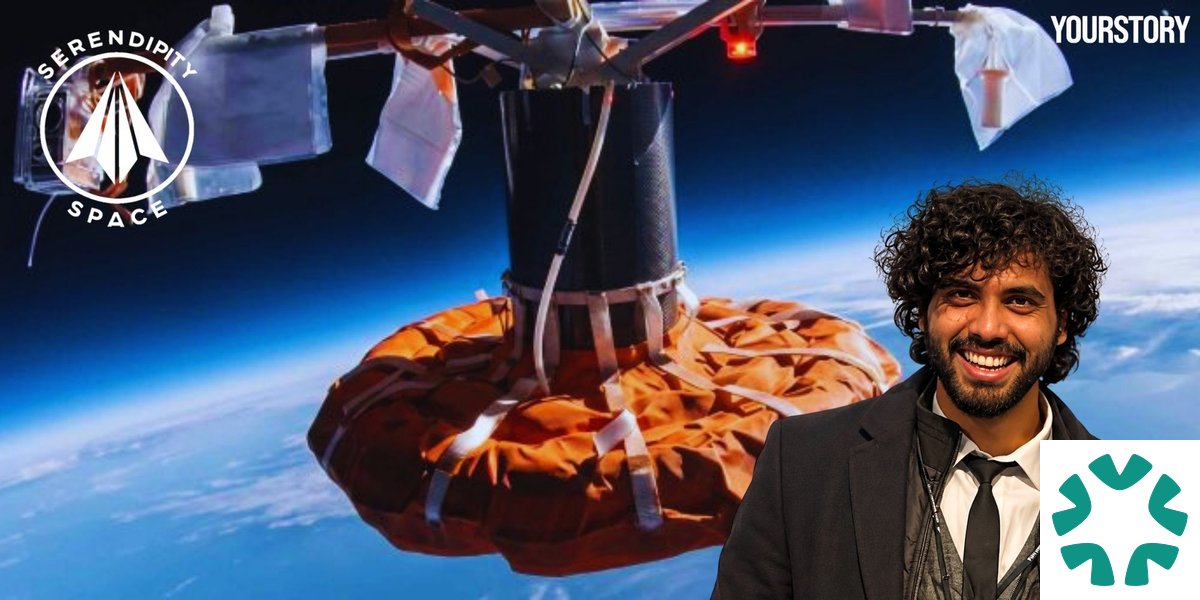

Serendipity Space: Revolutionizing Pharma Manufacturing in Orbit by 2026
30 SEC SUMMARY
Serendipity Space, founded in 2024, is pioneering in-space pharmaceutical manufacturing. The company aims to produce high-quality medicines in orbit, leveraging microgravity to create superior drug crystals. With a $591,000 funding boost, they plan to launch a reusable satellite by 2026, collaborating with the Tata Institute of Fundamental Research.
TABLE OF CONTENTS
KEY HIGHLIGHTS
- Founded in 2024 in Bhubaneswar, Odisha
- Aims to manufacture pharmaceuticals in orbit
- Developed an autonomous manufacturing module called Alchemy
- Achieved a near-space balloon mission in March 2026
- Plans for a reusable satellite by 2026
Company Overview
Serendipity Space was founded in 2024 by Antariksh Parichha, Jivitesh Debata, and Dr. Monica Ekal. Headquartered in Bhubaneswar, Odisha, the company focuses on in-space manufacturing, specifically in the pharmaceutical sector.
Mission and Technology
Gravity plays a crucial role in the crystallization process of pharmaceutical compounds. Traditional manufacturing methods on Earth are often hindered by gravity, which introduces defects and affects the quality of the crystals. Serendipity Space aims to overcome these challenges by leveraging microgravity.
Their core technology, Alchemy, is an autonomous pharmaceutical manufacturing module designed to operate without human intervention. This module is built to withstand the harsh conditions of space and to autonomously manage the crystallization process.
In March 2026, Serendipity Space conducted a near-space balloon mission in collaboration with the Tata Institute of Fundamental Research's Balloon Facility in Hyderabad. This mission tested the company's heat shield, avionics, and the crystallization process in microgravity. The payload included monoclonal antibody therapeutics, small-molecule drugs, and proteins used in drug discovery.
Funding and Milestones
Serendipity Space has raised approximately $591,000 across two funding rounds, with Campus Fund as their key investor. The company had a technical team in place by October 2025 and developed a functional prototype designed to orbital-class standards in under four months.
Future Plans
The ultimate goal of Serendipity Space is to deploy a reusable satellite that can manufacture pharmaceuticals in orbit, return to Earth, and fly again. This reusable model is essential for making the process economically viable, as a single-use factory is not cost-effective.
FAQs
**Q: What is the primary goal of Serendipity Space? A: The primary goal of Serendipity Space is to manufacture high-quality pharmaceutical compounds in orbit using microgravity to achieve superior crystal formation.
**Q: What technology does Serendipity Space use for pharmaceutical manufacturing? A: Serendipity Space uses an autonomous pharmaceutical manufacturing module called Alchemy, designed to operate without human intervention in the microgravity environment of space.
**Q: What was the outcome of the March 2026 mission? A: The mission successfully tested the crystallization process in microgravity, the heat shield, and avionics, and preserved the resulting crystals through descent, touchdown, and recovery.
Conclusion
Serendipity Space is at the forefront of in-space pharmaceutical manufacturing, aiming to produce high-quality medicines by leveraging microgravity. With a strong team and significant funding, the company is well-positioned to achieve its ambitious goals by 2026.
Call-to-Action
For more information on innovative space startups and their groundbreaking technologies, visit blogy.in.
Sources
- yourstory.com
Serendipity Space is building satellites that make medicines in orbit and bring them back
This story is an original summary and analysis written by LazyFounders from the reporting listed above. Facts are attributed to their original publishers; sections marked as analysis are LazyFounders's opinion. Where a source is in another language, facts were machine-translated and quotations are reported, not reproduced. Read the original coverage via the links.
