
Rezo.AI Revolutionizes Customer Service in India: 2026 Insights
Discover how Rezo.AI is transforming customer service in India with AI-driven solutions in 2026. Learn about its growth, challenges, and future plans.
LazyFounders
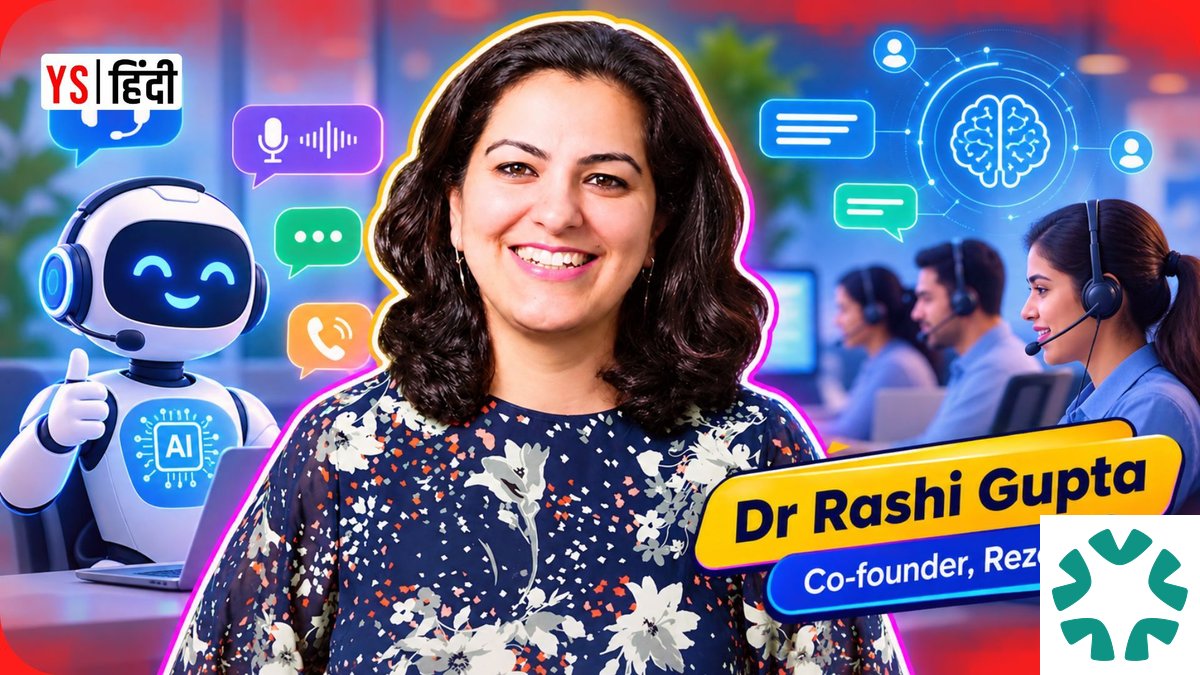

Rezo.AI Revolutionizes Customer Service in India: 2026 Insights
30 SEC SUMMARY
Rezo.AI, founded by Dr. Rashi Gupta, is revolutionizing customer service in India by managing over 1.5 crore calls daily using advanced AI technology. The startup focuses on integrating AI to solve real customer service issues, achieving profitability and recognition in 2026.
TABLE OF CONTENTS
- Introduction
- The Journey of Rezo.AI
- How Rezo.AI Works
- Challenges and Solutions
- Rezo.AI’s Team and Achievements
- Future Plans
- Conclusion
- Call-to-Action
KEY HIGHLIGHTS
- Rezo.AI manages over 1.5 crore calls daily.
- The company focuses on agentic AI to enhance customer service.
- Rezo.AI has achieved profitability and recognition in 2026.
- The startup plans to expand into international markets.
Introduction
In 2026, customer service in India continues to face common issues such as repetitive calls, unanswered queries, and poor call quality. Dr. Rashi Gupta identified these problems and decided to change the landscape with her startup, Rezo.AI.
The Journey of Rezo.AI
Dr. Rashi Gupta's journey from a science enthusiast to a startup founder is inspiring. Her background in mathematics, two master's degrees from IIT Delhi, and a PhD in data science from the University of Helsinki equipped her with the knowledge to develop innovative solutions.
Rezo.AI began in 2018, operating out of Dr. Gupta's apartment. The company prioritized product quality over rapid funding, securing 2 crore rupees in external funding in 2021. Instead of relying on external funding, Rezo.AI reinvested its earnings into product development and expansion.
How Rezo.AI Works
Rezo.AI positions itself as an agentic AI product company, focusing on managing customer interactions for large enterprises. The platform uses AI to handle calls based on the number, complexity, and type of interaction.
Rezo.AI’s AI Model
Rezo.AI's AI model is designed to understand customer needs and take appropriate actions. The agents use voice, chat, and WhatsApp to interact with customers and complete tasks in related systems.
Challenges and Solutions
Rezo.AI faced several challenges, including developing an AI model that could understand diverse Indian dialects and maintaining call quality across different networks.
Dialect and Call Quality
To address these issues, Rezo.AI used real-time call data to refine its models for different dialects and improved call quality through continuous monitoring.
Gaining Trust
Another challenge was gaining companies' trust, as many feared AI would replace human jobs. Rezo.AI started with small pilots to demonstrate AI's value as a tool to enhance, not replace, human work.
Scalability
Handling sudden spikes in call volume during festivals and campaigns was another hurdle. The company tackled this with auto-scaling and continuous monitoring.
Rezo.AI’s Team and Achievements
Rezo.AI's platform manages over 1.5 crore calls daily and supports 22 languages. The company has been profitable and recognized with awards like NASSCOM Emerge 50 and IDC's Gen AI Innovators list.
Notable Achievements
- Maruti Suzuki uses Rezo.AI to handle 7.5 lakh service bookings monthly.
- Rezo.AI resolves numerous insurance claim status calls without human intervention.
Future Plans
India remains Rezo.AI's primary market, with plans to expand to Singapore and other international markets. The company focuses on sustainable growth, emphasizing problem understanding, solution development, and gradual expansion.
Conclusion
Rezo.AI's success story highlights the importance of understanding and solving real customer service problems through technology. While technology evolves, the need to comprehend and address these issues remains constant.
Call-to-Action
Discover more about Rezo.AI and its innovative solutions at blogy.in.
Sources
This story is an original summary and analysis written by LazyFounders from the reporting listed above. Facts are attributed to their original publishers; sections marked as analysis are LazyFounders's opinion. Where a source is in another language, facts were machine-translated and quotations are reported, not reproduced. Read the original coverage via the links.
