
Proofpoint and Anthropic Outline Shift to Governing AI Agents in Enterprises
The Proofpoint Protect 2026 event in San Diego showcased a critical shift in enterprise AI strategy: from debating whether to deploy AI agents to governing their activities. Proofpoint and Anthropic highlighted the role of intent-based security models and knowledge graphs in detecting and mitigating threats posed by both humans and AI systems. This evolution comes as enterprises face increasingly sophisticated AI-driven attacks and seek consolidated security solutions.
LazyFounders
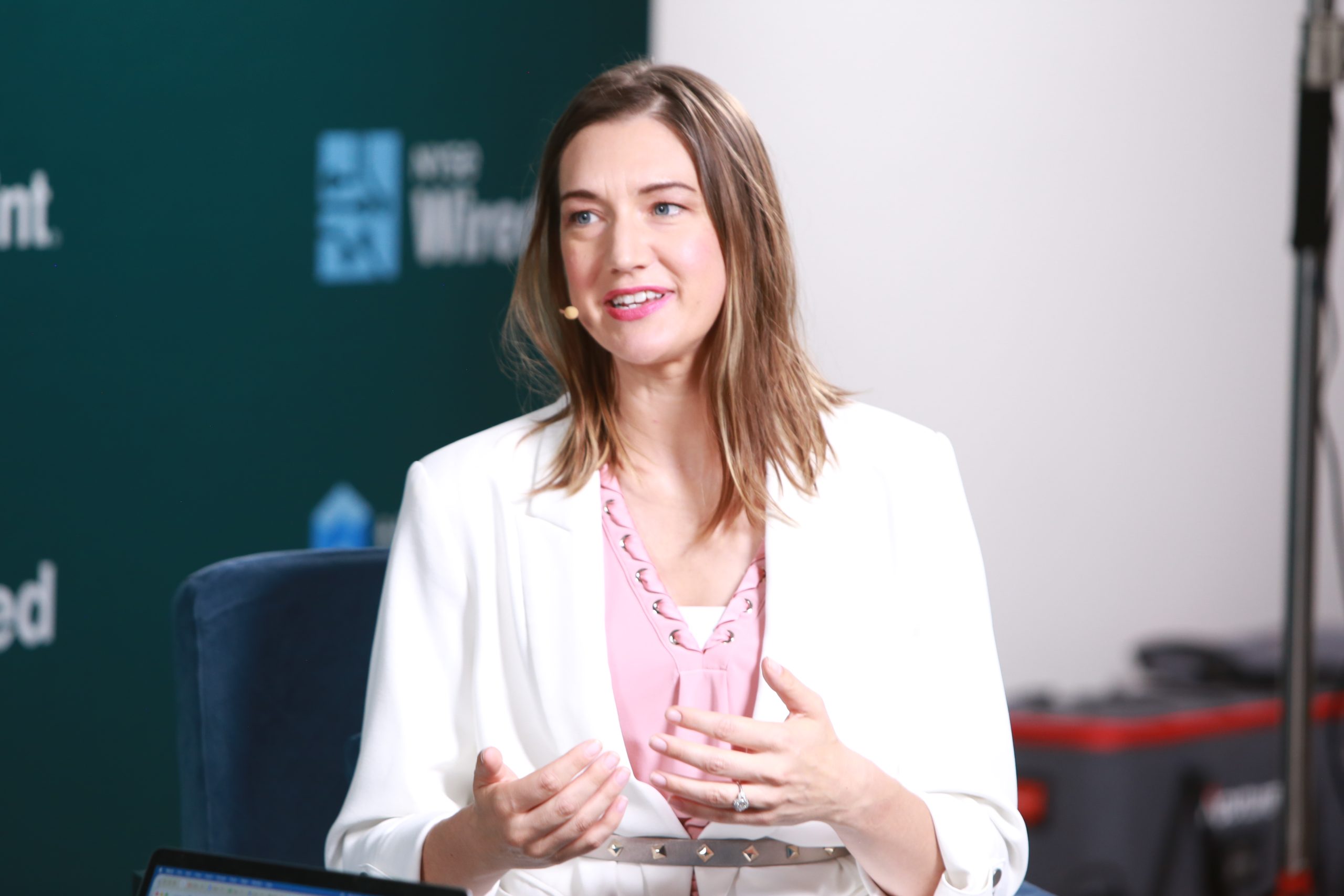

The Proofpoint Protect 2026 event in San Diego showcased a critical shift in enterprise AI strategy: from debating whether to deploy AI agents to governing their activities. Proofpoint and Anthropic highlighted the role of intent-based security models and knowledge graphs in detecting and mitigating threats posed by both humans and AI systems. This evolution comes as enterprises face increasingly sophisticated AI-driven attacks and seek consolidated security solutions.
30 SEC SUMMARY
- Proofpoint and Anthropic outlined the shift from AI deployment debates to governing AI agents in enterprises at Proofpoint Protect 2026.
- Intent-based security models and knowledge graphs are emerging as critical tools for detecting malicious or unauthorized AI and human activities.
- Proofpoint unveiled two new agentic systems for collaboration and data/AI security, built on knowledge graphs.
- Anthropic expanded Project Glasswing, distributing its Mythos Preview model for vulnerability hunting to more defenders.
- A Canadian bank consolidated its security providers in a $25 million, five-year deal with Proofpoint.
TABLE OF CONTENTS
- Focus shifts to governing AI agents
- New agentic systems and tools unveiled
- Enterprise adoption and platform consolidation
- Threat landscape evolves with AI
- Background: AI governance and security
- What this means
- Key takeaways
- FAQ
- Sources
KEY HIGHLIGHTS
- Proofpoint introduced two new agentic systems for collaboration and data/AI security, built on knowledge graphs.
- Anthropic expanded Project Glasswing to distribute its Mythos Preview model for vulnerability hunting.
- Enterprises are adopting intent-based security models to govern AI agents and human activities.
- A Canadian bank consolidated its security providers in a $25 million, five-year deal with Proofpoint.
- Proofpoint’s annual recurring revenue is nearing $2.5 billion, growing nearly 20% post-privatization.
Focus shifts to governing AI agents
At the Proofpoint Protect 2026 event in San Diego, Proofpoint Inc. and Anthropic PBC outlined a shift in enterprise AI strategy. According to SiliconANGLE, the conversation has moved from debating whether to deploy AI agents to governing their activities within the workforce. Intent-based security models and knowledge graphs are now seen as essential tools for detecting malicious or unauthorized actions by both humans and AI systems.
New agentic systems and tools unveiled
Proofpoint introduced two new agentic systems designed for collaboration security and data/AI security, both built on knowledge graphs. These systems aim to address the growing complexity of securing AI-driven workflows and data access. Additionally, Proofpoint added intent-based models to its Nexus detection suite, which operate across multiple tiers, including Flash, Extended-Thinking, and Deep-Thinking.
Anthropic announced the expansion of Project Glasswing, which distributes its Mythos Preview model for vulnerability hunting. The model was initially held back to build guardrails and prioritize defenders, reflecting a broader trend of balancing AI capabilities with security considerations.
Enterprise adoption and platform consolidation
A Canadian bank recently consolidated its security providers in a $25 million, five-year deal with Proofpoint, replacing four suppliers. This move reflects a growing preference for platform consolidation in enterprise cybersecurity, driven by the need for streamlined threat detection and response.
Proofpoint’s annual recurring revenue is now close to $2.5 billion, growing nearly 20% annually. The company’s revenue has doubled since its privatization by Thoma Bravo LP in 2021, signaling strong demand for its security solutions.
Threat landscape evolves with AI
Skilled threat actors are increasingly using AI to accelerate malware development and translate phishing lures into multiple languages, according to SiliconANGLE. This has led to a rise in dynamic, AI-driven attacks that require equally adaptive defenses.
Proofpoint’s data shows that about 99% of agentic activity occurs on endpoints rather than in the cloud, highlighting the need for real-time controls at the device level. Enterprises are now focusing on compensating controls that assess the intent of every human and AI actor, as patching every vulnerability is no longer feasible.
Background: AI governance and security
The shift toward governing AI agents reflects broader trends in enterprise AI adoption. For example, the PGA of America revamped its technology infrastructure to prioritize identity security and AI governance, eliminating traditional layers like data centers and VPNs in favor of streamlined access management.
AI-powered tools are not only transforming security but also enterprise workflows. Amazon’s recent launch of an AI plugin for sellers allows them to manage e-commerce tasks via AI assistants, demonstrating the growing integration of AI into business operations.
What this means
LazyFounders analysis — our interpretation, not reported fact.
The conversation around AI in enterprises has reached a turning point. Instead of asking whether to deploy AI agents, companies are now focusing on how to govern them effectively. This shift underscores the reality that AI agents are becoming insiders—with access to systems, data, and communications—blurring the line between human and machine-driven activities.
Intent-based security models and knowledge graphs are emerging as critical tools for this new paradigm. They allow enterprises to assess the intent of every action, whether performed by a human or an AI, and respond in real time. This is particularly important as threat actors leverage AI to accelerate attacks, develop malware, and scale phishing campaigns across languages.
Proofpoint’s growth and the consolidation trend among enterprises suggest that businesses are seeking unified platforms that can handle both traditional cybersecurity and AI-specific risks. The challenge for founders and operators is clear: building AI-driven products and workflows must go hand-in-hand with robust governance frameworks. Those who treat AI agents as part of their security perimeter—rather than an afterthought—will be better positioned to mitigate risks while unlocking AI’s potential.
Key takeaways
- Enterprises are moving from debating AI agent deployment to governing their activities using intent-based models.
- AI agents are being treated as insiders, requiring real-time intent-based controls to mitigate risks.
- Knowledge graphs and dynamic detection systems are critical for managing AI-driven threats and vulnerabilities.
- Proofpoint’s revenue growth reflects increasing demand for consolidated, AI-ready security platforms.
- Skilled threat actors leverage AI to accelerate malware development and phishing attacks.
FAQ
What are intent-based security models?
Intent-based security models assess the purpose or intent behind actions taken by humans or AI agents. These models use knowledge graphs and real-time analysis to determine whether an activity is authorized or malicious, enabling faster and more adaptive threat detection.
Why are knowledge graphs important for AI security?
Knowledge graphs map relationships between actors, actions, and data, providing a dynamic way to track and analyze behaviors. They are critical for governing AI agents because they help security systems understand context, detect anomalies, and respond to threats in real time.
How are threat actors using AI?
Skilled threat actors use AI to accelerate malware development, translate phishing lures into multiple languages, and chain low-severity vulnerabilities into serious exploits. This makes attacks faster, more scalable, and harder to detect with traditional methods.
What is the significance of Proofpoint’s $25 million deal with a Canadian bank?
The deal reflects a growing trend of enterprises consolidating security providers to streamline threat detection and response. It also highlights Proofpoint’s strength in the cybersecurity market, particularly as demand grows for platforms that can handle both traditional and AI-driven risks.
Related on LazyFounders
Sources
- SiliconANGLE · 2026-09-24
8 insights from Proofpoint Protect: Security bets on intent as AI agents join the workforce
This story is an original summary and analysis written by LazyFounders from the reporting listed above. Facts are attributed to their original publishers; sections marked as analysis are LazyFounders's opinion. Where a source is in another language, facts were machine-translated and quotations are reported, not reproduced. Read the original coverage via the links.
